

Shock In Moscow: A University Affiliated With The Russian Government Has Diagnosed The State Of The Economy
- 26.11.2026, 11:40
- 1,122
Russia ended up on par with Egypt and Malaysia.
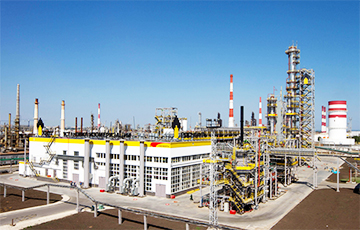
During Vladimir Putin’s years in office, the Russian economy has fallen into the trap of technological backwardness. This conclusion was reached by Alexander Safonov of the All-Russian Research Institute of Labor under the Ministry of Labor and Daria Nekipelova of the Financial University under the Government of the Russian Federation. According to their assessment, the industry suffers from a chronic lack of investment, and instead of machine tools and robots, companies are forced to hire people for manual labor, writes The Moscow Times.
Lost Scientific Potential
The country has lost a significant portion of its scientific and technological resources. Since the early 2000s, the number of people employed in research has fallen by a quarter, and Russia’s share of global inventions has halved. Less than 1% of GDP is spent on research and development, which is lower than the figures for Egypt and Malaysia.
At the same time, the economy depends on foreign technology: over 98% of the machine tools purchased by enterprises are made abroad. Russia’s position in the global market is also weakening: from 2021 to 2025, exports of machinery and equipment fell by a quarter, from $40.6 billion to $29.6 billion. As early as 2023, the government acknowledged that a model of “importing technology in exchange for raw materials” had taken hold and warned of the risk of entire industries deteriorating.
A Turning Point After 2012
According to the study’s authors, the turning point was Putin’s return to the Kremlin for a third term. From 2003 to 2008, labor productivity grew by 4.8–7.5% per year, but in 2015 it fell by 1.4%. By that time, Russia had already annexed Crimea and come under Western sanctions.
“The economy stopped generating efficiency and began simply ‘eating away’ at human resources,” the experts note.
Investment in machinery plummeted
The share of machinery and equipment in total investment for 2005–2024 fell from 43.9% to a “meager 14.7%.” According to calculations by the Center for Macroeconomic Analysis and Short-Term Forecasting (CMASF), average annual investment in equipment from 2014 to 2024 was 15% lower than the 2013 level.
Long-term investments by enterprises funded by their own profits grew by only 11% in nominal terms over the ten-year period: from 912 billion rubles in 2013 to just over 1 trillion in 2023. In 2023–2024, the manufacturing sector saw almost no modernization and operated until the equipment wore out. Now it is more profitable for businesses to keep their money in deposits than to buy machine tools.
“Tax on Technological Backwardness”
Safonov and Nekipelova refer to the labor shortage by this very name. The only available resource for fulfilling production plans, including the state defense order, remains human labor. In terms of automation density, Russia lags behind the global average by more than a factor of four: in 2024, there were 29 industrial robots per 10,000 workers, compared to a global average of 132.
War is eating up money meant for modernization
There is no money to modernize enterprises: the war is swallowing up every third ruble of the budget and causing corporate profits to plummet. In June, billionaire Roman Trotsenko complained that businesses cannot invest in equipment and technology. Severstal owner Alexey Mordashov announced a 24% cut to the investment program. The government is also cutting spending: in 2025, funding for the national project “Means of Production and Automation” was reduced by more than four times, from 52.2 billion to 11.8 billion rubles.

Bank's name: Bank Millennium S.A.
Address: ul. Stanislawa Zaryna, 2A, 02-593, Warszawa
IBAN: PL97116022020000000216711123
SWIFT: BIGBPLPW
Name of the account holder: Fundacja “KARTA ‘97”
Purpose/title of payment: Donation for statuary aims
You can contact us by the e-mail charter97@gmail.com