


Ukraine Has Opened The Way For Its Drones To Strike Russia By Destroying Front-line Air Defenses
- 19.05.2026, 20:30
- 1,816
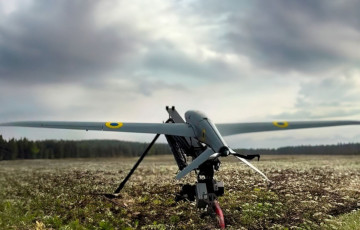
The AFU applied a new strategy.
The large-scale bombing of Russian oil refineries, ports and military facilities, culminating in the largest strike on Moscow and the Moscow region in the night of May 17 by nearly 600 drones in the entire war, was made possible by a new strategy of the Ukrainian Armed Forces. The new medium-range drones have severely "thinned" the air defenses located in the occupied territories and in the border areas of Russia itself. Such strikes alone cannot turn the tide of the war, military analysts say, but they are changing both it and the dynamics of the conflict, writes The Moscow Times.
In recent months, the Ukrainian Armed Forces have been devoting more and more resources to medium-range strikes - against an area some 30 to 200 kilometers behind the front line. By destroying air defense and rear front-line support facilities with drones, Ukraine is disrupting the advance of Russian troops and opening the way for long-range drones and missiles to hit refineries, oil storage facilities, ports and military plants, two Ukrainian commanders, two drone specialists and three military analysts told Reuters.
"Medium-range strikes are now playing a decisive role" in long-range strikes against Russia up to 2,000 kilometers away, Robert Brovdi, commander of Ukraine's Unmanned Systems Force, told Reuters. President Volodymyr Zelensky said recently that the number of medium-range strikes has doubled since March and quadrupled since February.
The Wall Street Journal calls it "probably the major change in the course of the fighting this spring." Medium-range drones such as Ukraine's FP-2 and Chaklun V and the U.S.-made Hornet are on the rise; the AFU is also using Starlink satellite communications, which the Russian army no longer has, for strikes.
Intensive research and development activities and a growing number of skilled pilots are paying off, the head of the UAV unit of the 1st Corps of the Ukrainian National Guard's Azov Corps, who has published videos of successful strikes on Russian rear infrastructure, told the newspaper.
Robert Brovdi said his unmanned forces have destroyed at least 129 air defense systems in Russian-occupied territories this year. As a result, he said last week, the Russian army is experiencing a shortage of them and is forced to use outdated complexes and radar stations that were "in service as far back as the 1960s."
The commander of the 7th Battalion of the 414th Independent Unmanned Systems Brigade told Reuters his unit is mainly engaged in destroying targets up to 100 kilometers from the contact line. The most valuable, he said, are radar installations and air defense missile systems such as Buk, Tor and Pantsir.
Drones have changed the nature of the conflict to such an extent that the front line may no longer be where the outcome of the war is decided, Bloomberg noted. There are now only three Ukrainian soldiers per kilometer in the most forward positions, "they have become a liability," Nikolai Beleskov, a senior consultant at the National Institute for Strategic Studies in Kiev, told the agency.
The Ukrainian armed forces have learned to reliably stop Russian soldiers with the help of drones, and as a result, the front line has barely changed since the end of winter.
More importantly, Ukraine, which has suffered from massive raids by Russian drones and missiles on its cities and power plants, can now bomb energy and military facilities in Russian regions on its own. And the occupiers' air defenses are much less likely to interfere with its long-range drones and missiles, which have put about 70% of the Russian population in range.
The mood in Russia's Z-community is increasingly gloomy as a result, states Ivan Filippov, who has been studying it since the war began.
"Even given the level of liberty that reigns in z-space, it is still not safe to write texts on the theme 'we are heading for defeat,'" but z-authors are still trying to convey to readers the idea that "the war is in a deadlock, the prospects are dim, and victory is impossible," Filippov notes:
"As a result, I read kilometers of texts from a wide variety of authors, ranging from technicians and engineers who deal with drones to the military, in which the authors seem to formally write about what is necessary for victory, but in reality - describe the inevitable defeat."

Bank's name: Bank Millennium S.A.
Address: ul. Stanislawa Zaryna, 2A, 02-593, Warszawa
IBAN: PL97116022020000000216711123
SWIFT: BIGBPLPW
Name of the account holder: Fundacja “KARTA ‘97”
Purpose/title of payment: Donation for statuary aims
You can contact us by the e-mail charter97@gmail.com