


Politico: Trump Has Officially Ended The War Against Iran, But There's A Nuance
5- 2.05.2026, 14:55
- 1,942
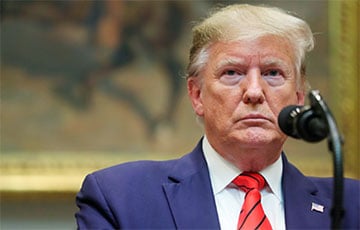
Some interesting details emerged.
US President Donald Trump has sent a letter to Congress in which he officially declared the end of the war against Iran. However, according to Politico, Trump's decision is needed to end the debate over whether Congress needs to approve the continuation of hostilities.
The White House reportedly outlined its position in a letter to Congress amid the fact that the conflict in the Middle East has reached the 60-day deadline after which military operations must be halted without proper authorization from lawmakers. Donald Trump said the truce regime with Iran effectively suspends the countdown to that deadline.
According to the 1973 War Powers Act, U.S. troops must leave a conflict zone 60 days after notifying Congress unless an extension of the operation is approved. At the same time, the White House can ask to extend it for another 30 days to complete combat operations.
Politico notes that the letter is aimed at avoiding an aggravation of discussions in Congress, where Trump may lose the support of part of the Republicans due to the lack of a clear strategy to exit the conflict, which is already in its second month. At the same time, such reasoning is drawing criticism from Democrats and part of Republicans who believe the campaign should be ended.
"There has been no exchange of fire between the United States and Iran since April 7, 2026. The hostilities that began on February 28, 2026 have ceased," the U.S. president wrote, specifying that he extended the cessation of hostilities "indefinitely."
The sending of the letter to Congress also came amid protracted negotiations and an ongoing military blockade of Iranian ports. Before leaving the White House for Florida on Friday, the president told reporters that he had provided Iran with a "final offer" but expressed pessimism about the possibility of reaching an agreement with the country's "disunited" government.
"They've made significant progress, but I'm not sure they'll ever reach the goal. I would say I'm not satisfied. ... They want to make an agreement, but I'm not satisfied," Trump noted.
On April 30, however, there were signs of division among Republicans who had previously supported Trump almost unanimously. For example, Maine Senator Susan Collins became the first party representative to change her position since the war began, saying she would not support its continuation beyond the statutory deadline.
"This deadline is not a recommendation, but a requirement," Collins said in a statement explaining her vote.
The failed vote showed that support for the war among Republicans may be gradually waning, given also public sentiment where more people favor ending it.
Trump, for his part, has criticized lawmakers pushing for a formal authorization for the war. At the same time, supporters of limiting his powers under the 1973 law believe the president is misinterpreting its provisions. They emphasize that despite the truce, U.S. forces are still engaged in a blockade aimed at pressuring Iran, particularly in the context of attempts to resume shipping through the Strait of Hormuz, and given the significant number of U.S. military personnel remaining in the Middle East.
In addition, Trump said previous presidents have also failed to comply with the 60-day limit.
"Many presidents, as you know, have exceeded that time limit. All other presidents thought it was totally unconstitutional," he said.
The Pentagon said the US Armed Forces are ready to resume strikes on Iran if peace talks fail.
At the same time, Virginia Senator Tim Kaine criticized the idea of possibly declaring an end to the war without withdrawing troops from the region, calling such an approach wrong. He also emphasized that Republicans, along with Democrats, should unite to hold the administration accountable for such actions.
"I hope they hear enough from their constituents about the unpopularity of this war and that it does not justify sending our sons and daughters to risk their lives to begin voting in accordance with the constitutional oath they took," he said.

Bank's name: Bank Millennium S.A.
Address: ul. Stanislawa Zaryna, 2A, 02-593, Warszawa
IBAN: PL97116022020000000216711123
SWIFT: BIGBPLPW
Name of the account holder: Fundacja “KARTA ‘97”
Purpose/title of payment: Donation for statuary aims
You can contact us by the e-mail charter97@gmail.com