


The US And The UK Conducted Large-scale Exercises Near The Border With Belarus
- 1.06.2026, 9:59
- 1,082
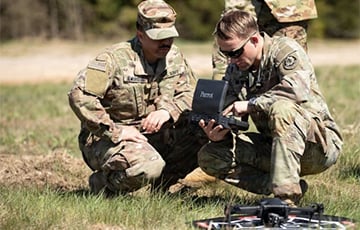
During the training, the military tested more than 50 technological solutions.
The U.S. Army this month conducted a joint exercise with the British military aimed at developing and unifying approaches to counter-drone warfare as part of NATO's efforts to bolster its eastern flank defenses. This was reported by Forbes.
The exercises, called Project Flytrap 5.0, took place in Lithuania about 30 kilometers from the border with Belarus. They were the next stage of an expanding series of maneuvers that began last year in Germany and Poland, where they are practicing ways to counter drones in mobile combat and "network" warfare.
In the course of the training, the military tested more than 50 technological solutions - from UAV detection and interception systems to ground-based robotic platforms. Special emphasis was placed on rapid feedback between soldiers and technology developers, which allows for rapid refinement of equipment.
U.S. Army officials say the program is growing in scope and could grow to the level of a brigade exercise in the next phase. They said it is part of a broader NATO initiative to strengthen the alliance's capabilities amid the growing threat of drone attacks.
The U.S. Army's chief technical officer Alexander Miller emphasized that the key goal of the project is not only to introduce new technologies, but also to integrate them into real maneuver warfare. He noted:
"How do you combine all of this so that soldiers can fight, move and stay protected?"
And he added that the Army's approach is becoming more pragmatic and cost-oriented:
"You don't have to choose the most perfect solution. You just have to understand the problem well and solve it quickly."
Separately, the U.S. and Britain are working to combine tactical systems and data architecture to improve counter-drone effectiveness. The British side, Miller said, has been actively involved in developing defenses for individual soldiers from the beginning and has offered its own technological approaches.
Besides high-tech solutions, the military is also testing cheaper ways to defeat UAVs - including using existing weapons with modernized munitions capable of firing on approach and hitting drones with shrapnel.

Bank's name: Bank Millennium S.A.
Address: ul. Stanislawa Zaryna, 2A, 02-593, Warszawa
IBAN: PL97116022020000000216711123
SWIFT: BIGBPLPW
Name of the account holder: Fundacja “KARTA ‘97”
Purpose/title of payment: Donation for statuary aims
You can contact us by the e-mail charter97@gmail.com