
"Fire Chief General" At The Head Of The Armed Forces Of Ukraine
11- 23.07.2026, 20:06
- 19,404
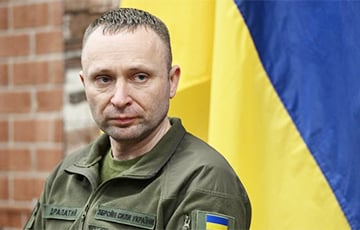
Photo: Getty Images
How Mykhailo Drapaty Could Transform the Ukrainian Army.
Ukrainian President Volodymyr Zelenskyy has appointed Major General Mykhailo Drapaty as the new Commander-in-Chief of the Armed Forces of Ukraine. Oleksandr Syrskyi has been dismissed.
The website Charter97.org asked three Ukrainian experts to share what they know about the new commander and what changes to expect in the Ukrainian army under his leadership.
“The Firefighter General”
Military and political analyst for the “Information Resistance” group Oleksandr Kovalenko recalled that Drapaty has been a well-known figure in Ukraine since 2014: at that time, commanding a small unit, he led a breakthrough toward Mariupol and laid the groundwork for the city’s subsequent liberation from Russian intervention.
“General Drapaty earned the nickname ‘Firefighter General’ in the army,” ” said Kovalenko, explaining that since 2022 he has been systematically redeployed to the most dangerous and unstable sections of the front precisely to neutralize the threats arising there.
As an example, the expert cited the situation in 2025 on the Dobropillia front, where the Russian 51st Combined Arms Army attempted to break through the defenses. It was precisely there that the “Drapaty” unit was deployed—and as a result, not only was the offensive halted, but some Russian units were also surrounded, forcing them to retreat. According to Kovalenko’s assessment, this operation depleted the 51st Army’s resources to such an extent that it still cannot resume offensive operations, and the losses sustained were extremely severe.
Next, the future commander-in-chief of the Armed Forces of Ukraine focused on the Kupyansk sector—containing the Russian troops’ bridgehead on the right bank of the Oskol River and clearing Kupyansk of enemy infiltration groups. Kovalenko recalled that in the fall of 2025, the Russian command—from General Kuzovlev to Gerasimov, Belousov, and Putin himself—repeatedly claimed to have full control over Kupyansk.
“This naturally raises the question: where is this control? This is all thanks to General Drapaty,” the expert noted.
Comparing the new commander-in-chief’s style with the approach of his predecessor Alexander Syrsky, Kovalenko emphasized: “Syrsky is, after all, a man of the old conservative school, whereas Mikhail Drapaty sometimes employs completely unexpected methods.” According to his forecast, under the new commander, the Ukrainian army will become more technologically advanced: bureaucracy will be streamlined when acquiring high-tech weapons for close, medium, and long ranges, and the troops as a whole will become more digitized.
Betting on Young Generals
Professor Petro Oleshchuk of Taras Shevchenko National University of Kyiv, in a commentary for the website Charter97.org, drew attention to the age of the new Commander-in-Chief of the Armed Forces of Ukraine:
“For a general and commander, he is quite young—he is 43 years old. Everyone expects him to bring new approaches to the management of the army,” Oleshchuk said.
According to the expert, the renewal of the Armed Forces of Ukraine’s command structure is not a one-time event but an ongoing trend: the previous generation is being replaced by younger generals who came of age in independent Ukraine and rose to the highest ranks from the bottom up, starting with command of their own units.
That is precisely why, the expert believes, Drapato is expected not only to demonstrate personal authority but also to continue institutional reforms—in particular, the transition to a corps-based system and the further reform of army management as a whole, including its modernization through technology. Oleshchuk also linked the appointment to the current political climate: Zelenskyy’s upcoming visit to the U.S., discussions of new sanctions against Russia, and, more broadly, a new phase of U.S.-Ukrainian cooperation, which, in his view, the arrival of such figures can help strengthen.
Don’t Expect a Revolution
Military expert and National Guard reserve major Oleksiy Getman commented to the website Charter97.org, noted that Drapaty is held in high regard by those who began their service as volunteers in 2014–2015 and later.
“This is definitely a positive development for the Armed Forces of Ukraine because it boosts morale,” the expert emphasized, adding that subordinates’ trust in their commander is a natural and important factor in wartime.
At the same time, Getman cautioned against overly high expectations:
“One person alone cannot win a war or bring about any radical changes,” he said, adding that abrupt, revolutionary transformations in the midst of combat operations are simply dangerous—only gradual improvements are possible.
The expert noted that both the first commander-in-chief Valeriy Zaluzhny and the outgoing Syrsky supported the appointment and promised to ensure a smooth transfer of authority. Syrsky himself, according to Getman, will most likely remain within the Ukrainian Armed Forces, although his future position has not yet been determined.
Speaking about the current situation on the front lines, the Ukrainian Armed Forces officer noted that this year the Ukrainian army has liberated over 700 square kilometers of territory—more than it has lost—which indicates a shift toward offensive, rather than exclusively defensive, operations.
“The army is on the offensive… but this is not a counteroffensive; what is happening can be described as counterattacks,” the expert clarified.
The expert identified the main challenge for the new commander-in-chief, Drapato, not as technology or tactics, but as the issue of troop manpower: “The most difficult task… is the issue of mobilizing and replenishing our troops,” said Getman.
He emphasized that despite the role of drones and automated systems, infantry and equipment remain decisive on the battlefield, citing the example of the recent U.S.-Iran conflict, where complete air superiority did not lead to military victory due to the lack of a ground operation.

Bank's name: Bank Millennium S.A.
Address: ul. Stanislawa Zaryna, 2A, 02-593, Warszawa
IBAN: PL97116022020000000216711123
SWIFT: BIGBPLPW
Name of the account holder: Fundacja “KARTA ‘97”
Purpose/title of payment: Donation for statuary aims
You can contact us by the e-mail charter97@gmail.com