

A Twist In The Russian Economy's Gut
- 13.08.2026, 11:40
- 3,332
Three closed circles.
The Ministry of Internal Affairs of the Russian Federation reports that 17% more cases of tax evasion have been uncovered this year than last year. Wow, what a jump!
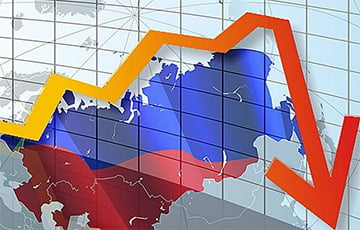
Either taxpayers have become more prone to evasion, or the police have become better at uncovering it—but if you think about it, it’s all part of a self-perpetuating mechanism of self-destruction, much like a twisted intestine.
Do you know how intestinal obstruction works in humans?
So, a person eats something bad, their intestines become inflamed, and they start to feel pain. Because of this pain, the intestinal muscles contract reflexively, which means they’re also putting pressure on the affected area. This makes it hurt even more, and the muscles contract even further. More pain—the muscles contract even more. When they can’t contract any further, the intestines twist, just like a rubber band or an electrical wire does when you want to coil it tighter.
The intestines overlap, tie themselves in a knot, constrict themselves, and rupture if therapeutic measures aren’t taken in time.
It’s the same with taxes. The state budget needs more money to wage war, so the government raises taxes. In response to this increase, people—especially small business owners, for whom Putin abolished the simplified tax system in order to extract as much money as possible from them—begin to evade taxes just to make ends meet. At the same time, law enforcement agencies are ordered to increase tax collection, because Putin needs money for the war—after all, his homeland is in danger. So it turns out that business owners are getting caught more often, taking greater risks, while the police are receiving tips, tax officials are stepping up their investigations, and prosecutors are eagerly opening new cases. There you have the first loop in the noose tightening around the Russian economy.
But there’s a second loop after that, and a third.
Since you can’t really collect fines from entrepreneurs who are barely making ends meet, law enforcement agencies go to court, and the court proceeds to seize the assets of tax violators. Some of these assets—which law enforcement knows about in advance or discovers while investigating the case—turn out to be quite valuable. I mean, right now the situation is so-so because of the crackdown by law enforcement, but generally speaking, it could be a very profitable business.
Consequently, these businesses seized from habitual tax evaders need to be transferred to someone friendly to the authorities. These new owners of the confiscated companies—who are friendly to law enforcement—certainly don’t pay taxes, because they’re the new owners, after all, and they’re on good terms with law enforcement. But the goal of increasing tax collection remains, and besides, some law enforcement officers feel resentful and envious that a valuable asset went not to a businessperson friendly to them, but to one friendly to a colleague from a neighboring department.
So what happens? They make another arrest—after all, it’s not hard to solve such a “crime,” and they’re eager to hand over a valuable company to someone on their side. There you have the second loop.
The third loop in Russia’s economic noose is largely provided by Ukrainian drones.
This is because many entrepreneurs who sold through Wildberries didn’t clear these goods through customs in order to evade taxes. In other words, they were selling contraband: this is possible if the goods aren’t subject to mandatory labeling.
Consequently, when a Wildberries warehouse explodes from a Ukrainian drone strike, it’s impossible to get insurance for the lost goods, impossible to get compensation from the marketplace, and impossible to expect the government to reimburse losses for goods that the merchants themselves had hidden from the government. Business owners are suffering losses, and in order to somehow save their struggling businesses—what?—they are evading taxes more and more openly. And this is exactly what law enforcement agencies need—agencies tasked with increasing tax collection and eager for the opportunity to seize others’ assets and transfer those assets to their own people. Not every business deals in contraband, but almost every business violates some regulation or another.
A vicious cycle. Or rather, three vicious cycles that overlap and feed into one another.
Of course, the Russian economy is too large to be quickly choked by this pathological peristalsis, but it does cause some discomfort within the system. And anyone who has ever had a stomachache knows: you can’t experience the joy of life with a stomachache.
Happiness is impossible with a stomachache.
Valery Panyushkin, The Moscow Times

Bank's name: Bank Millennium S.A.
Address: ul. Stanislawa Zaryna, 2A, 02-593, Warszawa
IBAN: PL97116022020000000216711123
SWIFT: BIGBPLPW
Name of the account holder: Fundacja “KARTA ‘97”
Purpose/title of payment: Donation for statuary aims
You can contact us by the e-mail charter97@gmail.com