

Putin's Main Myth Is Being Debunked
2- Petr Oleshchuk
- 5.08.2026, 11:23
- 7,226
Why Ukraine's long-range strikes against Russia are of strategic importance.
The same types of messages are constantly circulating in the media, relayed by Russians themselves and actively supported by Kremlin propaganda. Their message boils down to the claim that Ukrainian strikes on oil refineries, Wildberries warehouses, and other similar facilities will allegedly have no effect. Such attacks are called misguided, pointless, or even war crimes, with the suggestion that Ukraine should strike only strictly military targets.
The central theme of this argument is as follows: even if the Russians lose businesses, suffer material damage, or end up paying more due to inflation and the fuel crisis as a result of the strikes, this still won’t compel them to protest against Putin’s regime or attempt to overthrow it. Consequently, such actions are supposedly pointless, since Putin’s regime is “rock-solid,” and Russians will continue to support it under any circumstances.
This argument is promoted particularly vigorously by some representatives of so-called Russian liberal journalism. One of its most prominent proponents is Alexei Venediktov. He persistently repeats: if Russian strikes on Ukraine’s energy infrastructure did not force Ukraine to change its position, then Ukrainian strikes on Russia will allegedly yield no political results either.
At first glance, this argument may seem rational. Russian strikes on Ukraine’s energy infrastructure this winter did indeed fail to force the Ukrainians to immediately agree to peace on the Kremlin’s terms. Consequently, according to this logic, the Russians will also not agree to peace on Ukraine’s terms because of strikes on their infrastructure.
However, this is a classic case of equivocation. It ignores the fundamental difference between the nature of the war for Ukraine and for Russia.
For Ukraine, this war is existential. It concerns the very existence of the state, the nation, the political community, and the right of Ukrainians to determine their own future. For Russia, this is a colonial war—an attempt by the political elite to restore an empire that perished long ago, but whose corpse the Kremlin is striving to reanimate, sparing no human or material resources to do so.
Putin’s regime itself constantly demonstrates that it does not want this war to truly become a nationwide effort for Russians. The Kremlin is trying to conceal its true scale and convince the population that the war is not that important, that sanctions do not cause economic problems, that Russia is only “growing stronger” because of them, and that there is no need for mobilization because the front is supposedly fully staffed by volunteers—who are, in fact, mercenaries.
At the same time, propaganda claims that the Russian army is successfully advancing. To confirm this, television regularly shows so-called “flag-planting” footage—scenes in which several Russian soldiers run into a little-known settlement in the Donetsk region carrying a flag. This creates the illusion of continuous advancement and victory.
At the official level, Russia constantly downplays any losses, problems, and negative consequences of the war. This is necessary precisely because the war is colonial in nature. Deep down, most Russians understand that they do not need this war, that it brings them no benefit, and that it is merely a whim of the ruling elite.
As soon as the true scale of Russian losses and damage becomes widely known, a logical question will arise: what is the point of all this? What benefit does the capture of yet another destroyed village or farm building in the Donetsk region bring to Russia, its future, and its place in the world?
Of course, propaganda may continue to frame the war as “strategic defense” against an aggressive NATO bloc. However, the more the war affects the daily lives of Russians themselves, the harder it will be to avoid such questions.
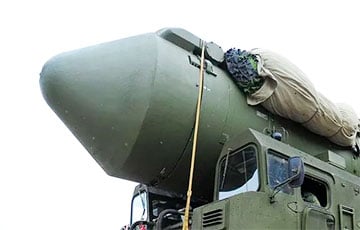
For decades, Putin’s Russia has positioned itself as a state that is “rising from its knees,” restoring its lost imperial grandeur, and once again becoming a superpower. Russians have been constantly told that their country dictates its will to the United States, Europe, and the entire world, and that its missiles are capable of reaching Washington.
This propaganda narrative collides with reality as Ukraine destroys a Russian oil refinery and pushes Russia closer to a fuel crisis. At this moment, the entire propaganda veneer is washed away. The image of an all-powerful and invulnerable empire is crumbling due to its inability to protect its own infrastructure from a state that the Kremlin has for years contemptuously called weak and incompetent.
However, the main significance of these long-range strikes lies not even in this alone. We should not expect Russians to immediately take to the streets because of fuel problems or rising prices, begin protesting against Putin, and—much less—overthrow his regime. Most likely, this will not happen.
The consequences may be different—less straightforward, significantly less predictable, but potentially no less dangerous for the Russian authorities.
The international community often projects onto Russian society perceptions shaped by the experiences of other countries. However, Russian society has several fundamental characteristics that shape its interaction with the Putin regime.
First and foremost, these include fragmentation, atomization, and a lack of organization. The regime has relied on these factors for a long time. Russians are unable to organize themselves effectively or collectively defend their rights, as they often view one another with distrust and hostility.
There are numerous internal fault lines in Russia. The first is social. This involves the contrast between the rich and the poor, with extremely wealthy individuals—among the richest in the world—at one extreme, and a vast number of citizens living in poverty at the other.
This social divide did not emerge overnight. It has been a defining feature of Russia throughout a long historical period. In its time, it was precisely this colossal divide that brought the Bolsheviks to power. A quasi-proletarian revolution took place in a country where there was virtually no large industrial proletariat, but where there was a vast mass of completely impoverished peasants.
Today, it cannot be said that the situation has fundamentally changed. Social contradictions persist, although they have taken on different forms.
The second fundamental line of division is national and religious. This involves the opposition between Russians and non-Russians, Christians and Muslims, and the central regions and the national republics. The potential for mutual animosity, hatred, and a readiness for violence is perhaps even higher here than in the social sphere.
The reaction of the Russian media to the attacks on Wildberries warehouses is telling. Russian society has traditionally been very prone to conspiracy theories. Rumors constantly circulate about Freemasons, Jews, secret conspiracies, and external forces that allegedly seek to destroy Russia.
The Putin regime has quite skillfully channeled this tendency into anti-Western rhetoric. The public is presented with an image of a sinister West that is supposedly always hostile toward Russia and seeks to seize, occupy, or destroy it.
At the same time, there are very real internal contradictions that easily give rise to new conspiracy theories. First and foremost among these is mutual interethnic hatred.
Wildberries is a major marketplace, but not the only one. It has competitors, notably Ozon. Following the attacks on Wildberries’ warehouses, a narrative began to spread rapidly in the Russian media suggesting that this was allegedly not only a Ukrainian operation but also an act of revenge by Ramzan Kadyrov, who had previously sought to gain control of the company but was unable to do so.
According to this conspiracy theory, Kadyrov allegedly may have been involved in orchestrating the attacks or acted with some support from Ukraine. This version requires no rational evidence, as it relies on pre-existing hatred toward Kadyrov.
For a significant portion of Russian nationalists, Kadyrov is a convenient internal enemy because he is Chechen and Muslim. They hate him, though they are often afraid to speak about it publicly, and are merely looking for a pretext to direct their discontent toward such an enemy.
The more the situation in the Russian economy, the fuel market, and other sectors deteriorates, the more actively Russians will seek to blame their neighbors, residents of other regions, members of other ethnic and religious groups, or simply wealthier people.
They will not necessarily direct their hatred directly at Putin and his regime. Putin is far away; speaking out against him is dangerous, and propaganda constantly shifts the blame away from him. The internal enemy, however, is right next door. It could be a member of a different ethnic group, a follower of a different religion, a resident of a neighboring region, or someone who has more money and can afford things that are out of reach for others.
One should not draw direct analogies between Russian terrorism against Ukraine and Ukrainian strikes on Russian territory. The nature of the Ukrainian and Russian states is fundamentally different.
On the one hand, we have an empire with colossal social stratification, a vast number of interethnic conflicts, and a political system that relies on the atomization of society and the suppression of self-organization.
On the other hand, Ukraine is a nation-state—imperfect, corrupt in places, and at times not very well organized, but a nation-state nonetheless. Its internal contradictions, problems, and conflicts are fundamentally different in nature.
An empire and a nation-state are different political entities. Their responses to military strikes, economic hardships, and political challenges will also differ. For Ukraine, external aggression reinforces the sense of a common threat and the need to defend the state. For Russia, the rising cost of a colonial war is gradually exposing internal contradictions that the Kremlin has spent years trying to conceal under the guise of propaganda and “stability.”
Thus, the significance of Ukraine’s long-range strikes should not be assessed solely by whether Russians take to the streets in protest the next day. There will be no such effect, and it is not worth counting on it. The strategic outcome lies elsewhere. The strikes shatter the myth of the empire’s invulnerability, demonstrate the regime’s inability to defend its own territory, increase the economic cost of the war, heighten social tensions, and exacerbate existing divisions. The longer this process continues, the more difficult it will be for the Kremlin to maintain the image of an all-powerful state that wins without any losses or hardships for the population. The war, which the regime has sought to reduce to a distant television spectacle, will increasingly become part of the daily lives of Russians themselves.
This is precisely why strikes against Russia’s military, industrial, and economic infrastructure must be continued and scaled up. Their effect will not always be direct or immediate. But they are gradually undermining the very foundations of Putin’s power—the myth of greatness, the promise of security, and the image of unshakable stability.
Petro Oleshchuk, Ph.D. in Political Science, Professor at Taras Shevchenko National University of Kyiv, exclusively for Charter97.org

Bank's name: Bank Millennium S.A.
Address: ul. Stanislawa Zaryna, 2A, 02-593, Warszawa
IBAN: PL97116022020000000216711123
SWIFT: BIGBPLPW
Name of the account holder: Fundacja “KARTA ‘97”
Purpose/title of payment: Donation for statuary aims
You can contact us by the e-mail charter97@gmail.com