

A 66-year-old Belarusian Woman Raised The White-red-white Flag Atop Nanga Parbat
1- 16.08.2026, 15:44
- 1,402
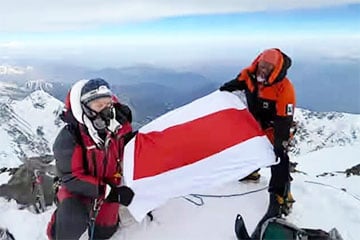
It is the ninth-highest peak in the world.
On July 1, 2026, Belarusian Lilia Yanovskaya reached the summit of Nanga Parbat, which stands at 8,126 meters, in Pakistan’s Gilgit-Baltistan region. It is the ninth-highest mountain in the world and the eleventh of fourteen eight-thousanders that the climber has conquered. At age 66, Yanovskaya became the oldest woman in history to reach this summit. Lilia spoke to "Belsat" Lilia spoke to "Belsat".
“Killer Mountain” — no exaggeration
For Yanovskaya, reaching the summit of Nanga Parbat was, above all, confirmation that, after her previous ten eight-thousanders, she was still capable of withstanding a very grueling ordeal. But at the summit, the climber says, she did not feel euphoria.
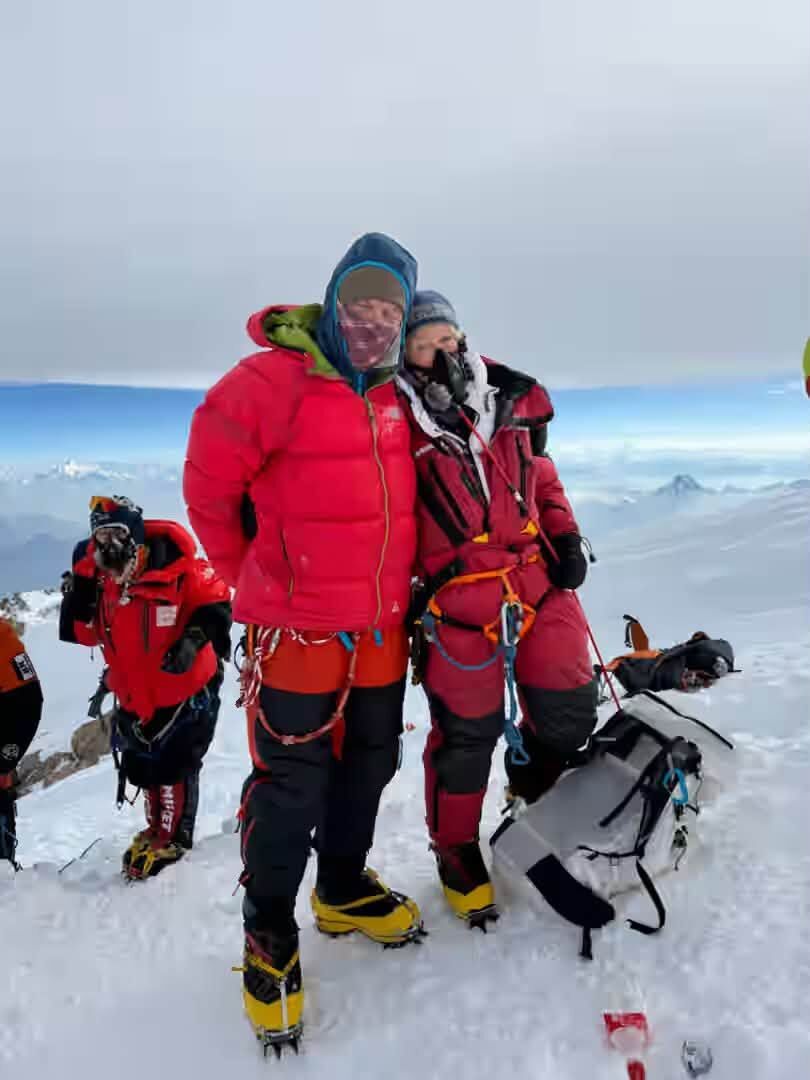
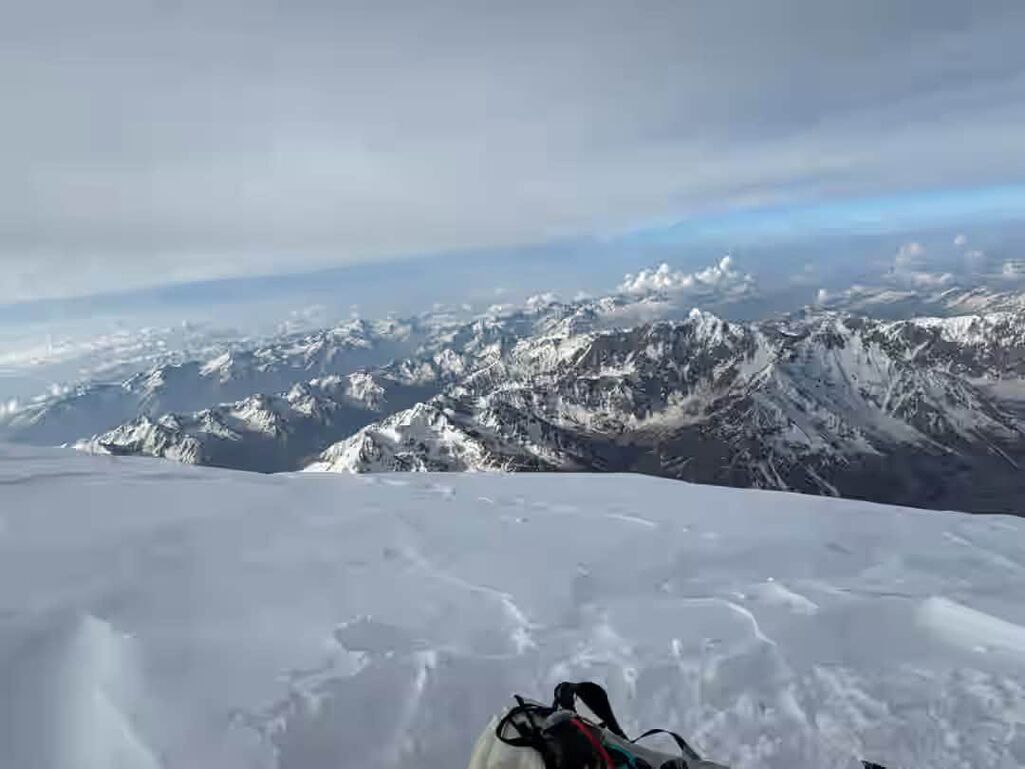
“For a long time, I couldn’t find the exact word to describe what I was feeling. Eventually, I settled on the English word ‘humbled’—a sense of humility in the face of the mountain’s grandeur. The conditions were quite harsh, and that’s precisely why the humility felt so strong: it was a quiet, inner feeling, completely unlike euphoria or triumph,” she says.
Nanga Parbat is considered one of the most dangerous mountains in the world, and, according to Yanovskaya, this reputation is entirely justified. The route features narrow couloirs where avalanches occur constantly. You have to pass through them as quickly as possible because it’s dangerous to stop there. After 11 or 12 in the morning, rockfalls begin: the sun heats the slope, and rocks and ice fall from above.
“People have fallen and died here precisely because they found themselves in these couloirs at the wrong time,” says the climber.
Nanga Parbat is also associated with one of the most tragic chapters in the history of mountaineering. On the night of June 22–23, 2013, armed militants disguised in the uniforms of the local Gilgit-Baltistan security forces surrounded the base camp on the Diamir side of the mountain. They tied up and shot eleven people—foreign climbers of various nationalities and a local guide. The Pakistani “Taliban” claimed responsibility for the attack, calling it revenge for U.S. drone strikes.
Yanovskaya recounts that thirteen years after the tragedy, her expedition set up camp virtually in the same spot.
“Thirteen years later, on my first day back at that very spot, we found a spent shell casing right next to the tent—a reminder of the tragedy that took place right there,” says Yanovskaya.
The story of the brothers Reinhold and Günter Messner is also connected to this mountain. In 1970, they became the first to traverse Nanga Parbat, but during the descent, Günter Messner was killed in an avalanche.
Poisoning could have halted the expedition
Yanovskaya describes the Kinshofer Wall on the approach to Camp 2 as the most technically challenging section of the route. It is a vertical cliff, covered with ice in places, on which dozens of old ropes from various expeditions remain.
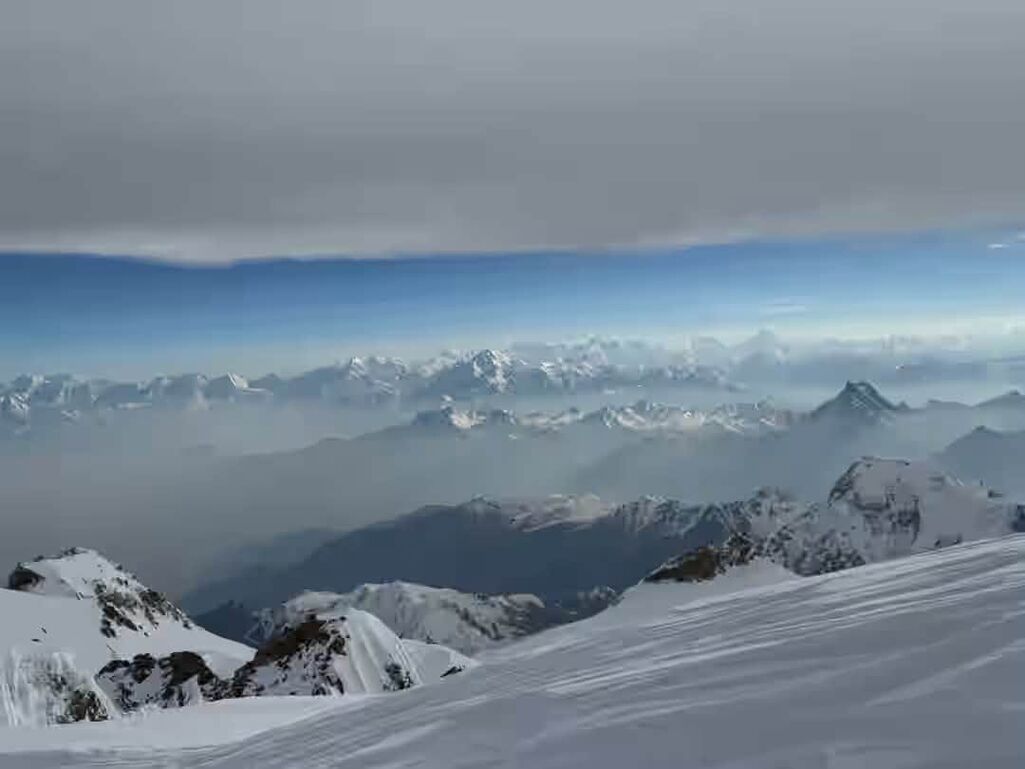
Climbers with no rock-climbing experience are forced to ascend primarily using a ascender—a mechanical device that attaches to the rope. This requires them to pull up their own body weight, gear, and backpack with their hands, which is very quickly exhausting. Those with rock-climbing experience use the rope more as a safety measure and can move much more easily.
The final push to the summit from the third camp took about eleven hours. They set out around eight in the evening and climbed all night without long breaks.
At one point, Yanovskaya seriously considered abandoning the climb.
During the acclimatization rotation, while she was at Base Camp 1 preparing to head to Base Camp 2, she began experiencing severe stomach pains and vomiting in the middle of the night.
The climber believes the most likely cause was contaminated water. In high-altitude camps, snow for drinking water is collected near the tents, where many people live at the same time. Later, in one of the bottles, she noticed something opaque at the bottom that looked like the remains of an animal or a bird.
“That day I felt so sick and exhausted that I wasn’t sure if I could continue. Even the thought of having to descend to base camp in that condition terrified me,” she says. Yanovskaya took the medication she had with her, rested, and drank clean water. By the very next day, she was feeling well enough to continue on.
In the mountains, she emphasizes, it’s practically impossible to count on proper medical care.
“Various problems, ranging from simple exhaustion to altitude sickness or food poisoning, can produce very similar symptoms, and you have to diagnose yourself based solely on your own experience,” she explains.
After the poisoning, the climber had hoped to get at least a few days to rest and recover. But the weather forecast didn’t allow for that.
A heavy snowfall was expected, one that could last a week or even ten days. That would effectively have meant the end of the season. So, after the acclimatization rotation, the group spent the night at base camp and, less than a day later, set off upward again—this time to make the final push.
“We weren’t acclimatized enough, and I was still recovering from food poisoning, but this was the only weather window we had. In situations like this, experience and sheer stubbornness come into play,” says Lilia.
Yanovskaya says that at some point, a person simply mustered all their willpower and kept going, because they realized there might not be another chance.
“It used to be ‘impossible,’ but now it’s ‘why not?’”
At age 66, Yanovskaya became the oldest woman to climb Nanga Parbat. But she herself doesn’t see this as her greatest achievement. What matters much more to her is the change in how those around her view her.
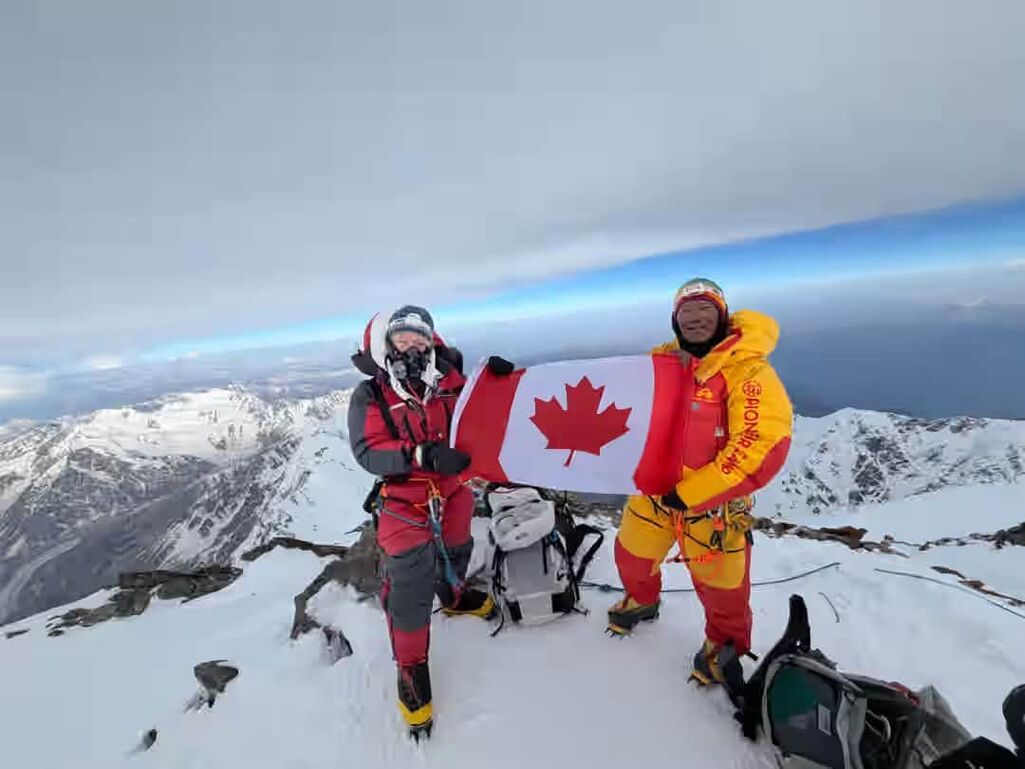
When Lilia first decided to try climbing Everest, acquaintances called her and her family, trying to talk her out of the expedition.
“They said I couldn’t do it because, first of all, I’m a woman, and second, I’m ‘too old.’ Women my age just don’t do things like that. ‘You can’t,’” she recalls.
Now, many of those people have become her close friends and support her new climbs.
“And it’s precisely this change in people that’s far more valuable to me than any records. It used to be ‘you can’t,’ but now it’s ‘why not?’” she says.
According to Yanovskaya, her physical fitness hasn’t changed as much with age as one might expect. But with every expedition, her mental resilience grows.
“With the experience of previous expeditions, I know exactly what to expect—from my own mind, from my body, and from the mountain itself,” says Lilia.
Nanga Parbat turned out to be more challenging for Yanovskaya than she had expected, even after K2 and Kanchenjunga. On Everest, Lhotse, and Makalu, she says, there are always many climbers and Sherpas working, so a significant portion of the routes are equipped with fixed ropes for the season. There are far fewer people on the Pakistani mountains.
During this expedition to Nanga Parbat, ropes were secured only on certain sections. In other places, she had to climb roped up with a Sherpa or completely on her own, without fixed ropes for protection.
The fear is particularly acute closer to the summit, where the slope becomes very steep, icy, and rocky.
“There’s no fixed rope, no safety belay. One mistake or a momentary lapse in concentration could cost you everything: if you slip and start falling, there’s simply nothing to stop the fall, and you’ll slide all the way down to the bottom,” Lilia explains.
“A Sherpa is a person too; he isn’t obligated to risk his life for you”
After climbing eleven eight-thousanders, Yanovskaya’s attitude toward responsibility in the mountains has also changed. She emphasizes: even if a Sherpa is nearby, a climber cannot completely rely on another person. A Sherpa is a member of the Sherpa people of the Himalayas; in mountaineering expeditions, this term is often used to refer to high-altitude guides and assistants who accompany climbers, helping with the route, equipment, oxygen, and safety.
“Of course, it’s good to have a reliable Sherpa by your side, but a Sherpa is a person too: he isn’t obligated to risk his own life for you and must, first and foremost, look out for his own safety,” she says.
Yanovskaya recalls that on Everest, her own Sherpa once left her without oxygen or assistance.
“Up there, everyone looks out for themselves first. Naturally, I never climbed with that Sherpa again,” she explains.
She also says that in commercial mountaineering, a “team” doesn’t always exist in the way outsiders often imagine it. Each climber moves at their own pace, and people mainly meet at base camps.
True trust, according to Yanovskaya, is built over years and through numerous expeditions. The world of high-altitude mountaineering is small, so from season to season, people meet each other on different mountains and gradually come to understand who they can rely on.
After reaching the summit, you still have to get back home
Reaching the summit does not mark the end of the expedition. After Nanga Parbat, Lilia still had several days ahead of her to make her way out of the mountains.
In Nepal, a helicopter can sometimes pick up a climber directly from base camp. But the Karakoram in Pakistan is a militarized border zone, so that option isn’t available.
The expedition members spent two days hiking down from base camp to an altitude of about 2,500 meters. Then came a long drive by jeep, an overnight stay, a bus ride, and several flights.
“I lose both weight and muscle mass during the expedition, and it takes several weeks to fully recover: rest, sleep, and good nutrition,” she says.
Yanovskaya has now climbed 11 of the world’s 14 eight-thousanders: Nanga Parbat, Kanchenjunga, Annapurna, Makalu, Lhotse, Dhaulagiri, Gasherbrum II, K2, Everest, Manaslu, and Cho Oyu.
Initially, she didn’t have a specific goal to climb all 14 eight-thousanders. She says this goal took shape gradually, with each new mountain.
Now there are three peaks left: Shishapangma in Tibet, Broad Peak, and Gasherbrum I in Pakistan.
Yanovskaya hopes to set out for Shishapangma in the fall, but everything depends on permission from the Chinese authorities. She plans to tackle Broad Peak and Gasherbrum I next summer.
She doesn’t yet know what will happen after she’s climbed all fourteen.
Among the options Yanovskaya jokingly mentions are climbing Everest again from the Chinese side, attempting a winter ascent, or even skiing down from a peak.
The main lesson she learned from Nanga Parbat is the need to be prepared for the unexpected. The weather, route conditions, how you feel, and your plans can change very quickly.
“As I get older, I realize more and more that you can never be too prepared. The better you’re prepared for the unexpected, the better your chances of making the right decision when it counts,” she concludes.

Bank's name: Bank Millennium S.A.
Address: ul. Stanislawa Zaryna, 2A, 02-593, Warszawa
IBAN: PL97116022020000000216711123
SWIFT: BIGBPLPW
Name of the account holder: Fundacja “KARTA ‘97”
Purpose/title of payment: Donation for statuary aims
You can contact us by the e-mail charter97@gmail.com