

"I Feel Like Someone Who Is Pushing A Child Out Of A Burning Train."
1- 17.08.2026, 9:02
- 1,896
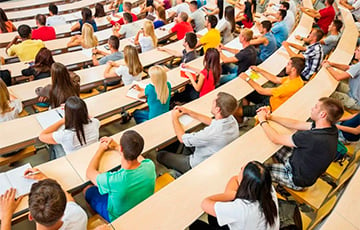
The mothers of graduates explained why their children are choosing foreign universities.
In recent years, graduates of Belarusian schools have increasingly been choosing to enroll in foreign universities. This brain drain has prompted the government to take action. Authorities are closely monitoring students enrolled in foreign language courses, and teachers may face problems. Information about diplomas submitted for apostille certification is immediately forwarded to schools, where officials then decide how to handle those who have applied.
According to available reports, parents are being summoned for interviews, their employers are being notified, and pressure is being applied from various angles. The schools themselves face reprimands for every graduate who leaves the country: this is seen as a failure in ideological education.
The situation was exacerbated by the 2023 cancellation of the military service deferment for students at foreign educational institutions, as well as this year’s designation of EGU as an “extremist organization.”
As a result, many teenagers who decide to study abroad are leaving with no way back.
What is it like—given Belarus’s current isolation—to send a child to another country, knowing full well that you won’t be able to see them for a very long time? The mothers of these young people shared their stories “Solidarnast” how they see their children off to study abroad. The names of the interviewees have been changed for security reasons.
“I keep wanting to ask: when did they manage to get so much in debt to their homeland?”
“First of all, you have to let your son strike out on his own anyway. He’ll have to leave home one way or another,” says Irina, explaining the reasons for her son’s departure. “We didn’t even consider other cities in Belarus from the start.”
It just so happened that among our circle of relatives, friends, and acquaintances, almost everyone’s children have left or are preparing to leave for Europe.
— Why not Russia? A lot of people are going there now.
“And then look for him somewhere near Donetsk or Malaya Tokmachka? Right now in Russia, they’re trying by hook or by crook to expel students so they can draft them into the war. I’ve heard so many stories like that already.”
And overall, what’s happening with Russian education looks even worse than what’s happening with ours. When people with academic degrees say that killing is good and that we’re right about everything, I consider that a profound devaluation of conscience. And I definitely don’t want teachers like that for my son.
Read also
— And how would you assess the current state of education in Belarus?
— Over the past five years, it seems to me that the best teachers—people who possess not only solid knowledge but also empathy—have, for the most part, been driven out of the country because they stood up for their students.
The same negative selection is taking place in education as it is throughout the country. And it’s already visible to the naked eye. Everyone knows what a wonderful teacher Natalia Dulina was. Her reputation as the best Italian studies scholar spread far beyond her university. We saw what ultimately happened to her.
And the best teachers have left our school as well. Sometimes, some would resign right in the middle of the school year. It became obvious that loyalty to the authorities, not professionalism, was the top priority.
And over the years, I’ve seen and heard so much of this at school—it’s both sad and funny.
On top of everything, the Belarusian education system has long been designed to provide only the bare minimum of knowledge. This unspoken rule is known to everyone: the school simply can’t properly prepare students for the Centralized Test or college admissions.
If you need a certain level of knowledge—beyond the basic minimum—you have to take care of it yourself; find a tutor.
Interestingly, the teachers understand this perfectly well. It gets to the point where some of them, when you ask them a lot of additional questions, will say it straight out: “If you want more, take paid lessons with me.”
As a result, every child planning to apply to college has 2–3 tutors. One session costs between $10 and $15. And you need to study for a year—or, for some, the last two years. Plus, you absolutely have to learn one or two languages.
In other words, you provide your child’s education yourself and at your own expense. There’s no such thing as free education in this country.
The only exception might be some backwater academy where you can get in just by finishing high school—the cutoff score for many programs there was 150 or even lower.
But if a child wants to attend a top university—for example, BSUIR or a medical school—then in this country we still have to talk about the outrageous mandatory work requirements. It’s hard to even comment on this phenomenon.
In short, in Belarus, gifted children simply haven’t been given a choice. That’s why we’ve been preparing for admission to European universities for several years now. I want my child not to look at every person in uniform with horror, but to live a normal, happy life.
— But you do realize that your son won’t be able to return for the next few years, and that you yourself will have a very hard time trying to get visas?
— I feel like someone pushing a child out of a burning train. I see how Russia is pulling us in deeper and deeper, and personally, that terrifies me.
At the same time, I realize that I’m sending my son not on a sightseeing trip, but on a very difficult journey. To survive on his own. To fight for his life in a place where he doesn’t have the advantages that others have simply by virtue of being born there. And from the very start, he’ll have to be a cut above the rest and work five times harder than they do just to achieve equal footing with them.
I realize that this is much harder than if he were studying here—and perhaps even living at home; there are plenty of universities in our regional center, too. But I’m genuinely afraid of what our homeland might do to our children on a whim.
For a long time now, just the sight of beautiful teenagers with sparkling eyes has made my heart ache. After all, they dream of a life of their own, but the state has its own plans for them. It’s currently deciding who they should be, where they should live, what they should do, how they should think, and what they should say.
They’re constantly reminded of their duty. I always want to ask: when did they manage to get so deeply in debt to their homeland?
— How did you say goodbye?
— Oh, it was hard. We have a lot of aunts, grandmothers, and grandfathers—even our cat is getting old. We took him in when my son was still little, and they grew up together. And it’s unlikely they’ll ever see each other again.
And our family understands that this might have been the last time we saw each other. But everyone held it together bravely; even I tried not to cry in front of my son until the very last moment. Everyone wished him a happy, bright future.
But it’s very hard, of course. You keep thinking, what if he gets sick? It’s not like Mom is nearby to come over and bring him some chicken soup. I’m not arguing—he’s a man, he needs to toughen up, and we have to let him go anyway. But in the moment, it’s difficult—for him, for his parents, and for the whole family.
— And financially, what kind of expenses are you expecting?
— We’re counting on free tuition and a part-time job. In Europe, many teenagers have part-time jobs. But we’ll help out, of course.
However, in our case, it’s tough—first and foremost, emotionally. We have many family traditions; we love getting together as a family.
But these are times when so many families have been torn apart—getting everyone together is now a real luxury. There are so many stories like this all around us!
If you talk to older people, probably half of them have children or grandchildren—or both—living abroad, with no way to return.
It’s already a pressing problem when a person dies and there’s no one to inherit their property. I sometimes think with a heavy heart that if those who have left aren’t allowed to return, in a few years Belarus will become a country of lonely, helpless elderly people with no one to care for them.
I won’t even mention who will be earning our pensions. Because, in reality, everyone who is capable and ambitious continues to leave. Those who remain are either people who don’t need anything, or those who have decided to pursue a career in the public sector and are willing to bend over backward. This is what’s called “negative selection.”
I really hope that when things change, many of those who have left will come back to help rebuild the country. Why do I believe this? Because I remember how, in 2020, people from various countries who were very well established there came back.
And so, if our country doesn’t go down the path of “North Koreanization,” if there’s some kind of upswing and it heads in a different direction, I believe many will respond.
“I left with just one suitcase and a jar of my favorite strawberry jam”
“A professor at the university advised my son to apply to study abroad when we went there for an open house,” Victoria recalls. — But that was before 2020. Back then, she told several students: “You’re smart kids—wouldn’t you like to try applying to a university in Slovakia?” “They have a good program in a specific field; they used to send students there on exchange programs. But then they stopped.”
“We found out that you could get into that university on a scholarship, and we thought, ‘Why not? We can always come back.’” But then 2020 came along...
In 2022, my son graduated from high school. By that time, he had already learned a little Slovak. We quickly had his diploma recognized, sent in all the documents, and he was admitted.
Based on his Unified State Exam scores, he qualified for state-funded spots at several of our universities, but he was already set on leaving. However, we still had to submit his application to one university so we could wait for his departure with peace of mind, since my son turned 18 that summer.
He didn’t start attending classes, and as soon as the university began calling, I quickly bought a bus ticket, and he left almost a month early. In Slovakia, classes at universities begin in October.
After he left, I went to the university to pick up his documents, and they warned me there: “You do realize that in a week, your son will be on the wanted list.”
By that time, he had already arrived safely, so I didn’t care either way.
— How did you cope with the fact that your son wouldn’t be able to return?
— I accepted the situation as inevitable. A few years ago, we might have hesitated, but after the draft requirements were tightened, we had, so to speak, no choice left.
The thing is, my son had always had a medical condition that exempted him from the draft. And suddenly, after a review of medical exemptions, he was deemed fit for military service. But his medical condition hadn’t gone anywhere.
In other words, in our case, sending him to the army would have ruined his health. That became the deciding factor.
He was leaving for nowhere. They assigned him a dorm later; we didn’t have anyone in any country abroad. The only thing we could do was get him expensive insurance, which wasn’t provided through his studies. It cost about 400 euros a year.
The day before he left, I taught him how to cook simple meals and make pancakes. He left with just one suitcase and a jar of his favorite strawberry jam.
I remember it was raining; relatives and friends came to see him off. There he was, getting on the bus—everyone was crying, but I wasn’t, even though I knew I wouldn’t see him again for a long time.
I felt a kind of calm inside; subconsciously, I must have sensed that there was no need to suffer. My only worry was that he would cross the border safely. And when he called me back, I breathed a sigh of relief.
Once he was in Slovakia, my son met other students who had left our various universities in 2022 and 2023—some in their second year, some in their third, and even some in their fourth.
Of course, my son and I are always in touch; it may have been hard for him, but he never complained to us about anything.
Some time later, I happened to have an interview with the KGB. These days in Belarus, no one is immune to that. The conversation also turned to my son.
They asked me why he was studying abroad: did he do so poorly in school that he couldn’t get into a university in Belarus? I said, “No, on the contrary, he did well in school, which is why he was accepted abroad and is studying there for free.”

Bank's name: Bank Millennium S.A.
Address: ul. Stanislawa Zaryna, 2A, 02-593, Warszawa
IBAN: PL97116022020000000216711123
SWIFT: BIGBPLPW
Name of the account holder: Fundacja “KARTA ‘97”
Purpose/title of payment: Donation for statuary aims
You can contact us by the e-mail charter97@gmail.com