
Alexei Getman: “Madyar” Warned Lukashenko—everything Will Be Decided Within A Week
16- 18.08.2026, 22:22
- 46,646
A Ukrainian officer explained how Kyiv would respond to an offensive from Belarus.
Major General Vadym Skibitsky, Deputy Chief of the Main Intelligence Directorate of the Ukrainian Ministry of Defense, stated that following the new mobilization, Russia will be able to form a strike force and attempt to launch a new offensive against the Kyiv and Chernihiv regions as early as this winter, including using Belarusian territory.
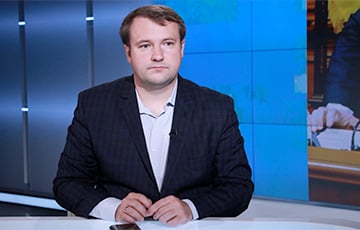
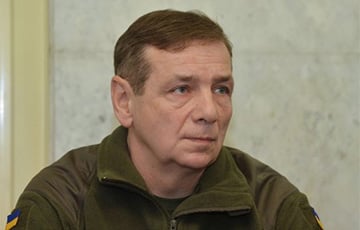
How realistic is such a scenario, and is a renewed invasion by Russian troops into northern Ukraine—including from Belarusian territory—possible? The website Charter97.org discussed this with military expert and reserve major of the Ukrainian National Guard Oleksiy Getman:
— We’ve known for at least half a year that Russia plans to increase the number of strike forces in the northern direction. There are five scenarios that Russia intends to use for an attack from the north of our country. Four scenarios involve an attack from the Bryansk Oblast, and one scenario involves an attack from Belarus.
Since the beginning of the year, the Russians have planned to form nine new divisions. They have managed to form only five. At the same time, they are completing the formation of seven new battalions. Most likely, these troops will be deployed to different sections of the front. It is not certain that these specific units will end up in the north. This means that other units may be redeployed there. Most likely, the buildup will take place in the Bryansk region. They need to muster at least 50,000–70,000 troops. Only then will this force be capable of making any kind of impact.
We also have information that they intend to redeploy airborne assault troops—more precisely, the Russian Federation’s airborne forces—and marines from the Zaporizhzhia sector to that area. Currently, these Russian units are stationed there but are taking virtually no active part in combat operations.
Therefore, we are familiar with these scenarios. So far, we are only talking about preparations for a possible escalation in this direction.
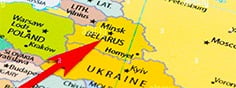
As for Belarus, we are tired of warning Lukashenko about how this could end for him. There may now be talks between President Zelenskyy and the self-proclaimed leader Lukashenko to open another track in our negotiations with the Russian Federation. We are the most interested in seeing peace established, or at least a temporary cessation of hostilities along the front line. Therefore, of the five scenarios being considered by the Russians, only one—that is, approximately 20%—is directly related to Belarus and possible offensive operations from its territory.
— Lukashenko’s regime is currently is deploying a new airborne assault brigade near Gomel and building infrastructure for it. Could this serve as a cover for the covert deployment of Russian troops and preparations for a new invasion of Ukraine?
— The infrastructure that’s been prepared—yes, it could be used. But it’s practically impossible to deploy troops covertly in modern warfare. Satellites see everything, and long-range radar, human intelligence, and military reconnaissance are all operational.
How can several tens of thousands of military personnel be deployed unnoticed? A sabotage and reconnaissance group might still manage to slip through secretly. That’s what we call infiltration. Sure, they might have slipped through between positions at night, quietly—especially while, as they say, the “green zone” is in place. But you can’t hide tens of thousands of people that way. However, it is entirely possible to prepare the infrastructure for them in advance. What might that entail in this case? Barracks to house personnel, kitchens, facilities and areas for equipment, and warehouses for weapons.
The new brigade itself consists of, say, a thousand or two thousand people. For a serious offensive operation, that’s nothing.
— How might the Ukrainian Armed Forces respond to the deployment of a new Belarusian airborne assault brigade near Gomel and a possible incursion by Russian troops from Belarusian territory?
— From my point of view, as well as from the perspective of other military personnel or those who served until recently, the likelihood of an invasion from Belarusian territory—and the Belarusian army’s participation in it—is still quite low, given the logic behind Lukashenko’s behavior.
He will continue to claim that Belarus and Russia are the closest of friends and allies. But in reality, Lukashenko will do his utmost to avoid sending Belarusian troops into Ukrainian territory. Because if he does, UN General Assembly Resolution No. 3314 (XXIX) will immediately come into effect, which clearly defines what constitutes aggression. The UN Charter and the norms of international law would come into effect, including a country’s right to self-defense in the event of aggression. That is, the right to strike the aggressor’s territory, as well as its military and industrial targets. Of course, this does not apply to civilian targets. A deliberate attack on civilian targets is a war crime. We do not do that.
The commander of the Ukrainian Armed Forces’ Unmanned Systems Forces Robert “Madyar” Brovdi officially mentioned 500 targets on Belarusian territory. Lukashenko heard this. We can destroy these 500 targets in a week at most. It is unlikely that Belarus has air defense systems capable of effectively countering our drones and missiles. Especially since the distance from our borders to any target in Belarus is much shorter than to targets within the Russian Federation.
Therefore, the likelihood of such an invasion exists, but I assess it as fairly low. However, the likelihood of an attack from the Bryansk region is significantly higher. Most likely, this would be more of a provocative action—an attempt to force our Armed Forces to redeploy some of their troops there and thus stretch our defensive line. We have already calculated that we would have to send an additional corps—or at least seven or eight brigades—to that sector.
For now, we’re talking about what might happen in three or four months. But making long-term predictions during a war like this is very difficult. The situation is changing rapidly, and so is the very logic of the war. A lot of new equipment and weapons are emerging that didn’t play such an important role just a year ago.
Let’s recall how important artillery was just two years ago. We used to count the number of artillery rounds fired by our side and by the Russians, and compare those figures. Now, there’s much less talk of artillery. Of course, it’s still involved in combat operations, but the emphasis on it has shifted. The same can be said about tanks. We no longer discuss as often which side has more of them or whose vehicles are better. Now the main focus has shifted to unmanned and robotic systems, primarily drones.

Bank's name: Bank Millennium S.A.
Address: ul. Stanislawa Zaryna, 2A, 02-593, Warszawa
IBAN: PL97116022020000000216711123
SWIFT: BIGBPLPW
Name of the account holder: Fundacja “KARTA ‘97”
Purpose/title of payment: Donation for statuary aims
You can contact us by the e-mail charter97@gmail.com