

Russians' Chinese Cars Have Started Breaking Down En Masse
11- 8.08.2026, 17:18
- 22,528
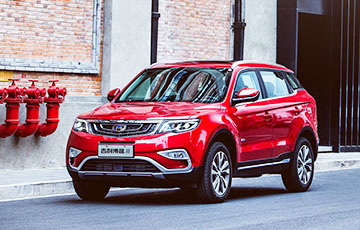
After filling up with low-quality gasoline due to a fuel shortage.
Owners of Chinese cars, such as Haval, Chery, Geely, Changan, Exeed, Omoda, and Jetour have begun taking their cars to service centers en masse due to engine and fuel system failures caused by the use of high-quality Euro 5-standard gasoline, according to Mash.
According to the channel, the reason is that these “Chinese” vehicles are not designed to run on “Euro-2” gasoline, which Russian authorities have authorized for production amid a fuel crisis triggered by drone strikes on Russian refineries. The sulfur content in “Euro-2” gasoline—which was previously banned in Russia—can be up to 50 times higher than that of “Euro-5.”
Russians who fill their tanks with “Euro-2” fuel have encountered widespread failure of the fuel injectors in the modern engines of their Chinese cars, as well as breakdowns of high-pressure fuel pumps and spark plugs. This causes the sensors to display engine error codes, the car loses power, starting becomes difficult, and fuel consumption increases.
However, due to a lack of knowledge, people continue to “feed” their cars low-quality fuel, and as a result, they “damage the car even more.” According to Mash, the number of visits to auto repair shops has recently jumped from 1–2 per week to 7–10. Repairs cost about 15,000 rubles. In some cases, this involves the complete replacement of expensive components.
On August 5, the Ministry of Energy announced that the Russian government had authorized the production and import of “Euro-2” gasoline—which was banned in 2013 and contains up to 500 mg of sulfur per kilogram of fuel. The authorization will remain in effect until July 1, 2027, and is intended “to ensure a stable supply of automotive fuel to the domestic market and prevent a potential shortage.”
The content of aromatic hydrocarbons, including benzene, is not regulated in this gasoline, and furthermore, the use of monomethylaniline (MMA)—an octane-boosting additive banned in most countries worldwide due to its high toxicity and cancer risks—is permitted. According to experts, the high sulfur content in “Euro-2” gasoline damages the cylinder-piston assembly and fuel system, engine oil, spark plugs, valves, and fuel injectors, as well as the catalytic converter.

Bank's name: Bank Millennium S.A.
Address: ul. Stanislawa Zaryna, 2A, 02-593, Warszawa
IBAN: PL97116022020000000216711123
SWIFT: BIGBPLPW
Name of the account holder: Fundacja “KARTA ‘97”
Purpose/title of payment: Donation for statuary aims
You can contact us by the e-mail charter97@gmail.com