


One Of The Strangest Dinosaurs On Earth Has Been Discovered
- 28.09.2026, 11:19
- 1,036
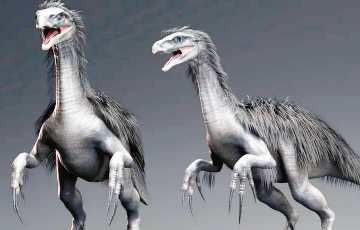
Photo: Popular Science
Scientists were surprised by its size, its meter-long claws, and its unusual jaws.
Therizinosaurs (Therizinosauria) are a rare group of theropods that includes both predatory dinosaurs, such as Tyrannosaurus, and some herbivores. Therizinosaurs had the longest claws in history on their forelimbs—reaching up to 1 meter in length. Paleontologists have discovered a new species of feathered therizinosaur in China, which is the largest and strangest of all known species. The dinosaur, named Kayrasaurus changliensis, was likely not a predator but a herbivore. The study was published in the *Journal of Systematic Paleontology*, according to *Popular Science*.
Therizinosaurs all looked alike. They had long necks and small heads, walked on two legs, and had huge claws on their forelimbs. Their bodies were covered in feathers. Therizinosaurs lived during the Late Cretaceous period, approximately 100–65 million years ago, and were among the last dinosaurs on Earth.
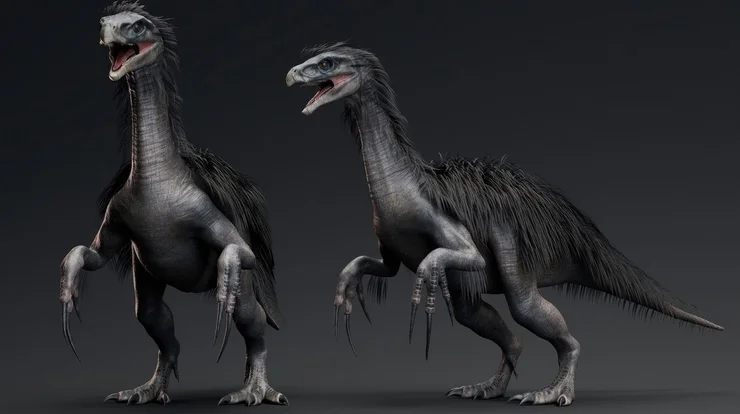
According to scientists, Kayrasaurus changliensis is the largest known therizinosaur, as revealed by a study of the ancient animal’s nearly complete skeleton.
The dinosaur weighed between 113 and 270 kilograms, and its body length was about 3.6 meters. This specimen was young, which means, according to scientists, that an adult Kayrasaurus changliensis could have been even larger in mass and size. Kayrasaurus changliensis is 1.6 times larger than the second-largest therizinosaur found in China—Beipiaosaurus inexpectus.
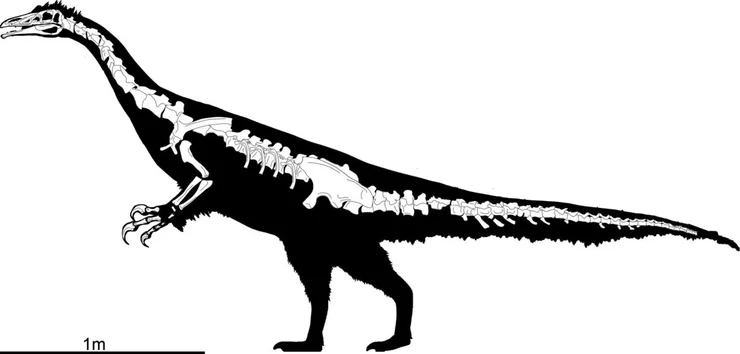
In addition to its size, this species differed from other therizinosaurs in its jaws and teeth. First, the lower jaw protruded slightly forward. Second, the lower jaw had 45 teeth, while the upper jaw had 32. No other therizinosaur had more than 40 teeth on either jaw. Large openings were also found on the jaws of Kayrasaurus changliensis, but paleontologists do not yet know what function they served.
Scientists believe that this new species of dinosaur was not a predator but was likely herbivorous. Its jaws and teeth resemble those of herbivorous dinosaurs. It is possible that the long claws were used to pull tree branches toward itself.

Bank's name: Bank Millennium S.A.
Address: ul. Stanislawa Zaryna, 2A, 02-593, Warszawa
IBAN: PL97116022020000000216711123
SWIFT: BIGBPLPW
Name of the account holder: Fundacja “KARTA ‘97”
Purpose/title of payment: Donation for statuary aims
You can contact us by the e-mail charter97@gmail.com