
Dzmitry Bandarenka: 97% Belarusians Still Oppose Lukashenka
10- 12.11.2022, 11:07
- 12,028
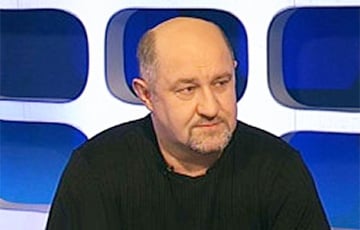
With such allies, we will surely win.
The Charter'97 civil initiative marked the 25th anniversary of its founding on November 10. One of its founders, coordinator of the European Belarus civil campaign Dzmitry Bandarenka spoke about the history of the initiative in an interview with Belsat.
— Continuing the theme of resistance to Lukashenka's dictatorship for decades. Charter'97 was created 25 years ago. Today, Charter'97 is primarily known as a website, but historically, the Charter, which was declared on November 10, 1997, was a programme declaration that stated human rights violations in Belarus, the destruction of national culture, and also united citizens in the fight against the regime of the usurper Lukashenka. Our guest today is one of the signatories of the Charter'97, coordinator of the European Belarus civil campaign Dzmitry Bandarenka. Long Live Belarus!
— Long live forever!
— So, it’s been 25 years, and I would like to remind or tell the new generations who came to the fight what happened then. Why was such a platform, such an association of people as Charter’97, created?
— In 1996, a coup d'état took place in Belarus. In fact, the Supreme Council was dispersed. Lukashenka has been destroying independent media since the first days of coming to power. And in 1995-1996 I worked as the commercial director of Radio 101.2. It was the last independent radio station to be shut down. Before that, regional studios were closed, independent television programs, Channel 8, and so on. It was necessary to protect the journalists, and Pavel Sheremet had already been arrested, and the journalists then rallied to release him. The last impetus was taking Aleh Biabenin, a journalist from the Imya newspaper, to the woods, where certain comrades explained to him that he could remain in the woods forever if he and his colleagues did not behave more quietly.
So we had to defend ourselves. The initiators were journalists, people of different professions, different views, different party affiliations. And so the Charter’97 was created.
But I want to say that among the creators were such people as Andrei Sannikov, Pavel Zhuk, even Pavel Sheremet was at the first press conference when the Charter was proclaimed; Uladzimir Rouda, who unfortunately is no longer alive; Viktar Ivashkevich, one of leaders of the Belarusian Popular Front, Piotr Martsau, Uladzimir Matskevich, who is in prison today. Such different people took part in the creation of the Charter’97 initiative, and the Charter'97 brand.
— By the way, then there were not only politicians, journalists, but representatives of the Belarusian elite in general. Ryhor Baradulin put his signature under the Charter'97, Nil Hilevich, Henadz Karpenka, God bless his memory, who was most likely killed in 1999. In general, besides the elite of the nation, which signed the Charter'97, other citizens began to sign it. In general, it was possible to collect 100,000 signatures then. Now there is a myth that Belarusians, sat still until 2020 and did not fight, but, look, citizens put 100,000 signatures regardless of such fierce intimidation. How did it work?
— Because the journalists joined. Almost all independent newspapers had the opportunity to sign. There was a place in the newspaper where you could put your signature and send it to the editor. It was a very broad initiative, because before that there were only opposition parties. There were elections in Belarus, there were elections in 1990, there were elections in 1994 — the last free elections. But people understood that they couldn't achieve anything on their own.
And first of all, it was necessary to defend themselves, because there was a collision with journalists, they put pressure on entrepreneurs, on party members, and a system of collective protection appeared. It consisted in the fact that every person who fell under repression or went to prison had the right to a lawyer, had the right to civil assistance, and the right to solidarity. Solidarity actions were held in Belarus and abroad, a political prisoner had the right to have his case known all over the world.
The Charter’97 website also appeared, it was something new. Earlier, people had to wait for information on Radio Svaboda, or on some other radio station, or for the TV pros to film it, edit it, and finally it would come to the people. And then came the Internet. Whenever there was a violation of human rights in the neighbouring street — this was immediately on the Charter’97 website. And this information reached Washington, Brussels, and human rights organizations.
— Charter’97 is not only history, it is a website that exists today. This is not something else, not just a continuation of the tradition, but practically the same initiative that continues on.
— Because in human rights activities such standards have already been developed, according to which everyone acted automatically. And today, other organizations, legally or illegally, continue to use what we laid down a very long time ago. And we learned from the Poles, from the Polish Solidarity, we learned from the Czechs and Slovaks, who went through the time of repression. We still understood that it was necessary to take actions: if we sit in offices, in the rooms, no one will know about us.
And so we, the young people who came to Charter'97, focused on actions. There were many initiatives: freedom marches, three or four of them, hundreds of human rights pickets, solidarity actions abroad. This was carried out by the Charter, and there was also such an element that people were in the parties, in different organizations, in the Zubr, in the Young Front, they knew that they had signed the Charter, and could ask for help. It was a strong brand.
Plus there was this moment: look, how many years have passed? It may seem that 1997 is irrelevant, it’s the XXI century. And then comes 2020, the revolution, and what do we see? 97% against Lukashenka. And Charter today is the website Charter’97%. These magic figures, I think, have gone into Lukashenka's head, and frightened him very much.
— So you mentioned the Czechs and Slovaks. There was such a Charter’77, and this became the inspiration for the Charter’97. This is when the Czech and Slovak dissidents also signed their policy document. And then there was a window of opportunity for the Czechs and Slovaks. In 1989 their country became free. Vaclav Havel became president. Now, look, many Belarusians connect their hopes with what is happening in Ukraine, with the liberation from the Russian occupiers. Experts say that, perhaps, Kherson will be liberated before the end of the year. Do you foresee a window of opportunity for Belarus? So that we again not only fight the regime, but, in the end, the Belarusians become masters at their home.
— I think that this number is magical — 97%, it was not just like that. The vast majority of Belarusians want change. And although the pro-Kremlin collaborators are now holding on with the help of weapons and clubs, this is temporary. Because we, free Belarusians, want independence and have allies all over the world. There is a final battle between good and evil on our continent.
And we are together with the entire democratic world, together with fighting and warring Ukraine. Why did Lukashenka hold on? Because there was Russia. And now there will be a defeat of this variant of Russian imperialism, unfinished by communism, and this will become a guarantor for the normal development of our country as well.
— Isn't there a danger that the situation in Russia will somehow be conserved, and Belarus can become a bargaining chip? Because, look, Belarusians are being destroyed by this repressive regime. Ukrainians have their own state and Ukrainians are fighting. And the world is always on the side of those who fight. And sometimes, strange as it may sound, or maybe not ethical, they forget about the victims. There is sometimes a feeling that the Belarusians have been forgotten.
— If we act as victims, then it will be so. But, I think we have our heroes. Such as Statkevich, Seviarynets, Afnahel, Matskevich. And we have volunteer heroes in Ukraine. These are, first of all, the fighters of the Kalinouski regiment. They are an example for us. And we understand that according to the military oath we have the right to fight. And we are obliged to fight for the independence and freedom of their country. And that's it, what kind of victims are we talking about?
We must win together with our allies, who are strong, who have strong weapons, strong armies. And we will definitely win. The regime does not want to change itself, Lukashenka does not want to give in — there will be an option in which they simply will not have a chance to stay in the state. I believe it’s 100% in Belarus, and in Russia it will happen a little later.