

Belarusian Front
- Oleksandr Levchenko
- 16.08.2023, 9:06
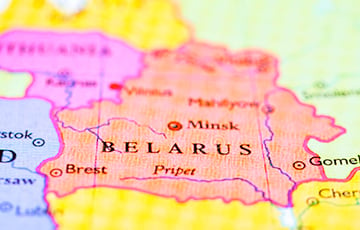
Moscow is pushing Belarus to war not only with Ukraine, but also with Western countries.
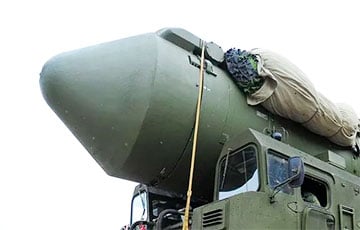
Realising the weakness of his own military power, Lukashenka has agreed with Moscow to deploy tactical nuclear weapons on his country's territory. This manoeuvre is in Moscow's interest in confronting the collective West, but has damaged relations with its very important and powerful ally, China.
Although China is not against a U.S.-Russian escalation or a Russia-NATO clash, but expanding the geography of nuclear weapons in the world through Belarus contradicts the existing international treaties on the principles of nuclear non-proliferation, which Beijing actively supports. However, the Kremlin is convinced that this misunderstanding with China will not interfere with the existing bilateral co-operation and partnership. Therefore, Moscow is pushing Belarus towards war not only with Ukraine, but also with Western countries. The purpose of Moscow's destructive actions in Belarus is to distract NATO countries from the war in Ukraine.
Lukashenka has turned Belarus into a springboard for possible actions of the armed forces of the Russian Federation. Lukashenka himself and his regime do not represent the people of Belarus. The Belarusian dictator was able to hold on to power with Putin's support, drowning the country in repression. At the same time, Moscow's plan is to divert the forces of the West and Ukraine, destabilise Poland before the elections, and carry out real threats against Lithuania and Latvia. Polish Defence Minister Mariusz Blaszczak said that the country's border with Belarus is at risk. He added that Belarus, backed by Russia, is encouraging illegal crossings to destabilise Poland. As a result, Warsaw has redeployed 10 thousand of its troops with heavy equipment to the Belarusian border. Four thousand were stationed along the border together with border guards, and six thousand formed the second line as a reserve force in case of attempts to cross the Polish-Belarusian border militarily by large groups of migrants from Asia and Africa deliberately brought from Moscow, or armed provocations by the Wagner troops and the Belarusian military. The Presidents of Poland and Lithuania held substantive consultations on joint response in case of armed provocations from the Belarusian territory.
After the failed attempt of mutiny in the Russian Federation, some of the mercenaries of PMC Wagner ended up in Belarus by agreement with the Belarusian dictator. Wagner can be involved in provoking a migration crisis on the borders of NATO member-countries, in particular Poland, Latvia and Lithuania. The Ministry of Internal Affairs of Belarus grants Belarusian passports to Wagner mercenaries so that they can legally pass through border checkpoints. It is very important for Russia to send human resources and weapons to the border with Poland, Lithuania and Latvia as quickly as possible, so that NATO would send a significant number of troops to the eastern border and, consequently, would be less able to provide assistance in support of Ukraine. The appearance of the Wagner military in Belarus is not a consequence of Prigozhin's "rebellion" or Lukashenka's decision and whim. It is an integral part of the Kremlin's strategic and tactical plan. Therefore, NATO countries should not underestimate the threat from Russian mercenaries, but should completely isolate and close the borders with Belarus and Russia, which do not stop continuing provocations against the Alliance states. Moscow obviously has a goal to fuel the political crisis in NATO countries neighbouring Belarus by destabilising and intimidating the public in order to stop support for Ukraine.
In the context of the so-called inter-clan confrontation between Russia's military and political business groups, the Putin regime is trying to deprive Yevgeny Prigozhin of his spheres of influence and reduce the level of threats of probable military insurgencies in the future. To this end, the process of removing heavy weapons from the ranks of the militants has been completed, and the work to force them to serve in regular units of the Ministry of Defence and the National Guard continues.
The most combat-ready, but disloyal to Putin mercenary units have been withdrawn from the combat structure of the United Group of Forces of the Russian Armed Forces and moved to the territory of Belarus. PMC mercenaries are already involved in combat training activities with servicemen of the Armed Forces of Belarus. Now there are up to 6.5 thousand mercenaries on the territory of the Republic of Belarus. It is likely that PMC fighters, with the assistance of the State Security Committee of Belarus and the FSB of the Russian Federation, will search for poorly controlled areas of the border, disable technical means of surveillance. If this scenario is realised, the enemy may direct its activities to complicate the supply of military logistical assistance to Ukraine from partner countries. Thus, the response of NATO countries to increased Russian provocations should be to provide Ukraine with long-range weapons and modern fighter jets. After all, Russia understands only the "language of force".
Oleksandr Levchenko, Obozrevatel