

Andrew Voynich: The Analysis Of The Nation's Leaders Proved Accurate
7- 2.10.2025, 23:31
- 20,992
The 2020 protests have been long and thoroughly prepared.
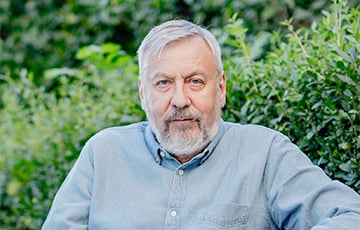
Coordinator of the civil campaign "European Belarus" Andrei Voynich spent almost five years in Lukashenko's prisons.
On September 25, 2020, he was detained along with other activists of "European Belarus" by law enforcers. Voynich was sentenced for "preparation for mass riots" to seven years in a penal colony.
On September 11, 2025, he was released and forcibly deported to Lithuania along with other former prisoners of conscience.
In an interview with Charter97.org Andrei Voynich told what was not enough in 2020 to win, what helped to keep the strength in prison and who he considers the real leaders of the Belarusian opposition:
- From the events of 2020, especially memorable was the general emotional involvement, the moral rise of people and the feeling of unity. There were many moments that are deeply etched in my memory. Even in the smallest things, there was an atmosphere that created a special mood.
Particularly striking were the episodes when people sang in the streets and in the crosswalks. I even videotaped some of the performers. One girl sang so sincerely and sincerely that her singing touched me to the core. It was amazing: you listen to it and get goosebumps.
A small column of people with white-red-white flags was also memorable. A boy of about ten years old was walking in front with a flag in his hands, and everyone around him was smiling. His joy and pride became for me a symbol of that time. Such moments are the most vivid memories.
- You saw the protests from the inside, felt the atmosphere of the street. Why do you think the regime could not be crushed?
- The protests were prepared for a long time and thoroughly. There was a clear strategy and understanding of the situation: what should be done and how.
In fact, there were two main directions. The first was street actions. They were successful. The second was the refusal of the majority of citizens to cooperate with the regime. Here the result was ambiguous. For example, the strikes did not succeed to the fullest extent. People were also urged not to pay taxes, utility bills, not to make large purchases in order to minimize the financing of the regime and its repressive apparatus. But this was not fully achieved.
We were able to influence street protests - and we succeeded in that. But it was impossible to influence economic resistance to that extent. The indecisiveness of individuals affected the result. Of course, people had to get on with their lives and provide for their families - and that played a role.
Specific examples can be given. Everyone remembers how it was planned to seize the Glavpochtamt in Minsk, but the indecision of some individuals led to the fact that it did not happen. Or going out on the roads: I remember how after Stela people started to occupy the roadway, but some people discouraged it, claiming that it was dangerous and wrong. They didn't understand the basic intent, and this seriously affected the course of events.
This was nevertheless a major battle - the first, but not the last. New challenges await us, perhaps one or two, but let us hope that they will be few.
History gives us many examples of the struggle for freedom. Poland was under the pressure of the Russian Empire and the Communist regime for centuries. In Latin America, Chile, Argentina, Uruguay. South Africa and India, where Gandhi was active. And everywhere freedom was eventually won. Oppressors always fall, sooner or later.
- After the protests, repression began, you were sentenced to seven years in prison. What was the most difficult experience in prison? What helped you to stay in prison?
- The punishment itself is not the term or the prison walls. The real punishment is the people in confinement. To endure, everyone looks for their own ways to preserve themselves. For me it was, again, the people around me who helped. There weren't many of those, but they played a huge role.
And then there was the support from the outside. Letters that reached, rumors passed on through random prisoners, greetings from acquaintances and strangers. Even such small signs of support were empowering. The most important thing is to know that you are not alone. That was the main factor that kept me afloat.
- Your "liberation" turned out to be forced deportation. How did you feel when instead of freedom you were taken out of your native country?
- To be honest, I was dumbfounded by what was happening. And the term "deportation" is not applicable here. I was not deported from a foreign country, I was expelled from my own. This is not deportation, but exile. If we talk about "exchange", the very idea of negotiations where people are bargained for is absolutely unacceptable. Negotiations should be conducted exclusively between the regime and the Belarusian people.
Observers may take part, but not outside players. The conflict is between the regime and the society. The Belarusians should determine for themselves what they want. Lukashenko's regime has forgotten that he is only a delegate of the people. It should be reminded of that. Any negotiations should be transparent, and every Belarusian has the right to know what is being discussed, what conditions are put forward and by whom.
- Five years have passed since 2020. What has changed in the Belarusian society despite repressions and war?
- Belarusian society has become more consolidated. And not only inside the country, but also outside it. People who left even before 2020 started to actively unite after the protests. They remembered that they were Belarusians. Those who stayed in Belarus felt it even more strongly. This is the main change.
- How do you see the future of Belarus? What would you like to say to the Belarusians who continue to live under the dictatorship?
- The most important thing is that the Belarusians have new leaders and heroes. Nikola Statkevich is both a leader and a hero. His contribution cannot be described in words. What he did, having decided to stay in Belarus, will go down in history. But pseudo-leaders, anti-heroes, and opportunists appeared in parallel. It is inevitable.
2020 showed who is who. Who is a real force, and who is only an appearance. The protests were prepared long in advance and were the result of serious analysis. Nikolai Statkevich and coordinator of "European Belarus" Evgeny Afnagel, Pavel Seviarynets warned in advance: if the protests started, a huge number of people would come out. And so it happened.
The analytics of the nation's leaders turned out to be accurate. Therefore, today it is necessary to listen to those who were right then. Draw conclusions from the past and move into the future. There are examples, there are precedents. It is necessary to rely on what works and has proven its effectiveness.

Bank's name: Bank Millennium S.A.
Address: ul. Stanislawa Zaryna, 2A, 02-593, Warszawa
IBAN: PL97116022020000000216711123
SWIFT: BIGBPLPW
Name of the account holder: Fundacja “KARTA ‘97”
Purpose/title of payment: Donation for statuary aims
You can contact us by the e-mail charter97@gmail.com