

Israel Explains The Appointment Of A Native Of Belarus As Head Of "Mossad"
- 11.12.2025, 10:35
- 10,758
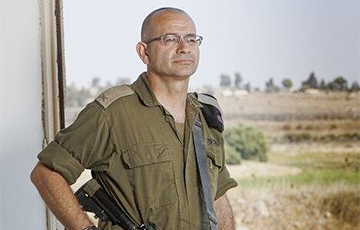
Roman Hoffman has a very good reputation.
Israeli Prime Minister Binyamin Netanyahu appointed as the new director of the "Mossad" his military secretary, a native of Belarus Roman Hoffman, because he "trusts him" and also wants to analyze the miscalculations of the intelligence services in the terrorist attack on October 7, 2023. This opinion was expressed in a conversation with RTVI by Dani Orbach, associate professor at the Hebrew University of Jerusalem and military historian, when asked why Netanyahu chose Hoffman.
The Israel Defense Forces major general will become the 13th head of one of the world's most prominent intelligence agencies. Roman Hoffman will replace David Barnea, whose five-year term expires in June 2026. Hoffman has served as Netanyahu's military secretary from May 2024 until today.
The Israeli media has called him "the most influential adviser to the prime minister during the war" against Hamas. Although Hoffman never worked for Mossad, he has, according to Netanyahu himself, worked closely with the intelligence service as an aide to the prime minister.
Netanyahu appointed Hoffman to head Mossad because he wants him to promote his policies within the intelligence services, according to Dani Orbach.
"Netanyahu has long felt that the system is rigged against him. He trusts Hoffman, his military secretary," Orbach said.
Roman Hoffman was born in Mozyr. In 1990, at the age of 14, he repatriated with his family to Israel. There his military career began in the armored forces.
He took part in battles with Hamas on October 7, 2023, at which time he was seriously wounded. In April 2024, Hoffman was appointed to the post of military secretary to the Israeli Prime Minister. In May of the same year, he was promoted to the rank of Major General in the IDF.
He said that Roman Hoffman has a very good reputation in Israeli military circles. Dani Orbach compared him to "one of the best leaders of the Mossad, Meir Dagan.
"Hoffman is known as a very assertive and courageous man, who is very different from the bureaucrat generals who, at least in Netanyahu's opinion, abound in the Israeli military," Dani Orbach added.
There is a widespread opinion in Israel that the intelligence services made a serious miscalculation on the day of the October 7, 2023 terrorist attacks, the expert recalled.
"And since they failed, you need someone from the outside to ask the right questions," the RTVI interlocutor
Orbach cited the appointment of Israeli Navy Commander-in-Chief Ami Ayalon as the head of Israel's Shin Bet counterintelligence service. The latter assumed the post in 1996 after the high-profile assassination of Prime Minister Yitzhak Rabin.
"Ayalon called all the department heads to a meeting and told them, 'I don't know anything about intelligence. I'm an admiral in the navy. I want you to teach me. So now I want you to explain to me what you do. In doing so, I want to hear from you the reason for every action you take. The only thing I don't want to hear is: "We will continue to do this because this is the way we have always done it," Orbach said.
In the expert's opinion, this is exactly the approach Netanyahu wants to take to the Mossad: with the help of a man "from the outside" to revise some of the fundamentals of the intelligence service.
At the same time, Orbach believes it is not correct to draw direct analogies between Hoffman's appointment to the Mossad and Pete Hegseth - as another "non-system" figure - to the Pentagon.
"Hegseth was more of a media personality, while Hoffman was and remains a military general. So it's not just someone with no experience," Orbach concluded.
Roman Hoffman will be the first Mossad director in nearly 15 years to be born outside of Israel. Also, unlike his last three predecessors, Goman will become the Russian-speaking head of Israeli intelligence.
There have been similar precedents in the Mossad's nearly 80-year history. The intelligence service's second director, Isser Harel (Israel Halperin), was a native of Vitebsk, part of the Russian Empire in 1912. His successor Meir Amit, though born in Palestine in 1921, knew a little Russian - his parents had come to the Holy Land from Kharkov via Theodosia, and he was a cousin of the Soviet poet Boris Slutsky.

Bank's name: Bank Millennium S.A.
Address: ul. Stanislawa Zaryna, 2A, 02-593, Warszawa
IBAN: PL97116022020000000216711123
SWIFT: BIGBPLPW
Name of the account holder: Fundacja “KARTA ‘97”
Purpose/title of payment: Donation for statuary aims
You can contact us by the e-mail charter97@gmail.com