
"The Fuel Situation Weakens Lukashenko As Well"
4- 26.08.2025, 16:43
- 16,614
Ukraine is striking powerful blows against its enemies.
After a series of August AFU strikes on refineries, Russia has lost much of its refining, and outages at gas stations-from Vladivostok to the Kurils-have become a reality.
At the peak of summer demand, the Kremlin is urgently exporting gasoline from Belarus and, according to analysts, is ready to extend the export ban.
What is the real scale of the fuel crisis in Russia after a series of Ukrainian drone strikes on refineries? Can we talk about short-term disruptions or the beginning of a systemic crisis in the fuel sector?
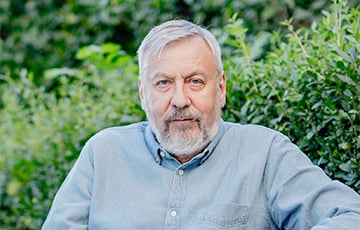
About this, Charter97.org spoke to Ukrainian diplomat and political scientist, director of the Center for Defense Strategies Alexander Hara:
- It is difficult for me to estimate the scale. We naturally see from the media and social networks what is happening there. And, of course, this cannot but make us happy.
Because, as U.S. Senator John McCain very correctly characterized the Russian Federation, it is "a gasoline station that masquerades as a state." Russia needs petroleum products in order to sell them abroad, to get foreign currency and convert it into weapons of murder or to fund the soldiers who are killing us. Well, and also - a very positive effect of the fact that Russians are beginning to realize that the war is not on TV, it affects their immediate lives.
Some people are flying in a drone, some are afraid of sirens, some can't fly out of Moscow airport, and some are standing in line for fuel. This is an important psychological factor, well, and plus - the economic effect. If we are not talking about ordinary citizens, it is obvious that oil products are necessary for the functioning of the entire national economy.
According to the data heard in the media, Russia has lost 13-17% of refining. This will certainly affect its ability to wage war and the public's support for this genocidal aggression. What will happen next? I think that if there is no ceasefire, we will carry out strikes and prevent the refineries that have already been hit from being restored.
And we will expand the geography of strikes almost to the Ural Mountains. There is encouraging news that Ukraine has developed a missile that is capable of delivering a ton of explosives at a distance of up to 3,000 km. I don't know how accurate these figures are, but even if you divide them in half, it is enough to cause irreparable damage to infrastructure and reduce the resource base of aggression.
- Could the current fuel shortage become a factor of destabilization in the Russian regions and at the same time affect the functioning of military logistics?
- Logistics is unlikely to be affected, because Russia is a system designed for war. As in the anecdote: a father tells his son that the price of alcohol has risen, and the son replies that he will drink less. But the father says, "No, you will eat less." It is the same here: all resources - financial and political - will be devoted to the war in the first place.
Ukraine needs to step up its work so that the effect of strikes on refineries is reflected on the battlefield. We are also hitting the transportation infrastructure that allows us to deliver fuel and lubricants to the front. This is also extremely important.
What concerns destabilization - it will indeed happen. The first signs are already there. The only thing is that I don't believe that Russians will start organizing en masse and speaking against the war in the squares and demanding Putin to stop it. Putin has raised a slave generation that patiently accepts the most harmful decisions. Moreover, the majority of Russians support this aggressive war. Most likely, they will direct their anger not at the one who started it, but at Ukraine.
In any case, political, economic and social destabilization in Russia is something that plays into our hands.
- To what extent is Belarus able to compensate for Russia's fuel shortage? Are there real volumes of supplies that Minsk can provide to Moscow, taking into account the limited capacity of its refineries?
- I am not an energy specialist, so it is difficult to judge the figures. But one can say unambiguously: Lukashenko's "economic miracle" was based on the duty-free receipt of Russian energy resources and their subsequent sale to the West.
Now this shop is closed. Belarus is not a powerful energy state that could replace Russia's losses. Moscow's needs are an order of magnitude higher than Minsk is capable of supplying.
On the other hand, if there is a shortage of fuel in Belarus itself, it will also weaken Lukashenko's regime. Unlike the Russians, the Belarusians have shown that they are ready to protest, they do not support this war. So there may well be a situation that will shake the regime.
Let's hope so, because Lukashenko is as much a criminal as Putin. He allowed the territory of Belarus to be used to attack Ukraine in 2022. Iranian Shaheds are flying Iranian Shaheds at our country through its airspace. Belarus under dictator Lukashenko is an enemy of Ukraine, just like Putin himself.
- The strike on the Druzhba oil pipeline station in Unecha: can this be seen as a signal not only to the Kremlin, but also to Lukashenko personally, given Belarus' role in supplying Russia with fuel?
- I think with this strike Ukraine tried to kill three birds, not two. Lukashenko here became collateral damage. The main blow, of course, was to Russia, which gets petrodollars from exports. The second was on Hungary, Moscow's ally. We saw on social media statements from Prime Minister Viktor Orban, Foreign Minister Peter Szijjártó and other representatives of the Hungarian regime: they called it a blow to Hungary's sovereignty, a de facto act of war. Although it is more than 900 kilometers from the Hungarian border to the place of the strike.
So it was a very reasonable decision. Especially since today Europe is on our side. In 2022, the EU decided to reduce energy dependence. Hungary, on the other hand, went the other way - increased dependence on Russian gas, nuclear power and oil. Now they are paying a dear price for their alliance with the Kremlin and for the aggressive policy of the Orban regime against Ukraine.

Bank's name: Bank Millennium S.A.
Address: ul. Stanislawa Zaryna, 2A, 02-593, Warszawa
IBAN: PL97116022020000000216711123
SWIFT: BIGBPLPW
Name of the account holder: Fundacja “KARTA ‘97”
Purpose/title of payment: Donation for statuary aims
You can contact us by the e-mail charter97@gmail.com