
Putin's Hamas
- Aaron Lea, Baruch Taskin
- 8.10.2026, 12:27
- 1,358
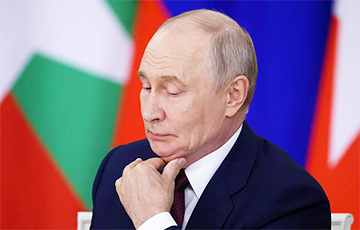
All of this suggests that the terrorist attack on October 7 did not coincidentally fall on the Russian president’s birthday.
Three years have passed since the most horrific tragedy to befall the Jewish people since the Holocaust. It is our duty to always mourn those who were killed and those who died, but it is absolutely essential to identify the causes and accomplices of this crime. And the Kremlin is directly involved in both.
To understand how Russia and Hamas ended up in the same trench, there’s no need for conspiracy theories—it’s enough to see how these outcasts adapt to international pressure in similar ways. They became partners not by blood, but by a brutal logic of survival: facing the same sanctions and isolation, different actors arrive at the same model—parasitizing on war, turning tragedy into a resource, and wearing down the West. This structural isomorphism repeats itself at every level—from geopolitics to raising children in the cult of martyrdom.
After October 7, 2023, communication with Moscow intensified. On October 26, 2023, a delegation from the Hamas Political Bureau, led by Musa Abu Marzouk, arrived in Moscow and was received by Deputy Foreign Minister Mikhail Bogdanov. Hamas publicly thanked Putin and Russian diplomats for their stance on the war with Israel. And it’s understandable—the partners had just derailed the signing of the Abraham Accords with Saudi Arabia, and it’s always satisfying to strike a blow against one’s main adversary—the U.S. And this works not only on the diplomatic front. Israeli intelligence (for example, Daniel Rakov) and Microsoft have confirmed that as early as the spring of 2023, the Russian Doppelgänger network was promoting the narrative that Ukraine was reselling Western weapons to Hamas. After October 7, this disinformation was ready for further use.
On October 27, the UN General Assembly voted on a separate amendment: whether to label Hamas’s attacks as terrorist acts in the text of the resolution. Russia voted against it—along with Iran, Syria, and North Korea. The amendment received 88 votes in favor, 55 against, and failed to secure a two-thirds majority. Such are the consequences of Putin’s personal friendship with Israel’s leadership.
Russia and Hamas do not share a common origin or faith, but they do share a common craft—war against the civilized world and the legitimization of violence through various, often incompatible justifications. For Hamas, it is eschatology: Palestine as an Islamic waqf, a sacred gift removed from human exchange, where compromise is heresy by definition. For the Kremlin, it is cold calculation: a “civilizational code” in which the state substitutes itself for metaphysics, and compromises—grain deals, prisoner exchanges, the Istanbul talks—are made only when it is advantageous. Different causes, the same effect: both exist at the expense of the chaos they themselves generate; both present violence as a way of life rather than a political tool.
Hamas learned the craft of terrorism not only in Moscow but also in Tehran: since 2014, Iran has been the primary sponsor of the training and arming of the Izz ad-Din al-Qassam Brigades. The Washington Institute explicitly documents an earlier, Soviet-era strategy—the KGB financed and armed anti-Western groups whose goal was the destruction of Israel. The use of Palestinian infrastructure was not limited to weapons. In 1970, the KGB developed Operation Vint —the abduction of a CIA station chief in Beirut using the Palestinian militant Wadi Haddad, founder of the PFLP, followed by interrogation at a KGB facility in Syria and, in the event of refusal to cooperate, his assassination. The plan was based on the assumption that suspicion would fall on the Palestinians, who had attacked American targets many times, and it received the approval of the Politburo. The plan was never carried out, but the model of “Palestinians as a tool of the KGB” worked perfectly. And in the USSR, thousands of Palestinians were trained—not only doctors, teachers, and engineers, but also terrorists. The KGB’s training system for this class of “professionals” was the best in the world. The post-Soviet approach was based on personal contacts between Yevgeny Primakov and Khaled Mashal, who was officially received in Moscow in 2006, immediately after Hamas’s election victory, when the civilized world refused to engage with the terrorists.
Moscow played both sides for a long time. Until 2022, the Kremlin officially considered Israel a friendly country: Putin’s warm personal relations with Netanyahu and Bennett, a de-escalation agreement on Syria, and Israel’s refusal to join Western sanctions against the Kremlin. Moscow refused to condemn the Hamas attack, continued to host delegations, and in November 2024, at Moscow’s “President Hotel,” (the office of Adam Delimkhanov, a State Duma deputy and Kadyrov’s deputy, but in reality a Kremlin operative) convened the “Global Coalition in Support of Palestine” —with marginal political figures from the Czech Republic, Australia, Finland, and Ireland in tow. The people there were not there by chance: for example, a Czech participant in the forum is linked to a real, structured network of Kremlin influence, which includes the ideologue of Putinism Alexander Dugin and arms dealer and State Duma deputy Viktor Bout. This laid bare the existing infrastructure.
But some of these “non-random” individuals are even more interesting. A signatory to the protocol establishing the World Majority Organization (“Yalta Initiative”) is the Indian Feroze Mithiborwala — a personal friend of Khaled Mashal and Mahmoud al-Zahar, the founders and leaders of Hamas. Another signatory, the Iranian Aliakbar Barati, coordinates a network whose events feature representatives of “Hezbollah” and “Islamic Jihad” — the Iranian axis that arms and finances Hamas.
All of this suggests that the terrorist attack on October 7, 2023, did not coincidentally fall on Putin’s birthday. The Hamas attack had been in the works for years according to Palestinian-Iranian logic, but it turns out it also aligned with the Kremlin’s calendar—after all, it was Moscow that bore the brunt of the impact. Western attention and intelligence resources from Ukraine were instantly redirected to the Middle East, causing a rift in the Western coalition and easing the pressure on the exhausted Ukrainian front. “The best birthday present,” according to a European diplomat—though he described this as an assessment of the benefits, not proof of a conspiracy. In the case of the high-profile murder of Anna Politkovskaya 20 years ago, no one had any doubts—it was a gift from Kadyrov to the tsar. A head on a platter. “We can do this again,” the terrorists thought. And they succeeded.
Haniya arrived in Moscow on September 10, 2023, for consultations. Now it’s clear what they were about. The secrecy surrounding the operation itself was exceptional within Hamas—even the leadership in Doha was kept in the dark, and the rank-and-file operatives only learned the details of their “assignment” hours before the attack began. But Moscow was clearly in the know, and there were no leaks from there.
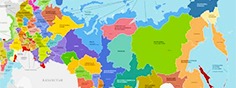
This friendship took root in the Moscow Region, Dagestan, Ingushetia, Kabardino-Balkaria, Karachay-Cherkessia, Bashkortostan, Tatarstan, and the Lipetsk, Ryazan, Tver, Tula, and Yaroslavl regions, where Palestinian families were settled following Israel’s devastating response in Gaza. In Grozny, Kadyrov built five residential buildings with 40 apartments, a school, and a kindergarten for families evacuated from Gaza. The “Akhmat Kadyrov Foundation” has been supporting the Palestinians for three years now, while simultaneously promoting its humanitarian projects in Gaza.
According to the head of the Main Intelligence Directorate Kirill Budanov, Hamas’s tactic of using FPV drones against armored vehicles resembles the actions of the Russian Federation’s army in Ukraine. Moscow also shared satellite data. And the launch of Radio Sputnik in Lebanon is no “suspicious coincidence.” Broadcasting began on October 2—allegedly, a scheduled switch to a frequency vacated by BBC Arabic. This means that the Kremlin’s information warfare tool was already in position, ready for battle. Which is exactly what happened.
On April 16, 2025, Putin met in the Kremlin with Alexander Trufanov, who had been released from Hamas captivity by the terrorists themselves after nearly five hundred days (his father had been killed on October 7). The president personally thanked “the leadership and political wing of Hamas” for this “humanitarian act,” which sounds more like an excuse for the terrorists than a condemnation of them.
In criminal law, an accomplice is not only the one who held the weapon, but also the one who lent a hand, supplied ammunition, and was the first to take the spoils. The Kremlin had more than enough of its years-long cynical flirtation with chaos, its ready-made infrastructure for chaos, and its willingness to harbor someone else’s war when it fell at its feet.
This means that, in fact, Putin became one of the main ideologues and instigators, the primary beneficiary, and an accomplice in the terrorist attack on Israel on October 7—on his own birthday.
Aaron Lea, Baruch Taskin, kasparovru.com

Bank's name: Bank Millennium S.A.
Address: ul. Stanislawa Zaryna, 2A, 02-593, Warszawa
IBAN: PL97116022020000000216711123
SWIFT: BIGBPLPW
Name of the account holder: Fundacja “KARTA ‘97”
Purpose/title of payment: Donation for statuary aims
You can contact us by the e-mail charter97@gmail.com