"There Is A "Kremlin Towers" Fight Going On."
1- 29.04.2026, 10:57
- 2,524
What is behind bloggers' speeches in Russia?
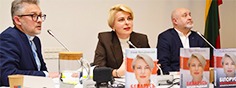
Z-blogger Ilya Remeslo, who sharply criticized Putin, has been released from a psychiatric clinic. He gave an interview to journalist Ksenia Sobchak, where he stated that Putin would be ousted in a palace coup and that certain people at the top were behind him. Russia is also still debating the statement of blogger Victoria Boni, who sharply criticized the authorities.
What is behind the statements of bloggers in Russia? About it the site Charter97.org talked with a well-known Ukrainian political scientist, head of the Center for Applied Political Research "Penta" Vladimir Fesenko:
- As for Boni and this specific character named Remeslo, it's more like a steam release. In this way they can still try to prepare pseudo-oppositionaries for the elections to the State Duma of the Russian Federation, so that the protest moods would be canalized, directed in the right direction. So that they do not interfere with the victory of United Russia and other controlled parties.
They want to fragment the opposition electorate, those voters who will come to the polls. And push them to vote for a pseudo-oppositionist. As Sobchak herself once played the role of such a pseudo-oppositionary.
Bonya is loyal to Putin. But she displays people's discontent, irritation about the disconnection of mobile Internet, problems with the disconnection of Telegram and so on. So in that sense, it's more of a political technology. Well, and, of course, at the moment it's letting off steam. This is also noticeable.
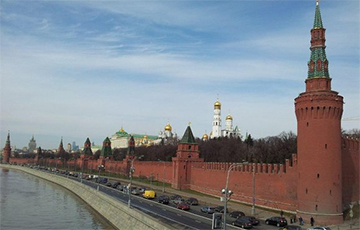
The struggle of the "Kremlin towers" is also taking place, this factor is present. Those "Kremlin towers" who believe that there is too much discontent in society now have decided to let off steam. Therefore, most likely, the political sector of Putin's administration decided to play Bonya.
So Peskov gave his consent to an on-air conversation between Solovyov and Bonya. Here the political technology has already manifested itself. Especially since Sergei Kiriyenko, well, and the Putin administration in general, have used such technologies before. And now there is a need for them. But as far as the "Kremlin towers" are concerned, circumstantial signs show that the struggle between them is intensifying.
This refers precisely to the topic of restrictions on the Internet. Perhaps at Putin's suggestion, but these restrictions are being actively handled by law enforcement agencies, in particular the FSB, and, of course, the Roskomnadzor service is now acting as such a global censor.
On the other hand, it is sort of pulling this discontent down on itself. Also, apparently, the political bloc of the Putin administration, plus the economic bloc of the Russian government, are detecting the growth of problems, the growth of discontent, and are trying to sound the alarm.
And how? Yes, in my opinion, they are using the information that Putin's ratings are declining as a danger indicator. Many people are surprised that Putin's ratings are probably declining even more than the sociological services are reporting. Another thing is surprising.
This is shown by the VTsIOM, the Putin administration's pocket sociological service. That is, the Kremlin-controlled sociological service has been recording a decline in Putin's ratings for seven weeks in a row. The paradox is explained simply. The administration's political bloc, which senses danger and growing problems, is trying to signal Putin.
Mol, "Vladimir Vladimirovich, do you see what's happening? Because of these restrictions, the level of trust in you is decreasing. It is necessary to stop these restrictions. Because they are already hitting you personally." This is also an attempt to criticize the actions of law enforcement agencies and Roskomnadzor. The story of Putin's ratings reflects a certain struggle between the different "towers of the Kremlin".

Bank's name: Bank Millennium S.A.
Address: ul. Stanislawa Zaryna, 2A, 02-593, Warszawa
IBAN: PL97116022020000000216711123
SWIFT: BIGBPLPW
Name of the account holder: Fundacja “KARTA ‘97”
Purpose/title of payment: Donation for statuary aims
You can contact us by the e-mail charter97@gmail.com