

Peter Magyar Arrived On His First Visit To Poland
2- 19.05.2026, 10:56
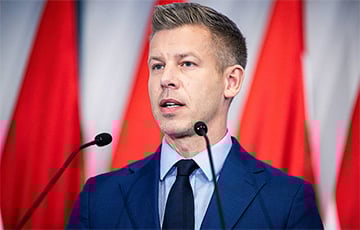
Photo: Getty Images
Hungary's new prime minister wants to "reset relations" with Warsaw.
Hungarian Prime Minister Peter Magyar began his first visit - to Poland - on May 19; it will last two days, Reuters reported.
Magyar began a two-day visit to Poland on Tuesday, his first overseas visit since taking office; several other members of the government are traveling with him.
The trip is seen as the first big step toward resetting relations between Warsaw and Budapest after they have "cooled" since the return of Donald Tusk, who has harshly criticized Viktor Orban's anti-European and pro-Russian moves, as Poland's prime minister.
Magyar begins his visit from Krakow, after which he plans to travel by train to Warsaw for a meeting with top Polish government officials and then on to Gdansk in the north of the country.
He explained his decision to travel by train by his desire to see how the Polish high-speed railroad turned out - as he is considering the construction of a high-speed line between Warsaw and Budapest.
Magyar is accompanied on the trip by Foreign Minister Anita Orban, Economy and Energy Minister Istvan Kapitan, Defense Minister Romulus Rusin-Sendy, and Transport Minister David Vitezi.
"The areas of responsibility of the ministers participating in the visit naturally point to the directions of our planned talks," Magyar said.
It is unofficially reported that Tusk is going to offer the new Hungarian government access to the LNG terminal in Gdansk, which will start operating from 2028 - which will help realize Magyar's pledge to end energy dependence on Moscow by 2035.
In addition, sources said, the Polish side will initiate discussions on support for Ukraine. Cooperation within the Visegrad Four, which has weakened significantly in recent years due to political disagreements between Prague and Warsaw on one side and Budapest and Bratislava on the other, will also be a topic of conversation.
Magyar expects to discuss Polish support for unblocking European funds earmarked for Hungary, which it did not receive due to problems with the rule of law in the "Orban era."

Bank's name: Bank Millennium S.A.
Address: ul. Stanislawa Zaryna, 2A, 02-593, Warszawa
IBAN: PL97116022020000000216711123
SWIFT: BIGBPLPW
Name of the account holder: Fundacja “KARTA ‘97”
Purpose/title of payment: Donation for statuary aims
You can contact us by the e-mail charter97@gmail.com