


Putin's "favorite" Missile Found To Have A Critical Flaw
- 27.05.2026, 9:23
- 4,310
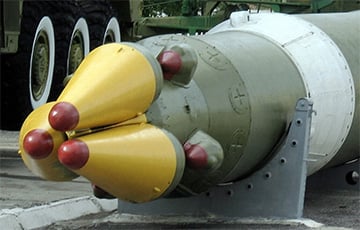
"The hazel tree turned out to be not so scary.
Russia's hypersonic Oreshnik missile, which the Kremlin presents as an "uninterceptable" weapon, has a critical flaw - low strike accuracy. Despite its speed of more than Mach 10 and sophistication for air defense systems, its combat effectiveness in real-world attacks remains limited, writes WELT.
In its last launch, the missile took off from the Kapustin Yar test site in Russia and fell near Bila Tserkva in the Kiev region. Ukrainian authorities reported fires in a garage cooperative, but there were no casualties.
Analysts point out that the Russian military used a missile worth tens of millions of dollars for such a strike, while the result was the defeat of secondary targets.
"Oreshnik" is based on the RS-26 "Rubezh" medium-range ballistic missile. It can carry several warheads weighing up to 1.5 tons and can travel up to 5,000 kilometers. The main advantage of the missile is its hypersonic speed and complex flight trajectory, which makes it much more difficult to intercept.
But experts explain that when entering the atmosphere, a plasma ball with a temperature of thousands of degrees is formed around the missile, which blocks radio and satellite signals. Because of this, the missile has problems with course correction in the final stage of flight, which reduces its accuracy.
This is why the Peanut is called a paradoxical weapon: it is extremely difficult to intercept, but at the same time it is not accurate enough for "surgical" strikes against individual military targets.
The Challenge for Air Defense
Traditional air defense systems, in particular IRIS-T, are not designed to deal with such targets. Even Patriot systems can intercept such missiles only under favorable conditions and using the latest interceptors.
To counter such threats, the West is creating specialized exoatmospheric interception systems, such as Arrow 3 and THAAD. Their task is to destroy ballistic missiles outside the atmosphere, before the separation of the warheads.
Despite dictator Vladimir Putin's statements about the "non-interceptability" of the Oreshnik, military experts believe that the missile is not invulnerable. However, its destruction requires satellite-based early warning systems, long-range radars and extremely expensive interceptor missiles.

Bank's name: Bank Millennium S.A.
Address: ul. Stanislawa Zaryna, 2A, 02-593, Warszawa
IBAN: PL97116022020000000216711123
SWIFT: BIGBPLPW
Name of the account holder: Fundacja “KARTA ‘97”
Purpose/title of payment: Donation for statuary aims
You can contact us by the e-mail charter97@gmail.com