
Lukashenko Has Become A "fat" Target
16- 29.05.2026, 11:15
- 12,778
What Russia's burning military plants tell us.
Ukrainian authorities showed European ambassadors foreign components that were in Russian missiles and drones fired at Ukraine on the night of May 24. Among others, there were microchips and circuit boards for cruise missiles and Oreshniks fired by Minsk-based Integral.
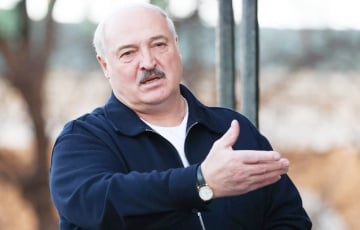
For now, official Kiev has called on its partners to tighten control over Belarus' access to foreign electronics. But against the background of the latest statements sounding against the Lukashenko regime from Ukraine, this news looks like a target on the same Integral.
And the saddest thing is that there may be more than one and not two such targets. The other day, the commander of Ukraine's Unmanned Systems Force Robert Brovdi said that at the moment 500 such targets have already been identified in Belarus. And earlier he threatened Lukashenko personally for assisting the Russian occupiers.
It is also sad that the words about possible strikes on Belarusian enterprises serving the Russian military-industrial complex are now heard not only from the mouths of alarmists and highpagers. Sane experts are now openly talking about it as a non-zero option.
The same Alexei Kopytko, who writes about zero confidence in Lukashenko's "peacekeeping," has also identified a number of goals:
"Let me remind you that in January-February 2022, Lukashenko swore that there would be no threats to Ukraine from the territory of Belarus. And it was good that his words were divided by 16. Now they can be simply multiplied by zero.
More than that. Ukraine can now zero out the Mozyr and Novopolotsk refineries, as well as a number of chemical enterprises in one fell swoop: Soligorsk, Lyuban, Petrikov, Grodno."
And if the very fact of a possible strike on Grodno's Azot, which supplies raw materials to the Russian military-industrial complex, seems like a delusional fantasy to some, then remember the attacks by Ukrainian drones on similar plants in Russia. Or about military factories producing electronics that burned after the attacks. Not so long ago, this seemed impossible for Russians as well.
Kirill Ivanov, "Salidarnasts"

Bank's name: Bank Millennium S.A.
Address: ul. Stanislawa Zaryna, 2A, 02-593, Warszawa
IBAN: PL97116022020000000216711123
SWIFT: BIGBPLPW
Name of the account holder: Fundacja “KARTA ‘97”
Purpose/title of payment: Donation for statuary aims
You can contact us by the e-mail charter97@gmail.com