


The Economist: Three Lessons From The War In Ukraine
- 29.05.2026, 15:11
- 1,868
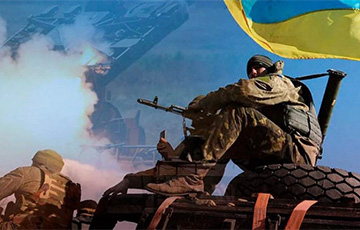
How new technologies are destroying superpower supremacy.
The world is entering a new era of warfare, in which even powerful armies are increasingly bogged down in grueling conflicts, while seemingly weaker countries gain an unexpected advantage thanks to drones, AI and precision weapons. Ukraine is the main laboratory for this military revolution.
Wars of the future will not be "blitzkriegs," but costly and chaotic traps. Against this background, the West is learning from Ukraine. The "smarter" the military technology, the more pointless the wars that politicians launch by choice, writes The Economist.
Almost 750,000 people will die in wars between 2021 and 2024 from bullets and bombs. Even more from indirect effects: starvation and disease. The number of combat deaths over the past four years is the highest since the end of the Cold War.
Russia's attack on Ukraine has become a humiliating quagmire for Vladimir Putin. Donald Trump's war has failed horribly against Iran.
These two wars, launched by leaders of their own choosing, exemplify new realities on the battlefield. Technology has made it harder for armies to advance. At the same time, they have made it easier for weaker nations to wreak havoc in the ranks of a stronger enemy.
The first major shift is that soldiers are no longer protected. Sensors and satellites can detect them, and small, cheap drones can kill them. Armies have to make increasing efforts to hide, move and survive.
The expanding "kill zone" on the front lines in Ukraine, where soldiers move in small groups and ground robots evacuate the wounded and deliver supplies, epitomizes this shift.
Technology is spreading fast. Israeli soldiers in Lebanon face the same drones first used in Ukraine. Iranian missiles today are far more accurate than Iraqi missiles launched during the 1990-1991 Gulf War. If China tried to invade Taiwan, its landing forces would similarly face a barrage of drones.
Air superiority is harder to achieve now. The skies, oversaturated with drones, no longer protect soldiers the way they once did.
Some experts conclude that attacking enemy vulnerabilities with shock and swift action is no longer possible. However, war is a Darwinian environment that encourages constant adaptation, and the battlefield never stands still for long.
The lesson learned from the events in Ukraine is that armies will have to properly train and arm themselves to blind the enemy, disrupt their systems, and avoid cameras, sensors, and munitions operating above and around them.
In this regard, Western armies are hopelessly behind. They need more REB and drone defenses to avoid detection and defeat. They need realistic training that simulates combat conditions.
This is why NATO armies are being helped in exercises by Ukrainians who have mastered drones. They should be bolder in introducing unmanned systems into their armed forces for everything from reconnaissance to logistics.
But they should not simply copy Ukraine's experience. While the Ukrainian army shows impressive innovativeness, it also has shortcomings. Generals trained in the USSR are still micromanaging brigades at the front.
Ukrainian unmanned systems forces may be world-class, but they are not as closely synchronized with assault units as they could be. In addition, the drones operating in the skies over Donbass and in the waters of the Black Sea are smaller, have shorter ranges, and cost less than those that would be required to wage war in the vast expanse of the Pacific.
The second shift is that AI-based software allows armies to find and engage targets with previously unimaginable speed and scale. The U.S. lightning operation in Iran provides a glimpse of this.
An army that can outpace the enemy in detecting and destroying command posts, depots, and weapons could theoretically paralyze the enemy and force them to surrender. In practice, it is incredibly difficult.
America and Israel could bomb Iran, but Tehran shows no signs of surrender. On the contrary - during the 39 days of war, it has continued to launch drones and missiles, maintained its nuclear program, blocked the Strait of Hormuz and provoked global economic chaos.
Trump boasts of the number of targets Iran has hit, destroyed by vastly superior American weapons, but strikes should be a means to an end, not a substitute for strategy.
What Trump planned as a short, hard war quickly began to deplete the US's stockpile of expensive munitions and revealed the country's limited willingness to tolerate the economic costs - not to mention the human cost.
In previous wars - such as the US war in Vietnam or the USSR in Afghanistan - the smaller, weaker side won because it was fighting on its own territory. Now the weaker side can also afford precision weapons.
The third change is that the laws of war are increasingly being erased. Putin's troops subjected Ukrainian civilians to torture, indiscriminate bombing and systematic attacks on medical facilities. Hamas took pride in massacring Israeli women and children.
The coming years will inevitably bring new wars. Trump has clearly shown disdain for allies and is weakening the U.S.'s ability to deter aggressors.
Political leaders around the world continue to believe that under their brilliant leadership, the next war will be quick and painless. But the facts show that war is increasingly complex and costly; that weaker countries can more easily deter and wear down stronger ones; and that it is easier to start a war than to finish it.
This is something Trump should ponder as he ponders whether to restart a war against Iran, whether to start one in Cuba. Putin, who continues to burn lives and money in Ukraine, should too. Si Jinping in China, pondering whether to invade Taiwan - also.
As military technology gets smarter, wars by choice look increasingly stupid.

Bank's name: Bank Millennium S.A.
Address: ul. Stanislawa Zaryna, 2A, 02-593, Warszawa
IBAN: PL97116022020000000216711123
SWIFT: BIGBPLPW
Name of the account holder: Fundacja “KARTA ‘97”
Purpose/title of payment: Donation for statuary aims
You can contact us by the e-mail charter97@gmail.com