

Gennady Fedynich: After The Incident With The Uzbeks, No One Will Come To Belarus
22- 24.07.2026, 21:37
- 15,772
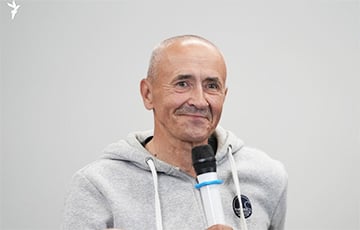
PHOTO: “RADYEO SVABODA”
The labor shortage in Belarus will only get worse.
Lukashenko lured workers from Uzbekistan to Belarus with promises of high wages and decent working conditions. Once there, the workers were met with low wages and dilapidated dormitories, which led to open protests.
What does the Uzbek workers’ revolt reveal about working conditions and the regime’s attitude toward ordinary people? The website Charter97.org posed this question to former political prisoner and labor union leader Gennady Fedynich:
— You know, the bottom line is that there’s a labor shortage in Belarus. This is a fact confirmed by both the government and business leaders. That’s why they decided to bring in foreign workers. Especially since they arrived in an organized manner. Naturally, they were promised excellent working conditions and decent wages here. People believed it and came.
But, as is often the case in Belarus, the situation turned out to be much more complicated. The question is, how can you pay foreign workers high wages today if you don’t pay your own workers? Everyone here should be on an equal footing: both in terms of wages and motivation.
In this situation, I think the news has already spread throughout all the countries of the former Soviet Union. After this, it’s unlikely anyone will want to come here to go through what the Uzbek workers went through.
I think they’ll raise their wages somewhat and try to provide them with work. It’s no coincidence that the Uzbek ambassador lost his post. This is a very serious issue.
The labor shortage in Belarus will continue. They can’t simply be replaced by Uzbeks or Tajiks. Unskilled labor can still be replaced, but skilled workers need to be trained. It’s not that simple here.
Therefore, the economic situation in Belarus will become more complicated—that much is certain. The question is which enterprises might close soon, because there is no other way out. They will become unprofitable and operate at a loss. If there are no skilled workers, but we need to produce decent, high-quality goods, another question arises: how to sell them afterward.
That is why this is a serious and pressing problem, including at the highest levels. Such issues cannot be resolved with mere words. Everything sounds good in theory, but in practice, it’s completely different. That’s why I believe the problem exists and will continue to exist because today in Belarus, virtually all workers, without exception, lack proper motivation to work.
Unfortunately, this problem is a reality. And no matter how you try to mask it, there is widespread discontent among the people because prices are rising and eating into their wages.
— Why did the authorities deceive foreign workers, and what does their mass influx reveal about the labor crisis in Belarus?
— It’s not even just about the deception. It’s not Lukashenko who should be talking about this, but the local leaders who know what the wage levels are and what the living and working conditions are like. That’s who should be in charge of this. But saying it is one thing; doing it is quite another.
Representatives of the Lukashenko regime aren’t doing this not because they don’t want to, but because they simply can’t. While it’s still possible to find housing—and relocating people to another dormitory isn’t that difficult—the issue of wages remains. When people are promised $900 or $1,500 and free housing, it’s unrealistic for Belarusian companies to deliver on that.
Therefore, unfortunately, we are once again seeing an attempt to pass off wishful thinking as reality. And this, in my view, will come back to haunt Belarus, because skilled workers are now unlikely to come here.

Bank's name: Bank Millennium S.A.
Address: ul. Stanislawa Zaryna, 2A, 02-593, Warszawa
IBAN: PL97116022020000000216711123
SWIFT: BIGBPLPW
Name of the account holder: Fundacja “KARTA ‘97”
Purpose/title of payment: Donation for statuary aims
You can contact us by the e-mail charter97@gmail.com