
Foreign Policy: Lindsey Graham's Bill Will Help Eliminate The "Shadow Fleet" From All Seas
1- 31.07.2026, 10:01
- 2,224
It will soon be passed by the full Senate with a large bipartisan majority.
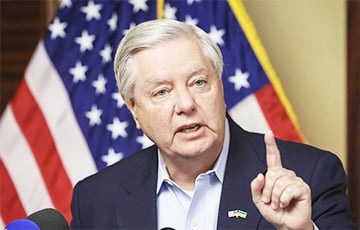
A bill on anti-Russian sanctions, drafted by the late U.S. Senator Lindsey Graham, moved closer to becoming law following a positive procedural vote in the Senate. It is expected to be adopted shortly by the full Senate with a large bipartisan majority. And at the end of the year, the House of Representatives will be expected to vote on it.
According to Foreign Policy, a successful final vote would signal a resurgence of Republican support for Ukraine after more than four years of war with Russia. The bill could also become the first comprehensive package of U.S. sanctions against Moscow during Donald Trump’s second term. And this will take place against the backdrop of intensifying sanctions pressure on Russia from Europe and the United Kingdom.
“Graham has tirelessly pushed for the passage of his bill. He has consistently advocated for increasing economic pressure on Russia using all available tools of U.S. economic policy, but Trump’s lukewarm attitude kept the bill in limbo for over a year,” the article states.
Among the bill’s positive aspects highlighted by experts in the publication is the legislative enshrinement of sanctions against Russia. The bill provides for the imposition of sanctions against specific banks and companies, making it difficult for future administrations to lift these sanctions. This would also bring U.S. sanctions against Russia’s shadow fleet into alignment with those of the United Kingdom and the European Union:
“If the West wants to seriously restrict Russian exports of oil and petroleum products, it is extremely important to remove the Russian shadow fleet from the high seas.”
The authors noted that the majority of Russia’s seaborne crude oil exports are still carried out using tankers subject to sanctions. And the sanctions would become more effective with the inclusion of financial restrictions.
Another positive aspect of the proposed legislation is the sanctions targeting shipping companies that provide tankers to replenish the aging shadow fleets of Russia (and Iran). Many of these shipping companies are Greek.
Drawbacks of the bill
Journalists noted that, unlike previous congressional sanctions laws, the restrictions against Russia are not mandatory. They are imposed at the president’s discretion: “This means that the ultimate impact of the sanctions bill will depend on Trump, who has not taken a hard line against Putin since returning to office.”
In addition, Graham’s bill included secondary tariffs from the outset as a way to increase pressure on Russia. This means high import duties for countries that purchase Russian oil and gas. Trump has already used this tool against India (a major buyer of Russian oil), but not against China (the largest buyer of Russian oil).
This provision, which expands Trump’s authority to impose tariffs, is considered the biggest obstacle to the bill’s passage in the House of Representatives. It is explained that the Democrats will not be willing to expand Trump’s powers.

Bank's name: Bank Millennium S.A.
Address: ul. Stanislawa Zaryna, 2A, 02-593, Warszawa
IBAN: PL97116022020000000216711123
SWIFT: BIGBPLPW
Name of the account holder: Fundacja “KARTA ‘97”
Purpose/title of payment: Donation for statuary aims
You can contact us by the e-mail charter97@gmail.com