
"What Belarusians Take For Granted Is A Novelty To Russians."
3- 10.08.2026, 9:25
- 4,162
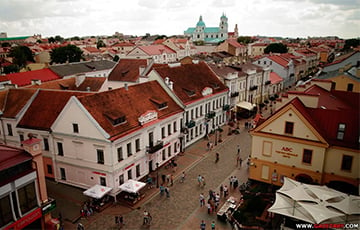
Yet another argument in favor of the civilizational differences between us and our eastern neighbors.
The publication “Solidarnast” explains and illustrates in its latest report what distinguishes Belarusians from their eastern neighbors.
“If you Google the Belarusian city of Grodno, the search engine will definitely show the Catholic Cathedral of St. Francis Xavier among the first images; it’s one of the city’s main attractions and, in my opinion, its most beautiful architectural landmark. When I travel, I always try to visit Catholic churches because I’ve seen my fill of Orthodox churches, and another culture is always interesting.”
This is one of many comments from Russian visitors on review sites dedicated to travel in Belarus. Many Russians have been coming here for years specifically to see the architecture, which is unusual to them.
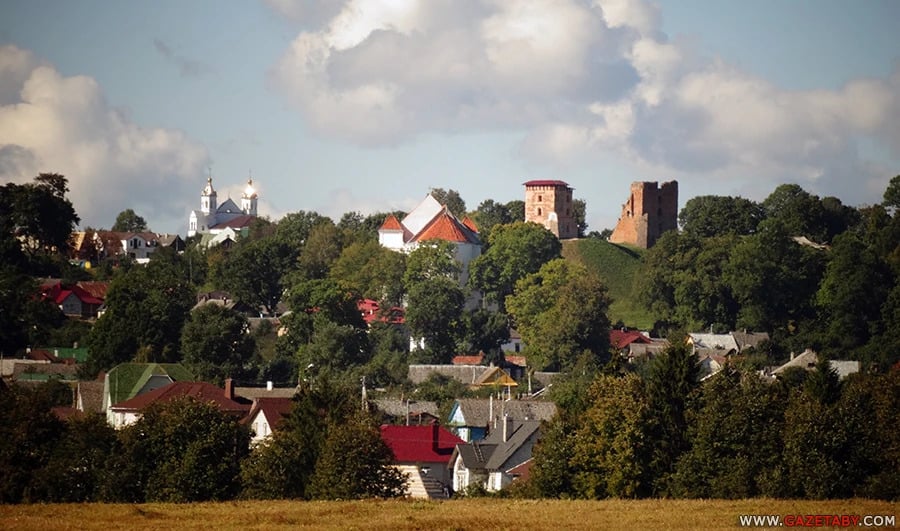
What Belarusians often take for granted is a novelty for Russians. For example, there’s a Catholic church and an Orthodox church in the central square of nearly every district center, not to mention the regional capitals.
Not all visitors are architecture experts, and that’s understandable. But there are also those who recommend that their compatriots explore examples of Vilnius Baroque, which links our country to the European school of architecture.
Incidentally, churches built in this style were erected not only in the western regions of Belarus, such as the Church of Saints Peter and Paul in Boruny, in the Oshmyany District. These include St. Sophia’s Cathedral in Polotsk and the Cathedral of the Descent of the Holy Spirit in Minsk, which was originally built as a Catholic church. And the Church of the Virgin Mary in Mstislavl, which is just a stone’s throw from the Russian border.
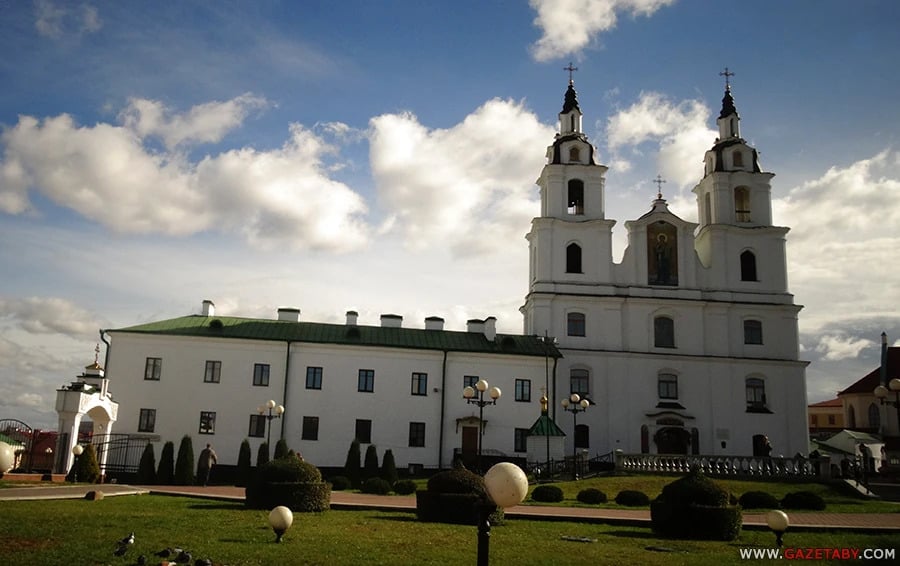
There’s a good reason why Russians travel to Belarus to see these churches. A simple comparison: according to various estimates, there are up to 300 registered Catholic parishes in Russia, and by no means do all of them own their own churches. In other words, across the entire vast country, there are, at best, a few hundred churches.
In Belarus, the number of active Catholic churches exceeds four hundred. And there are also empty churches that are in a state of disrepair. Not to mention the churches that have been converted into Orthodox churches.
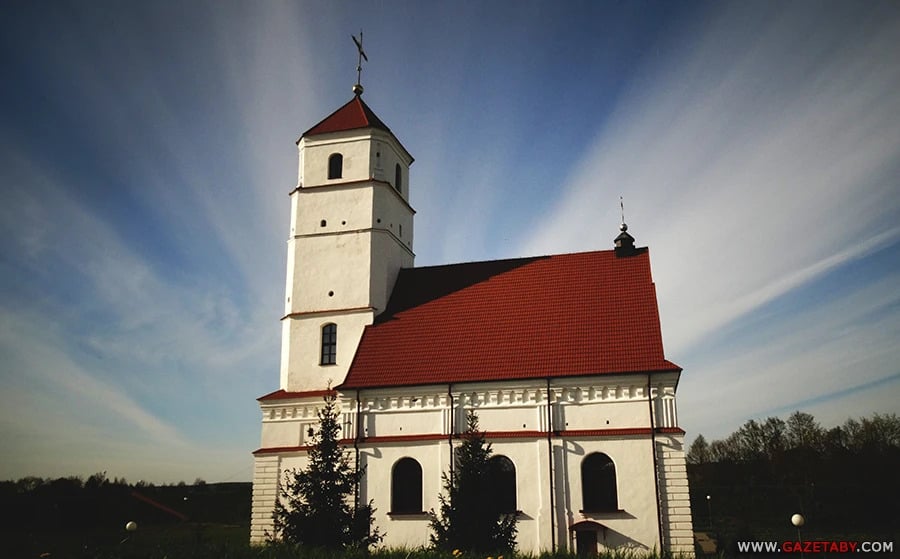
One distinct feature that sets us apart from Russia is the Calvinist congregations, which were established on the lands of the Grand Duchy of Lithuania in the 16th–17th centuries. A total of about two hundred were built, but only about a dozen have survived to this day, and most of them have undergone more than one alteration.
After the Counter-Reformation, many Calvinist places of worship were converted into Catholic and Orthodox churches. One example is the Calvinist church in Zaslavl, built with donations from Prince Jan Glebowicz.
In 1628, it was converted into a Catholic church. In 1833, the church passed to the Uniates, and after Uniatism was banned in Belarusian lands, it was transferred to the Orthodox Church. Some Russian tourists today are clearly puzzled by the non-Orthodox appearance of the Zaslavl church.
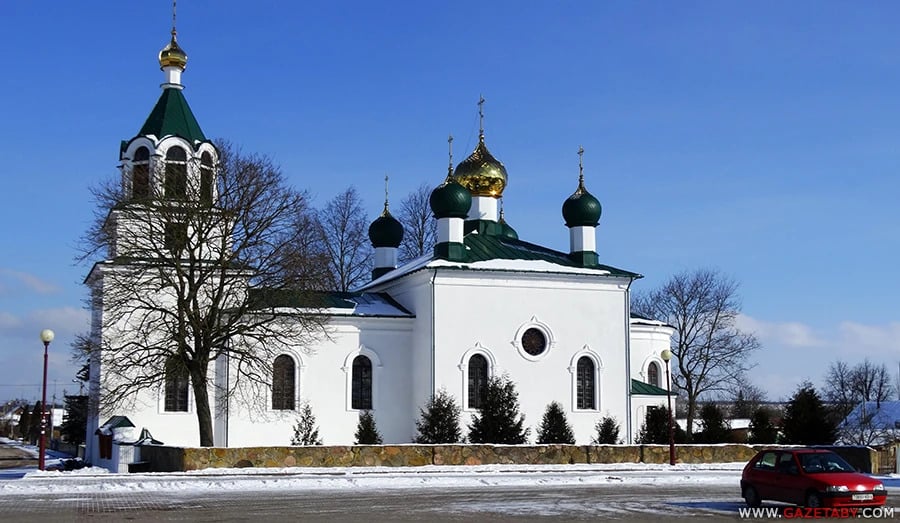
In closing, we must not forget how Russia spent many decades attempting to destroy the uniqueness of Belarusian Catholic and Orthodox churches, either by altering them or simply demolishing them. After the suppression of the 1863–1864 uprising, Orthodox churches in a retro-Russian style—the so-called “Muravyovkas”—were built en masse on our lands (built on the initiative of Governor-General Mikhail Muravyov).
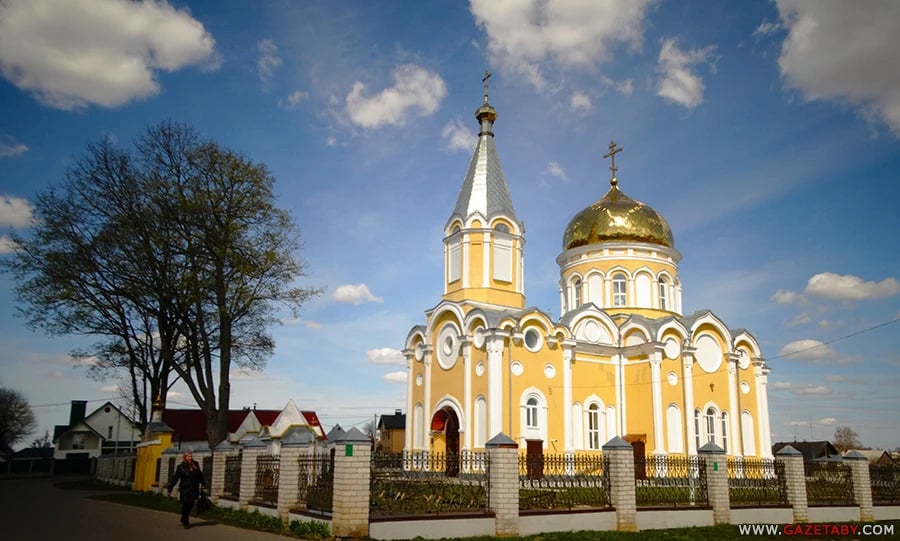
They were distinguished by elements foreign to traditional Belarusian architecture: hipped roofs, kokoshniks, and onion-domed roofs.
During the Soviet era, many Belarusian churches—which had survived numerous wars and changes in power—were simply destroyed, used as warehouses or grain silos, or left to stand empty, gradually falling into ruin.
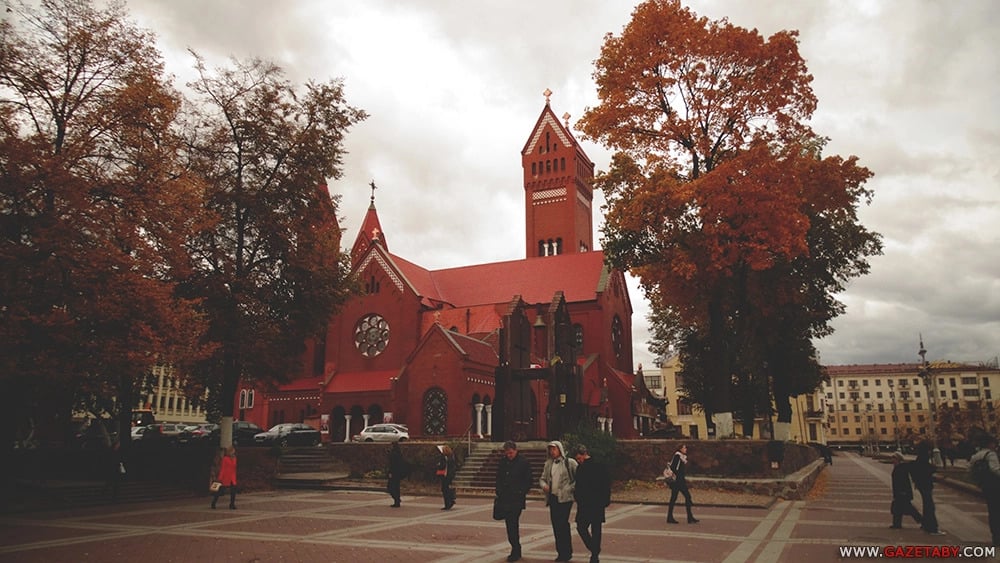
Today, with the support of those in power, the Russian Orthodox Church is once again staking its claim, installing gilded onion domes on our ancient churches and transforming former Catholic churches beyond recognition.
And this is yet another convincing proof that Belarus is not Russia.

Bank's name: Bank Millennium S.A.
Address: ul. Stanislawa Zaryna, 2A, 02-593, Warszawa
IBAN: PL97116022020000000216711123
SWIFT: BIGBPLPW
Name of the account holder: Fundacja “KARTA ‘97”
Purpose/title of payment: Donation for statuary aims
You can contact us by the e-mail charter97@gmail.com