

Putin Is Rapidly Approaching A Dead End
- Abbas Galliamov
- 15.08.2026, 9:59
- 1,736
It's time for the Russian elite to rein in their leader.
A message for the Russian elite.
Putin didn't have enough problems on the country's western borders, so the day before yesterday he went to stir up trouble in the East. What the Russian president did in the Kuril Islands can only be described as a provocation against Japan.
The “head of state’s” unwillingness to de-escalate tensions with the outside world and the rapid slide of the Russian economy toward collapse have created a fundamentally new—and previously unseen — situation in which the domestic elites can no longer trust Putin to chart the course the Russian Federation should follow. He clearly prioritizes his own emotions over the interests of the system, exposing the latter to unnecessary risks.
The problem for the Russian establishment is no longer whether it likes Putin or not. The question is this: Can we continue to allow a single person to make decisions unilaterally if he is taking steps that threaten to bring down the entire power structure?
Previously, Putin’s monopoly on power ensured stability for the elites. Now it is becoming the primary source of risk.
The system must move away from a personality-based autocracy toward collective leadership. China serves as a good example. This is not difficult—among Russian “patriots,” it is common practice to admire their eastern neighbor and hold it up as a model. A distinctive feature of the Chinese model, as is well known, is what is effectively a one-party system, the absence of direct elections for top leadership, and collegiality. The latter, however, has been seriously eroded under Xi Jinping, but precisely for that reason it leads to a decline in the quality of governance, an increase in repression, and a rise in economic problems—that is, it makes the advantages of collectivism even more evident.
In fact, China’s collective leadership emerged precisely to avoid the problems described above. After Mao’s death, his successors concluded that the country could no longer depend on the mental and physical condition of a single individual. Deng Xiaoping saw the source of the disasters of the “Great Leap Forward” and the “Cultural Revolution” not only in Mao’s personality, but in the very idea of excessive concentration of power. Therefore, they began to restructure the system so that the top leader would remain the top leader—but would no longer be the only one. It was precisely this shift away from personalism toward collegiality that set in motion the engine of growth that transformed China from the backward, impoverished shell it was under Mao into what we see today.
As part of a policy to “strengthen national unity,” the Russian authorities could announce the merger of all “patriotic parties” into a single nationwide party organization and the creation of its Politburo—an official one, not a shadow one, as is currently the case.
Other members of this structure will need to try to keep Putin in check. Of course, he will remain first among equals, but he must cease to be the country’s sole, unquestioned ruler. Fundamental decisions must be made collectively—literally through an official vote by all members. Let Putin have two votes instead of one, but the others must have votes as well.
The head of state has failed to cope with sole rule; the others must lend him their support. It seems to me that at some point he will agree. A dead end is approaching, and soon he will finally realize this. Stepping down from power is too radical a step, but shifting part of the responsibility for how the situation unfolds onto others is a viable solution. Putin cannot stop the war on his own, so a situation must arise in the country where others will do so…
If the current actor cannot handle the task, a new actor must emerge.
It’s time for Putin to stop being the leader of a criminal organization; the time has come for him to become a politician. Otherwise, politics will take its toll on him.
Collectivism is a mechanism for correcting past mistakes, as well as a way to avoid making new ones. That is exactly how it should be viewed.
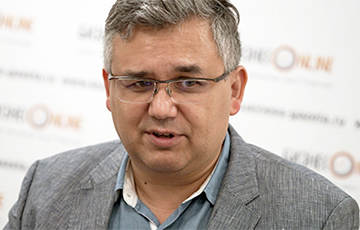
Abbas Galliamov, Facebook

Bank's name: Bank Millennium S.A.
Address: ul. Stanislawa Zaryna, 2A, 02-593, Warszawa
IBAN: PL97116022020000000216711123
SWIFT: BIGBPLPW
Name of the account holder: Fundacja “KARTA ‘97”
Purpose/title of payment: Donation for statuary aims
You can contact us by the e-mail charter97@gmail.com