


Trump Has Decided To Modernize U.S. Aircraft Carriers
- 16.08.2026, 9:39
- 1,496
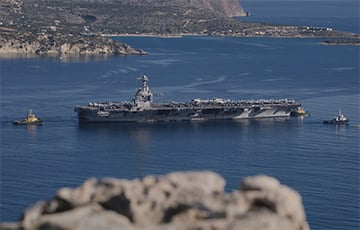
This involves a major design change.
The U.S. Navy is considering a major redesign of the new Ford-class aircraft carriers to better align with President Donald Trump’s vision. Specifically, this involves moving the command tower—known as the “island”—closer to the center of the ship. This is reported by The Washington Post reports, citing seven current and former U.S. officials familiar with the situation.
According to them, Trump expressed concern about the appearance of the new aircraft carriers, as their bridge is located closer to the stern. The president wants future warships to more closely resemble older-generation U.S. vessels, particularly those used during World War II.
Relocating the “island” could entail a large-scale and costly modernization effort. According to a former high-ranking U.S. official, the Navy had already explored this possibility during Trump’s first presidential term. At that time, it became clear that the design change could cost billions of dollars and significantly delay the program’s implementation.
“It turned out that the costs and the timeline for this would be simply colossal,” the official said.
Former Navy officer Brian Clark, who researches the U.S. Navy at the Hudson Institute, called the relocation of the “island” a “significant design change.” According to him, such a redesign would affect the aircraft carrier’s weight and buoyancy and could entail significant additional costs.
At the same time, the current location of the bridge was chosen not only for aesthetic reasons. According to officials, moving it closer to the stern frees up more space for aircraft near the catapults. This reduces the time needed to prepare fighter jets for launch and simultaneously minimizes turbulence during aircraft landings.
Trump also wants to change the catapults
The idea of relocating the “island” has become the second major design change to aircraft carriers initiated by Trump. In a new national security memorandum, the president directed the Navy to develop a plan to return to advanced steam catapults on future aircraft carriers. Ford-class ships use a modern electromagnetic launch system instead.
Supporters of the changes emphasize the advantages of proven technologies. At the same time, critics warn that a return to the old system could also cost billions of dollars and lead to further delays.
The first Ford-class aircraft carrier—the USS Gerald R. Ford—took 17 years to build. It was precisely the new technologies, particularly the electromagnetic catapult, that were one of the causes of the program’s delays. At the same time, the Navy subsequently stated that the electromagnetic system had demonstrated high efficiency.
Currently, three other Ford-class aircraft carriers are in various stages of construction. The USS John F. Kennedy is undergoing sea trials, while the USS Enterprise and the USS Doris Miller are under construction.
According to Navy plans and an estimate by the Congressional Budget Office, the U.S. could build up to 10 aircraft carriers of this class over the next four decades. The estimated cost of each new ship is approximately $22 billion.
The White House’s influence on the design of U.S. warships has been growing recently. Trump had previously proposed creating a new class of battleships as part of the “Golden Fleet” concept. The initiative has drawn criticism from naval analysts and lawmakers, who believe that such a large-scale project could divert resources away from the U.S. shipbuilding industry.
According to estimates by the Congressional Budget Office, building such battleships could cost approximately $275 billion over 30 years.

Bank's name: Bank Millennium S.A.
Address: ul. Stanislawa Zaryna, 2A, 02-593, Warszawa
IBAN: PL97116022020000000216711123
SWIFT: BIGBPLPW
Name of the account holder: Fundacja “KARTA ‘97”
Purpose/title of payment: Donation for statuary aims
You can contact us by the e-mail charter97@gmail.com