Lukashenko's Unexpected Admission
2- 21.08.2026, 18:33
- 4,134
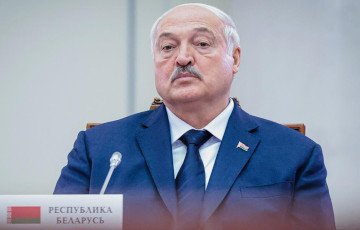
The subconscious gave the dictator away.
As it happened, several highly revealing events took place almost simultaneously, demonstrating the current focus of Belarus’s foreign policy.
Myanmar’s leader Myin Aung Hlaing arrived in Minsk on an official visit. At the same time, a government delegation from Afghanistan, led by the Minister of Agriculture and Irrigation, is visiting Belarus.
Meanwhile, Belarusian Foreign Minister Maksim Ryzhenkov has been on vacation in North Korea these past few days. This was reported by an unofficial Telegram channel of the Belarusian Foreign Ministry. According to the channel, Ryzhenkov traveled to the DPRK with his family and is visiting “friends” there, where he is enjoying “fresh air, Juche ideas, and conversations about eternity.” However, he did manage to return in time to meet with the leader of Myanmar’s military junta in Minsk.
What do Myanmar, Afghanistan, and North Korea have in common? They are pariah states—the most notorious, isolated, and impoverished in the world—all of which are subject to harsh international sanctions.
Belarus’s foreign policy shift toward pariah states did not stem from a comfortable situation. The shift toward the Global South was a consequence of the severe conflict between the Belarusian government and the West. Moreover, this reorientation was backed by a massive propaganda campaign. The narrative goes: the West is decaying, it has lost its dominant role in the world, and is being defeated by the countries of the South—which is why “the sun rises in the east.” Belarusian state propaganda has been repeating these claims almost daily for many years.
An Embarrassing Moment with a Compliment
And that’s when an embarrassing moment occurred. On August 20, while hosting Myanmar’s President Min Aung Hlaing, Alexander Lukashenko remarked:
“You’re wearing that kind of clothing. I don’t have any like that. You’re a thoroughly European man, not an Asian one.”
A phenomenal remark. It can perhaps only be compared to an incident that occurred in 1999, when Lukashenko greeted Chinese Premier Li Pengwith the words: “Even though you’re an Eastern man, you reason like a true European politician” (“Belarusian Business Gazette,” February 26, 1999).
Situations like this arise when Lukashenko sincerely wants to pay a compliment to a politician or negotiating partner, but sometimes it comes across as awkward, ambiguous at best, and at times simply offensive. As for the case with Li Peng, it is well known that, according to Chinese tradition, their country is considered the center of the world, the “Middle Kingdom.” This is all the more so given that China is now striving to become a world leader. Therefore, such a statement seemed almost blasphemous to the head of the Chinese government.
What’s interesting about the “compliment” to the president of Myanmar isn’t even the comparison—which is humiliating for an Asian politician—but rather the underlying implication of Europe’s civilizational superiority over Asia. Here we observe a notion that has surfaced from Lukashenko’s subconscious: that Europe is superior to Asia in status, of higher quality, and more progressive. This acknowledgment shatters all the propaganda narratives about the decaying West. And it shows that Minsk’s official shift toward the Global South was forced—it did not happen out of a sense of well-being. After all, Europe does not accept the current regime in Belarus.
PR and an attempt to capitalize on friendship
Thus, the reorientation of official Minsk’s foreign policy toward the East and South is intended to address several objectives. First and foremost, it is cheap PR. Belarus’s leadership seeks to prove that the country is not internationally isolated, that there are many nations in the world that want to be friends with it, and that Lukashenko is a respected politician.
There is also a clear attempt to reap economic benefits. Since these countries (Myanmar, Afghanistan, and North Korea) are isolated, few are willing to cooperate with them. Therefore, the reasoning goes, we’ll step into the vacuum, into uncharted territory, and be able to reap some benefits. However, the experience of recent years does not support the economic viability of such friendships.
How the Regimes Are Similar
Nevertheless, we see that the frequency of meetings between Lukashenko and Min Aung Hlaing is very high. Last year, they met six times. Moreover, the leader of Myanmar visited Minsk twice. Lukashenko visited that country in November 2025, and this year he was there in July. Less than two months later, the president of Myanmar flew to Minsk again. The only person Alexander Lukashenko meets with nearly as often is Vladimir Putin.
What connects these two countries—or these two regimes? During the talks, there was much talk of the outstanding prospects for bilateral cooperation. However, a look at the official statistics reveals a less impressive picture. For example, trade between Belarus and Myanmar totaled $15.9 million in 2025, and it doubled in the first half of this year.
The main component of bilateral cooperation is military-technical collaboration. It is coordinated through a joint commission, which discusses issues related to production, repair, technology transfer, and training.
This area of cooperation is shrouded in secrecy. During the current talks in Minsk, Lukashenko stated:
“The informal setting is also important because it allows us to address issues that cannot be voiced or discussed publicly.”
A Weak Spot in Relations
Myanmar lacks the funds to pay for shipments of Belarusian goods. And for the deals to go through, Minsk is forced to grant loans to its partner so that it can pay for imports from Belarus. Under the terms of the loan agreement, the Myanmar side will have to repay the loans within no more than 5 years.
Overall, the political regimes in Belarus and Myanmar are very similar. In 2021, a coup d’état took place in Myanmar, and the democratically elected government was overthrown. Mass protests were brutally suppressed, and approximately 1,600 people were killed. Thousands of political prisoners were jailed, including 240 children. Those arrested were subjected to torture. All of this is all too familiar to Belarusians.
Just as in Belarus, there is a mass exodus of citizens from Myanmar. 3.5 million residents were forced to leave their country.
Also, like Belarus, Myanmar is subject to international sanctions. Lukashenko became the second politician to visit Myanmar after the coup. In 2021, the then-prime minister of Cambodia, Hun Sen, visited the country. Friendship with the Myanmar regime severely damages politicians’ reputations. Only those leaders who have nothing left to lose are willing to forge closer ties with it.
Afghanistan and North Korea—New Partners?
Something similar is happening in economic cooperation with Afghanistan. Belarus is interested in supplying agricultural machinery and food products to that country. But Afghanistan is a very poor country; it has no means to pay for Belarusian goods.
Interestingly, the Belarusian state media has made virtually no mention of the Afghan delegation’s arrival or the talks in Minsk. Conversely, the Afghan media is actively covering the current visit. Perhaps the Belarusian authorities do not want to publicize these contacts because Afghanistan is ruled by the Islamist “Taliban” movement, which has been officially designated a terrorist organization by many countries.
Belarus’s friendship with North Korea has reached such a stage that Foreign Minister Maxim Ryzhenkov flew to North Korea for a vacation.
It is not entirely clear what benefits the Belarusian government hopes to gain from cooperation with this country. North Korea is ruled by the most brutal dictatorial regime in the world. This country holds the absolute record for the number of sanctions imposed against it. Moreover, many of these restrictions were imposed by a UN Security Council resolution, meaning they were supported by permanent members of that body, such as Russia and China.
Trade relations between the countries are practically nonexistent. According to very modest and fragmentary statistics, annual trade volume amounts to approximately $0.5–1 million per year. In other words, we are talking about occasional shipments of certain goods (for example, a shipment of meat in 2025). Economic cooperation is negatively affected by sanctions and complex logistics. The possibility of North Korean workers appearing in Belarus cannot be ruled out. The export of labor is one of the few “commodities” that North Korea can supply.
Belarus may attempt to squeeze its way into the military-industrial cooperation between Russia and North Korea. But this sphere is highly closed off.
If anything, Belarus’s cooperation with these notorious outcasts serves only as fodder for propaganda outlets.
Valery Karbalevich, “Radio Svaboda”

Bank's name: Bank Millennium S.A.
Address: ul. Stanislawa Zaryna, 2A, 02-593, Warszawa
IBAN: PL97116022020000000216711123
SWIFT: BIGBPLPW
Name of the account holder: Fundacja “KARTA ‘97”
Purpose/title of payment: Donation for statuary aims
You can contact us by the e-mail charter97@gmail.com