
Why Did An Indian Medicine Kill Nine Belarusians?
3- 23.08.2026, 9:08
- 2,272
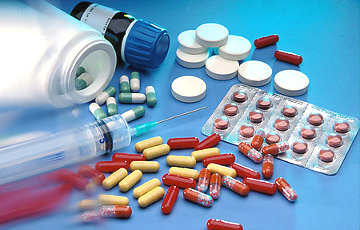
The company that manufactured the drug does not have certifications in the United States or in most European countries.
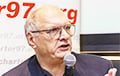
The publication “Zerkalo” and the organization Belpol have learned that from January through May 2026, in Belarus, at least nine patients died who had been administered the same Indian adenosine—the drug “Cardiurex” (Cardiurex) manufactured by Welcure Remedies—during heart surgeries. Traces of bacteria were later found in the medication. A doctor Stanislav Solovey explained to “Studio” on "Belsate", Stanislav Solovey
emphasized that without all the relevant documents, it is difficult to say whether this was a random coincidence or an inevitable result of the system. A full investigation is necessary.
“In any case, such situations, unfortunately, do happen. They happen even in countries with very strict regulations, such as the U.S.,” he emphasized.
The company that manufactured the drug does not have certifications in the U.S. or most European countries, Solovey noted. It only has local certifications. These should apparently be sufficient; they seem to comply with World Health Organization (WHO) standards.
But, Solovey continued, it is well known that obtaining a local certification is easier: experts from the U.S. do not come to Belarus, and there is no rigorous inspection of the entire supply chain. And we need to understand exactly how the drug ended up in Belarus:
“Belarus has fairly strict pharmaceutical controls—as strange as that may sound—and, in theory, all batches are tested. This raises a logical question: Was the entire batch defective—or did it contain, say, 1% [defective items], and did the random inspection simply miss it due to statistical probability? Or was it processed through an expedited procedure that allowed it to bypass [inspection] based on documentation provided by the manufacturer?”
One of the most important differences between drug regulation in the European Union and the United States is the impossibility of falsifying documentation and the results of tests that have already been conducted, Solovey noted. Indian legislation, however, is not as strict, judging by the frequency of drug recalls. They might have “turned a blind eye” to something back in India at the manufacturer’s plant, since recalling a batch is expensive. They might have accidentally missed a defective batch during the batch inspection stage. But the problem was discovered only after the drug had already killed patients.
The problem lies not only in the deaths but also in the system’s response
On the one hand, the drug was used during heart surgery, when patients are at their most vulnerable. At the Brest Regional Hospital, the drug was administered to 13 patients—eight died. According to the leaked documents, the patients developed sternomedial sternalitis—an infectious process in which the sternum and tissues inside the chest cavity become inflamed and suppurate. Three developed sepsis, and two had a generalized infection. At the Minsk Republican Scientific and Practical Center “Cardiology,” nine patients received the drug—eight were saved, and one died. Highly resistant bacteria were detected in all of them, and they were also diagnosed with sepsis.
“Inflammation after surgery is possible! But if it’s severe and extensive, something isn’t right,” Solovey emphasized.
On the other hand, Solovey noted, this drug has a relatively narrow range of applications, which minimized the consequences: the hospitals that perform such surgeries can be counted on the fingers of one hand. Had it been a drug with a broader range of applications, there could have been more casualties.
The problem is that the Brest hospital did not report the detection of bacteria in patients’ blood to either the city or regional center for hygiene and epidemiology, Solovey emphasized. The “Cardiology” hospital in Minsk did report the incident—perhaps, Solovey suggests, because this Republican Scientific and Practical Center is “held in high regard”; it is given more leeway since it treats the most critically ill patients and has close ties to the Ministry of Health.
According to Solovey, the cause could be a “peculiarity” of Belarus: here, medical errors—even complications in patients—are treated as criminal offenses. Consequently, even if the doctor is not at fault—but rather a combination of circumstances beyond his control—the doctor will be punished. Senior officials are not usually punished for such things, since the investigation is conducted by those very same officials.
“Consequently, the clinic’s first natural reaction is to try to resolve this on its own, to keep the matter under wraps,” Solovey believes.
He mentioned a case where a resident physician encountered a routine complication—one that occurs in 1–2 out of every 1,000 patients—“and had to run around to the district attorney’s offices.” Even if such a situation doesn’t end in prison but only in the threat of criminal charges, it’s a huge source of stress that doctors try to avoid.
Solovey admits that in Brest, the doctors did everything correctly in the operating room, but decided not to risk a lawsuit and therefore did not stop the surgery involving the dangerous drug. And as a result, the worst happened: not only did people die, but trust in the system—already damaged during the COVID-19 pandemic—was further undermined. The deaths were not reported immediately—and rumors began to spread. Solovey thanks Belpol and “Zerkalo” for bringing this to light, but asks:
“How many patients will now be afraid to undergo a scheduled surgery that is vital for them, and in six months their lives will be cut short because they didn’t undergo that scheduled surgery?”
Why was this particular Indian drug chosen?
Belarus has lost a great deal due to sanctions and political repression. However, Solovey emphasized that sanctions do not apply to medicines, even though propaganda likes to manipulate this fact.
“In a global sense, price is the deciding factor here,” Solovey explained.
There are brand-name drugs, and there are so-called generics—drugs with the same main active pharmaceutical ingredient but with certain other ingredients. Generics begin to be produced when the patent on the brand-name drug expires. For example, there is the Hungarian “No-Spa,” and there are similar drugs such as “Drotaverine” in various formulations and from different manufacturers (including Belarusian ones), “Notospasm,” “Spazmol,” and others, all of which contain the same main active ingredient—drotaverine. Generics, Solovey explained, are usually cheaper. But even when produced by European companies, they are viewed with slightly more suspicion than brand-name drugs.
There is also a difference in regulation, he continued. A local license costs several tens of thousands of dollars and can be obtained in a matter of months. European or American certification, on the other hand, costs millions and takes years. “No-Spa” and its generics, for example, are not approved in either the United States or the European Union, but are legally used in about fifty countries worldwide, including Belarus.
“So it’s not as if some shady Indian operation bought some counterfeit drugs,” Solovey emphasized. “This is a company that supplies many of these drugs throughout Asia and Africa… But the risks associated with these products are higher due to less stringent controls.”
All medications carry risks, the source added. Both European and American drugs can cause side effects, trigger allergies, or contain defective tablets or vials in a batch. No healthcare system is immune to what happened at “Cardiurex.” There are no absolutely safe drugs, but that doesn’t mean we should stop using medicine. And just because a drug is from India doesn’t mean it’s a “bad drug.”
As Solovey argued, the speed of medical professionals’ response when something goes wrong is crucial. In the case of “Cardiurex,” it was necessary to suspend elective surgeries as soon as possible, implement infection control measures, and warn other hospitals: “We know this is happening; take these specific steps.” That could have saved lives. But fear of legal repercussions led the Minsk Republican Scientific and Practical Center to follow in the footsteps of the Brest hospital and investigate the causes of the tragedy. And the fear of public exposure led to a loss of trust.
“If the Ministry of Health had immediately said, ‘We’re facing a disaster; we’ll get to the bottom of it—don’t panic,’ it would have caused far fewer long-term problems,” Solovey reiterated.
It will take more than five or even ten years to sort this out. This is especially true given that patients in Belarus are often denied the choice between European, American, and cheaper medications. Solovey hopes that it will be determined why the problem slipped past Belarusian oversight, and that the tragedy will serve as a lesson.

Bank's name: Bank Millennium S.A.
Address: ul. Stanislawa Zaryna, 2A, 02-593, Warszawa
IBAN: PL97116022020000000216711123
SWIFT: BIGBPLPW
Name of the account holder: Fundacja “KARTA ‘97”
Purpose/title of payment: Donation for statuary aims
You can contact us by the e-mail charter97@gmail.com