
The Decisive Moment
17- Valery Zaluzhny
- 23.08.2026, 10:35
- 19,082
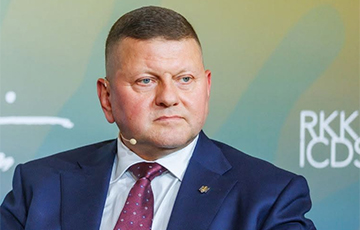
A Few Lessons for Ukraine.
“Be strong and courageous. Do not be afraid or terrified of them, for the Lord your God will go with you; He will never leave you nor forsake you.” (Deuteronomy 31:6)
Remembering the past, we will not lose the future.
Thirty-five years of Ukraine’s independence is not only a time to reflect on the journey already taken, but also—and most importantly—to set a course for the future.
If we compare our journey to the exodus of the people of Israel from Egyptian captivity to “the land flowing with milk and honey,” as described in the Bible, we still have five years to go.
But these very years may prove to be the most difficult; they will require unity, a consolidation of efforts, and a commitment to freedom. After all, we must fight not only an external enemy but also “sandstorms” in the form of lies, fatigue, disbelief, and the loss of hope.
As Ivan Yakovlevich Franko wrote in his poem “Moses”: “And the people lost their faith and said: ‘The prophets have lied! We are to live and die in the desert! What else is there to wait for? And how long?”
Today, Ukraine has come closer than ever to a state where doubts about the path ahead could permeate—and have already begun to permeate—society. And the words “What are we waiting for? And how long?” will multiply, like the tablets of the law—albeit inscribed on cardboard.
Therefore, to answer the question: “What lies ahead, and how can we avoid stumbling so that we may finally emerge from the darkness of the desert?”, we must analyze the path our country has already traveled over these 35 years and define strategic priorities for the upcoming decisive phase.
The collapse of the USSR was the greatest geostrategic turning point of the 20th century. Russian President Putin calls this event the greatest mistake. And for good reason: while a geopolitical shift cannot be undone, a mistake can be corrected.
That is why, even today, while Western political science circles tend to view the dissolution of the Soviet Union as an objective historical process—after all, every empire eventually declines and collapses— — in the Kremlin, contrary to this historical pattern, a different point of view prevails: this should not have happened.
As long as Moscow is guided by precisely these considerations, Russia’s strategy of refusing to recognize Ukraine’s independence will remain decisive and preclude any compromises—whether for the sake of sham elections or for the sake of a lasting and lasting peace. On this issue, the “prophets” certainly must not lie. However, this is a grave mistake for the Russian leadership as well, for the obsession with correcting history has already led to a great war in which there will be no victors—and in which Russia itself is incapable of winning.
Ukraine’s independence, despite being the result of the historical process of the empire’s collapse, was the culmination of decades and centuries of our ancestors’ struggle for freedom. This is precisely what we must remember.
Or at least to remember the exact price paid for it by those who—today, in the 35th year of the independence of the country for which they fought—have finally been laid to rest in their homeland. Today’s defenders must see and remember this. Will they, too, become new hostages to political maneuvering, forced to seek peace somewhere else—just like the thousands who have not yet returned?
In 1991, history, much like the shifting of tectonic plates, triggered a powerful earthquake at the very heart of Europe. It is hard to say whether this sparked—at least among the elite of the time—a wave of hopes and aspirations. And was this even the very elite that was supposed to translate those expectations into concrete work on nation-building?
It is clear that it was precisely they—the elites—who were supposed to establish strong institutions, which, in turn, would be responsible for developing and strengthening the economy, the military, science, technology, and education.
Even today, we can say with certainty that it was precisely then that something went wrong. Instead of building the Ukrainian state for which thousands of Ukrainians fought and died, we ended up with a clan-oligarchic republic that, by defending the interests of a select few, systematically eroded the faith and unity of society—a society that, despite two revolutions, had already rallied together during the war.
Will this be enough for the most difficult stretch of the journey, or will those who care only about their own interests take their revenge and determine the future of freedom? All of this was the result of missed opportunities—including the loss of our own history.
A history that even today, in Ukraine, some are trying to rewrite.
One could analyze the period that began in 1991 at great length, but the most tragic mistake back then was to believe that our own freedom, won in the whirlwind of history, would be protected by that very same whirlwind. It was precisely us—those of us who were 18 years old in 1991 and who believed in that elite—who, in 2014, had to correct their mistakes with our own blood. But were these truly mistakes, or simply someone’s plan? History will tell.
That is precisely why the neglect of the state’s security and defense became the main contributing factors that ultimately made this bloody, large-scale war possible.
Of course, any complex political decisions are made with due consideration for the situation in which the state finds itself at a given moment. It is essential to understand and respect such decisions. Perhaps, given the instability of the young state’s institutions, it really would have been worth making concessions to Russia to prevent war back then—more than 30 years ago.
But was it far-sighted, in that context, to disarm on a massive scale, cut military spending, and decide in a single day to divide the Black Sea Fleet? It turns out that the war wasn’t simply postponed—there was a systematic weakening of the Ukrainian state.
We, the citizens of Ukraine, didn’t just disarm our own army—we lost strategic factories, enterprises, scientific potential, and technological production facilities. That is precisely what we lack today to even build our own missile and anti-missile industries.
War is a dire situation. And it is best when a country’s policy is based on making every effort to prevent an escalation that leads to the inevitable. However, there are various ways to avoid this. The main thing is to focus on strengthening our capabilities so that, when the critical moment comes, we will still be able to defend ourselves.
There is also another path—to declare sincere intentions and aspirations, without concern for defense and security, and to seek confrontation, banking on the fact that war will ultimately not happen.
Another important lesson is that of the Budapest Memorandum.
Today, the discussion is not about the role of nuclear weapons. After all, in today’s world of technological progress, much cheaper and simpler—yet no less deadly—weapons systems are emerging, and these will shape the nature of future wars.
The example of the Budapest Memorandum is important because a state’s security cannot be based solely on external assurances or even guarantees. No documents can replace a state’s own ability to defend itself. And a state can defend itself only thanks to its people’s readiness to resist and fight—even for a long time.
I do not reject the idea of international security alliances and blocs, but I am fully aware that they can be beneficial only when backed by a state’s own strength, economic stability, and technological superiority. And we should ally ourselves with those who base their national defense strategy on an understanding of the changes that scientific and technological progress brings to the world, and on a readiness to adapt to them.
When assessing the decades of our independence, we cannot overlook the year 2014. It marked the start of a war that people tried to prevent not by strengthening our defenses, but through disarmament and a drift toward Russia. It was a very difficult year of loss and pain, but at the same time—a year of hope.
It was precisely then, because of the war, that Ukrainian society demonstrated enormous potential for self-organization and resistance. And there were also people who were not afraid to take responsibility where state institutions were unable to act in time or simply did not exist.
Ultimately, society truly came to realize the importance of the military; trust in the Armed Forces grew; the Armed Forces themselves began to change; and the state was forced to make security the cornerstone of national policy. We managed to stop a major war back then. And once again, just as in the distant year of 1994, it was our lack of preparedness that led to the only correct decision at that moment.
Minsk taught us yet another lesson. You only get one chance.
It is precisely now that we need solutions, not postponed problems that can no longer be resolved except through war. Despite the tragedy of the preceding situation, we have been given a chance to rethink our ideas and approaches to the meaning of independence and Ukraine’s place in the world—a place that can only be secured through our own strength.
Ultimately, the diplomatic maneuvering surrounding attempts to negotiate with Russia has led to a predictable war.
It’s hard to say whether any negotiations with Russia today are a trap, since the only way out is a ceasefire. But what is certainly a trap is a weakened, demoralized, and politicized army that will no longer provide a chance to escape the trap of negotiations.
The experience of a completely new kind of war showed us a way out of the latest “sandstorm” of 2022. We saw that modern warfare is no longer just about tanks, artillery, and missiles. It involves unmanned systems, artificial intelligence, autonomous systems for command, control, analysis, and data collection, robotic complexes, and reliable satellite communications.
War has become, in some ways, cheaper and more accessible, but at the same time—more brutal. Ukraine has become one of the main testing grounds for the 21st-century military-technological revolution and should have become perhaps the most powerful nation in the world—a nation that invented new weapons.
Here is another lesson.
War accelerates scientific and technological progress. Unfortunately, it is precisely this progress—which claims lives every day, including those of civilians—that gives some people the opportunity to profit. Alas, this has always been the case. Therefore, no amount of marketing—no matter how “attractive” it may be—can replace a genuine strategy based on science and experience.
Only a clearly defined political goal and well-developed strategies—including military ones—pave the way for achieving that goal. And our goal is, after all, VICTORY.
The resistance of the Ukrainian people has reaffirmed our agency and clearly demonstrates the need to abandon the policy of so-called “gray zones” in the system of international relations. We are moving beyond our status as a “buffer” between East and West—a role in which both the East and the West have tried to keep us for decades.
But today, Ukraine has already become the epicenter from which the formation of a new security architecture for the European continent is beginning. The Armed Forces of Ukraine have gained unique experience in waging a full-scale technological war against a superior enemy—experience that no NATO army possesses. These are the realities that can be rejected only by those who stubbornly try to deny the modern realities of war and live in the paradigm of “Cold War”-era deterrence.
Ukraine has become one of the key actors in shaping the new European security architecture. Whether everyone in Europe is ready for this remains an open question.
Now we face the main question: how can we transform the lessons of this war into a long-term national security framework? How can we navigate this wilderness—perhaps for another five years—without falling out with one another or getting lost in a world that is already beginning to live and organize itself according to a new logic: the logic of extremely rapid scientific and technological progress.
This requires a well-thought-out and effective development strategy, at the heart of which SECURITY must occupy a central place. And yes: anyone who promises economic growth and recovery while neglecting the key factor of security is a “prophet” foretelling the path we all already know.
But the security factor is not limited to modern armed forces. It also includes the training of physicists, engineers, and mathematicians. It is knowledge of history and maintaining a connection to our roots—the key to a nation’s survival. This is our driving force for emerging from the desert and building our own independence, won with blood.
Ukraine has already proven that it knows how to fight. Now we must prove that we can survive and win strategically: avoid the mistakes of the past, turn experience into the doctrine of the future, technology into the economy, the army into a deterrent, and Independence into an irreversible historical reality.
We must move forward and do everything we can so that, on the 40th anniversary of Ukraine’s independence, we can say: “We will certainly never be ashamed again, for we did not stop in the desert…”
Valery Zaluzhny, New Voice

Bank's name: Bank Millennium S.A.
Address: ul. Stanislawa Zaryna, 2A, 02-593, Warszawa
IBAN: PL97116022020000000216711123
SWIFT: BIGBPLPW
Name of the account holder: Fundacja “KARTA ‘97”
Purpose/title of payment: Donation for statuary aims
You can contact us by the e-mail charter97@gmail.com