A Sensational Result
- Abbas Gallyamov
- 15.10.2026, 12:59
- 4,172
Americans didn't like Trump's diesel deal with Putin.
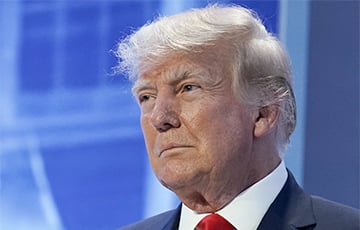
Donald Trump came as a big surprise. A man who built his entire political career on the principle of “America First” and never shied away from expressing American national self-interest suddenly began speaking like a true altruist.
Responding to to a question about the diesel deal, the American leader stated that it was not carried out for the sake of Americans at all. It turns out it was concluded in the interests of the entire world. Supposedly, the global market is suffering from high prices, and he, Trump, decided to help it.
What happened? Where did this sudden concern for humanity come from, given that just a few days ago he presented the deal as beneficial specifically to Americans?
It seems to me that Trump realized that the agreement with Putin—which he had initially hoped to count as a victory—has brought him more downsides than upsides. That’s why he started scrambling, trying not so much to distance himself from it as to somehow reposition it.
Americans, it seems, didn’t like how they looked in the context of the deal—as a nation that betrays its ideals in pursuit of prosperity, as a people selling their birthright for a bowl of soup.
Americans Did Not Support Trump’s Deal with Putin
There is no representative public opinion poll yet on Americans’ attitudes toward the deal. However, some indirect signs suggest that the public reaction turned out to be quite different from what Trump had expected.
On CNN on October 10, well-known host Michael Smerkonish asked the audience to answer the question: “Should the U.S. buy Russian diesel fuel if it leads to lower prices?”
Note the wording. It’s as favorable to Trump as possible. It doesn’t just mention the deal; it also highlights the main benefit it offers, while failing to mention any drawbacks. It would seem the answer is obvious—especially since Americans are genuinely unhappy with high fuel prices.
The result turned out to be nothing short of sensational: 95% of the more than 60,000 voters said they were against the deal. Less than 5% were in favor.
And we shouldn’t dismiss this result by saying, “That’s just the opinion of the Democratic Party elite, not average voters.”
First, CNN is watched not only by the elite but also by that very same average electorate, including 20% of Republicans, as well as independent voters who lean toward supporting the Republican Party. Second, the host of this particular program is a former Republican; he is fairly moderate, and two-thirds of his audience consists not of Democrats but of those very independents on whom the outcome of the upcoming election depends.
These events suggest that the majority of Americans do not approve of Trump’s actions.
The reaction of Republican members of Congress is also very important. Six of them sent a letter to the president demanding that he cancel the deal. They called the agreement with Russia “a gift to our enemy and a betrayal of our allies.” It was stated that the deal helps finance Russian aggression against Ukraine, harming American interests.
Reagan as a Weapon Against Trump
An even more significant indication of just how far discontent within the Republican Party has gone was the legislative initiative by Congressman Brian Fitzpatrick. He announced that he would introduce a bill banning U.S. purchases of Russian oil. He chose a highly symbolic name for his initiative: the Ronald Reagan Peace Through Strength Act—a law named after Ronald Reagan on peace through strength.
Fitzpatrick himself is a Republican and co-chair of the House Ukraine Caucus. His party colleague Don Bacon has already expressed his willingness to support the initiative.
Fitzpatrick intends to push for a vote through a special parliamentary procedure that would allow him to bypass the House leadership if he manages to gather 218 signatures. Of course, this is still only a legislative initiative, not a law, but the political significance of what is happening is no less important.
It is important to understand that for American Republicans, the name Reagan is not merely a historical reference.
He is one of the main symbols of the party’s identity, the embodiment of an era when Republicans considered confronting Moscow to be the most important task of American foreign policy. Now, however, it has turned out that some Republicans are using Reagan’s name to oppose the policies of another Republican—their own president.
Former U.S. Vice President Mike Pence also spoke out against the deal, calling it a betrayal of the political legacy of the late Senator Lindsey Graham, who had consistently advocated for increasing pressure on Russia.
On Fox News, which traditionally supports Trump, a telling exchange took place between hosts Brian Kilmeade and Rachel Campos-Duffy. The latter tried to defend the president’s decision, while her colleague suddenly sided with Ukraine. He pointed out that it was Russia that started the war, and that Ukrainian strikes are targeting infrastructure that supports the Russian war machine. The host called Putin “the Hitler of our time” and described a rapprochement with him as potentially the biggest mistake of the current U.S. administration.
Equally interesting is the reaction of the well-known MAGA activist Laura Loomer, who can hardly be suspected of sympathizing with the Democrats. She stated that the money Russia receives from diesel sales will be used not only against Ukraine but also to support Iran, which is at war with the Americans.
In other words, opposition to the deal now comes not only from Trump’s traditional opponents but also from people within his own political camp.
It appears that the president has encountered much stiffer resistance than he anticipated. He wanted to gain an additional talking point for the Republican campaign: “Look, I’ve reached an agreement with Putin; now fuel prices will go down, and even if they don’t, at least I’m trying.” Instead, Trump has to answer questions about why the U.S. administration is helping to finance the Russian war machine, as well as listen to accusations that he’s a traitor.
As the saying goes, Fyodor didn’t go after Yegor.
Abbas Gallyamov, “Vot Tak”

Bank's name: Bank Millennium S.A.
Address: ul. Stanislawa Zaryna, 2A, 02-593, Warszawa
IBAN: PL97116022020000000216711123
SWIFT: BIGBPLPW
Name of the account holder: Fundacja “KARTA ‘97”
Purpose/title of payment: Donation for statuary aims
You can contact us by the e-mail charter97@gmail.com