The Passions And Paradoxes Of The Oil And Gas Industry
1- Mikhail Krutikhin
- 14.10.2026, 15:47

Photo: octagon.media
Let's look at things in their proper perspective.
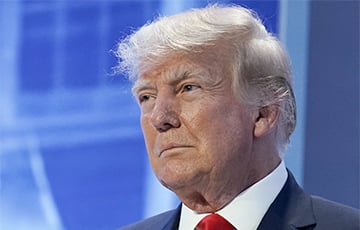
I’ll start, perhaps, with Donald Trump’s “diesel initiative” . I’ll begin and then immediately cut short the story: dozens of competent experts have demonstrated the futility of this endeavor—for the global energy balance, for the U.S., and for Russia. In about two months, the global (not Russian) diesel fuel shortage will be completely forgotten.
But this surge of frenzied interest is a good example of how, by getting carried away with minor incidents and trivial details, observers fail to see the forest for the trees. Perhaps we should forget about Sherlock Holmes’s supposedly “deductive” method , who pieced together the big picture from details, and instead engage in true deduction—that is, begin by looking at the situation from a broad perspective (starting from the big picture): establish a coordinate system and understand where minor incidents fit into it.
Trump’s manners, tastes, and statements are repulsive. They are the epitome of cynicism and complete disregard for the concepts of good and evil, ethics, and morality. But the course of events triggered by the actual actions of his administration leads one to suspect the existence of a clear and far-reaching plan.
I will choose as the reference point for my evaluative framework not theoretical speculation, but an existing powerful factor—the existence of two great powers, the United States and China: the current head of Azerbaijan’s ruling dynasty is absolutely right; there are only two of them. In the foreseeable future, they are destined not only for a symbiotic relationship—that is, the impossibility of existing without one another—but also for constantly arising conflicts in the form of a struggle for markets and political influence, again for the sake of market advantages.
The global oil and gas balance—and the energy balance as a whole—is the resultant force of the dynamics between this inseparably conflicting pair of competitors.
If we view events through this lens, we can not only determine their significance but also uncover glaring paradoxes.
The long-term interests of the United States include the desire to achieve a dominant position and control over the global energy sector—and to push the Chinese aside in this industry. An example? Following the war in Iran and the military escalation around the Persian Gulf, China lost a significant share of its trade, economic, and political influence in this crucial region. This is a strategic success for the Trump team.
In Russia’s war against Ukraine, great-power rivalry plays a massive role. China is reaping enormous benefits by single-handedly exploiting both the Russian market and Russian resources in the absence of Western competitors suffering from their own sanctions, and it has absolutely no desire for the war to end. The Americans are just as unwilling to see this carnage end, and their main motive is the fear that Putin’s defeat would not only plunge Russia into chaos but also turn it into a Chinese colony—if not territorially, then politically and economically.
And the second great power will become even more powerful.
Now, about the paradoxes.
Countries that produce and export oil and gas are objective competitors to the U.S., unless American companies are comfortably engaged in that business there. It is clear that limiting competitors’ capabilities and the scope of their operations is part of the long-term strategy of both Trump and all previous and future occupants of the White House.
Recognizing this reality, one must view American demands and promises to ensure freedom of navigation in the Strait of Hormuz or to stop Ukrainian strikes on oil facilities in Russia with extreme skepticism. Weakening both the oil sheikhs and the Russian oil and gas sector serves the U.S. national interests already mentioned here.
Trump’s supposedly ongoing—but largely fruitless—efforts to increase the supply of oil and gas on the global market are a temporary and relatively short-term phenomenon: he needs to appease the electorate ahead of the election. Help competitors? The Americans will only do that in a situation—for example—where those competitors behave like Venezuela, which has now become a cash cow for U.S. businesses.
From this perspective, it becomes clear that, ultimately, even Iranian Khomeinist radicals—who are attempting to block the Strait of Hormuz and trap competitors to U.S. oil production in the Gulf—are working in the long-term interests of the United States.
Putin, too, is objectively acting in those same foreign interests; for a quarter of a century now, he has been undermining Russia’s economic potential and competitiveness—sometimes by removing “Gazprom” from the lucrative European market, then by worsening the investment climate through discrimination against foreigners and domestic commercial entities in favor of corrupt government officials, and then by waging war against neighbors and turning oil and gas industry facilities into legitimate targets for Ukrainian drones and missiles.
We’ve forgotten Hegelian dialectics! We fail to see the essence behind the phenomenon. We attach importance to form (such as Trump’s clown show) rather than substance.
Let’s look at things in their true perspective.
Mikhail Krutikhin, The Moscow Times

Bank's name: Bank Millennium S.A.
Address: ul. Stanislawa Zaryna, 2A, 02-593, Warszawa
IBAN: PL97116022020000000216711123
SWIFT: BIGBPLPW
Name of the account holder: Fundacja “KARTA ‘97”
Purpose/title of payment: Donation for statuary aims
You can contact us by the e-mail charter97@gmail.com