Unexpected Consequences Of Attacks On Russian Data Centers
- Petr Oleshchuk
- 14.10.2026, 15:06
- 1,876
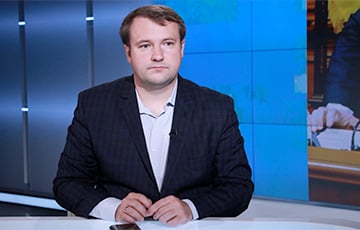
Will this opportunity be seized?
The latest attacks on Russian data centers—and, in particular, on Yandex’s data centers— have led to consequences that seem completely unexpected at first glance.
Initially, all these attacks by Ukraine appeared to be simply a response to corresponding actions by Russia, which not long ago began a systematic campaign against Ukrainian data centers, particularly in the Ukrainian capital, Kyiv, as well as in other cities. Russia even mockingly referred to these attacks, through its Ministry of Defense, as Ukraine’s “information detox.”
However, Russian planners failed to take into account one very simple fact: while Ukraine’s data centers are relatively small and predominantly private, in Russia the relevant infrastructure is tied to major information monopolies, such as “Yandex.”
Yandex’s monopolistic status in the Russian information technology market has resulted in its data centers being absolutely colossal. Moreover, they provide a whole range of additional functions, one of which turned out to be quite unexpected.
In particular, internet analysts have noted a sharp drop in the activity of political bots in online communication. After Ukraine struck three major Yandex data centers, supporters of “Alternative for Germany,” radical Trump supporters, as well as numerous “Poles” who had been actively opposing Ukrainians, and “Ukrainians” who had been just as actively opposing Poles.
The same applies to a whole range of other destructive movements in the modern world.
The situation is as follows: Russia simply used the infrastructure of its information monopoly to host entire bot farms, which pursued rather mundane goals.
To this day, many believe that bots in the information space are some kind of virtual agitators who simply seek to convince someone of something. In reality, bots in the modern world are most often used for entirely different purposes.
By and large, they aren’t trying to change anyone’s mind. They simply play on emotions, sow division, pit people against one another, fuel destructive debates, and, overall, foster destructive processes in society.
Russian bots aren’t trying at all to convince anyone that Putin or Russia is something wonderful. No, they simply discredit the public institutions of Western countries, undermine the foundations of society, destroy public trust, and fuel internal conflicts.
And, as it turns out, all of this can be stopped relatively easily with targeted strikes against Russian data centers.
Because, as it turns out, a significant portion of the destructive forces operating in the Western information space actually exist thanks to Russian virtual infrastructure. And this is very telling.
Ukraine is once again doing Western societies a great service; these societies have suffered for years from destructive Russian practices but are often unable—and not particularly willing—to do anything about it.
And here comes Ukraine, which—through its effective, hard-hitting sanctions—is once again giving European politicians a chance to prepare for new attacks and acts of sabotage from Russia.
Whether this opportunity will be seized is hard to say. However, the fact remains: in contemporary Western political discourse, there are too many bots and too little common sense.
Petro Oleshchuk, Ph.D. in Political Science, Professor at Taras Shevchenko National University of Kyiv, exclusively for Charter97.org

Bank's name: Bank Millennium S.A.
Address: ul. Stanislawa Zaryna, 2A, 02-593, Warszawa
IBAN: PL97116022020000000216711123
SWIFT: BIGBPLPW
Name of the account holder: Fundacja “KARTA ‘97”
Purpose/title of payment: Donation for statuary aims
You can contact us by the e-mail charter97@gmail.com