Andrei Sannikov: We Need a Firm Strategy to Confront Dictatorships
1- 15.10.2026, 9:16
- 2,116
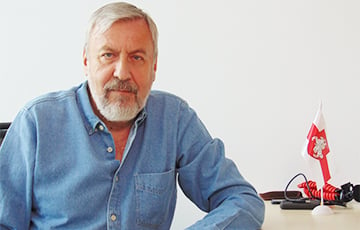
People who have fought for freedom deserve real protection.
The leader of the “European Belarus” civic campaign Andrei Sannikov took part in a side event at the OSCE Human Dimension Conference on “Transnational Repression”, held in Warsaw on October 14.
Charter97.org publishes the full text of the opposition politician’s speech:
“Authoritarian regimes are increasingly extending their repression beyond their borders, targeting political opponents, journalists, human rights defenders, and exiles even in countries where they seek safety. Yet the democratic world still lacks effective instruments to prevent this growing threat and adequately protect its victims.
Known as transnational repression, this practice takes many forms, including assassinations, kidnappings, forced returns, digital surveillance, cyberattacks, and the misuse of international legal mechanisms. It demonstrates the expanding reach of authoritarian power and highlights the urgent need to strengthen the global defence of democracy and human rights.
Transnational repression has become such a serious global threat that it should be recognized as a distinct indicator in international assessments of freedom and democracy, including Freedom House’s Freedom in the World and the Human Rights Foundation’s Tyranny Tracker.
Democratic states face a major challenge: they still lack sufficiently effective instruments to prevent transnational repression and protect those targeted by authoritarian regimes. When they cooperate with politically motivated extradition requests or fail to respond to threats against exiles, they risk enabling repression on their own territory.”
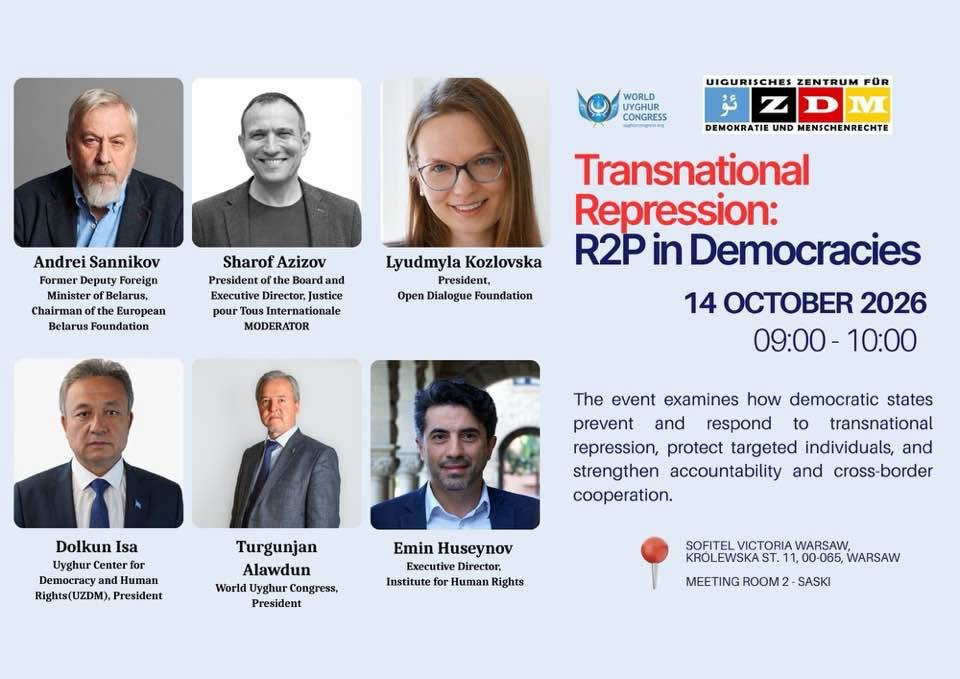
Andrei Sannikov argues that one aspect of transnational repression that receives insufficient attention is the bureaucratic barriers within democratic countries themselves:
“Political activists, journalists, and people seeking international protection may escape persecution in their home countries, only to spend years facing delays in administrative procedures, uncertainty over their legal status, restrictions on employment and travel, and the constant threat of deportation. Authoritarian regimes can make their situation even worse by refusing to issue passports to their critics or even stripping them of their citizenship.
Bureaucratic delays in themselves do not constitute repression. However, when democratic institutions fail to take into account the specific risks faced by political exiles, administrative obstacles can leave them vulnerable to threats, pressure, and renewed persecution. The consequences can be devastating: deportations, legal proceedings based on fabricated charges, serious harm to mental health, and damage to the well-being of political exile communities. These consequences also include an increased risk of suicide.
A democracy cannot claim to defend freedom while leaving those who seek its protection trapped in bureaucratic limbo.
I therefore call on democratic governments, parliaments, and international institutions to take decisive action:
Guarantee timely and fair procedures for asylum, residence, and legal status, taking into account the specific risks faced by political exiles.
Close legal loopholes exploited by authoritarian regimes, including the misuse of Interpol mechanisms, politically motivated extradition requests, and cross-border surveillance.
Protect those at risk by ensuring legal certainty, access to employment and valid documents, personal safety, and the freedom to continue peaceful political activities.
Ensure accountability for threats, intimidation, surveillance, and other unlawful acts against exiled activists.
Adopt strong and coordinated measures against authoritarian regimes that systematically persecute their opponents at home and abroad.”
According to Andrei Sannikov, the situation in Belarus illustrates this problem clearly:
“The repression unleashed by Lukashenka’s regime has been compounded by years of insufficiently decisive action by the democratic world. When authoritarian regimes face no meaningful consequences, they are encouraged to intensify repression, imprison their opponents, and extend persecution beyond their borders.
Thanks to US diplomatic efforts, political prisoners in Belarus have been released. Yet this progress has been accompanied by a disturbing development: the regime continues to detain people while seeking concessions, including sanctions relief, in exchange for their release. Those freed are often forcibly deported from Belarus and deprived of their passports and the protection of their own state, leaving them vulnerable in exile and dependent on the willingness and ability of other countries to protect them.
It is impossible to effectively counter transnational repression without confronting the regimes responsible for it. Protecting every individual victim is essential, but it is not enough to achieve lasting results. What is needed is a firm, coordinated strategy to counter dictatorships, real consequences for their actions, and accountability for those responsible.
The stakes extend far beyond individual cases. If democratic states fail to protect political exiles and consistently challenge authoritarian aggression, they risk undermining their own institutions, principles, and security.
Exile must not become another form of punishment. Seeking protection in a democracy must not mean living in permanent fear. Those who have fought for freedom deserve more than sympathy: they deserve effective protection, solidarity, and decisive action.
The credibility of the democratic world depends not only on the freedoms it promises, but also on its willingness and ability to defend them.”

Bank's name: Bank Millennium S.A.
Address: ul. Stanislawa Zaryna, 2A, 02-593, Warszawa
IBAN: PL97116022020000000216711123
SWIFT: BIGBPLPW
Name of the account holder: Fundacja “KARTA ‘97”
Purpose/title of payment: Donation for statuary aims
You can contact us by the e-mail charter97@gmail.com