
Andrei Sannikov: We Gained Independence At A Unique Moment In History
2- 25.08.2026, 12:59
- 7,216
35 years ago, Belarus became an independent country.
August 25 marks the 35th anniversary of the day when Belarus's independence became law. In 1991, the Supreme Council granted the Declaration on State Sovereignty the status of a constitutional law.
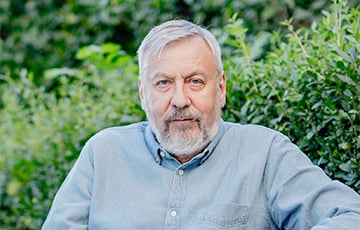
About what happened during those historic days, how the Lukashenko regime tried to destroy the legacy of independent Belarus, and when the country might have a new chance at liberation, the website Charter97.org spoke with the leader of the “European Belarus” civic campaign, Andrei Sannikov.
— Andrei Olegovich, you witnessed those historic events. How did Belarus’s independence become possible?
— The story of Belarus’s path to independence begins with Kastus Kalinowski, who in 1863–1864 led uprising against the Russian Empire. This uprising marked the beginning of the Belarusian national liberation movement.
The next milestone was the third charter of the Belarusian People’s Republic (BPR) dated March 25, 1918, which proclaimed Belarus’s independence. Then came July 27, 1990, the day the Supreme Soviet of Belarus adopted the Declaration on State Sovereignty, and, finally, the exclamation mark: On August 25, 1991, the Declaration acquired the status of a constitutional law.
I was indeed a witness to that final stage. Independence became possible because the heirs of that very same Kastuś Kalinowski—the Belarusian Popular Front, led by Zenon Poznyak — seized the unique moment of the collapse of the totalitarian Soviet empire and, with the support of the majority of the people—albeit in the face of desperate resistance from the terrified nomenklatura—secured the legislative ratification of our independence.
— You worked in the Ministry of Foreign Affairs of the newly independent Belarus and witnessed the first steps of our state. What were you able to accomplish back then, and what were those few years of freedom and democracy in Belarus actually like?
— For me, it was the best time of my professional life; I think it was also the best time in the history of independent Belarus—at least to date. We had to work 25 hours a day; sometimes my eyes would close on their own from lack of sleep, but how wonderful it was to work for my own country, to participate in laying the foundations of independent Belarus’s foreign policy, and, in essence, to establish ourselves in the world as an independent state.
The most complex issues of international security, the succession of international treaties, and the development of a strategy for Belarus’s European future — all of this had to be resolved within tight deadlines, and in doing so, we had to not only keep national interests in mind but also advance them on all fronts: from state borders to the establishment of our own embassies in key countries.
It can be said that in just a couple of years in international relations, we covered ground that took other countries more than a hundred years to traverse.
And the entire country was, in those few years, simply being reborn. There was an incredible energy of creation—a distinctly Belarusian energy: our own television, an independent press, a multi-party political system, a parliament, elections, the emergence of civil society, and Belarusian rock music. In short, that was life.
— Just a few years later, Lukashenko came to power in Belarus; he would hold an illegal referendum in 1996, and you, as Deputy Minister of Foreign Affairs, would resign in protest. Was Lukashenko inevitable? Could Belarusian history have unfolded differently?
— Lukashenko was not inevitable. Even when he became president, he was not destined to remain in power for such a monstrous term. He was brought to power by Prime Minister Vyacheslav Kebich’s maniacal desire to become the most powerful figure—that is, the president.
Let us recall that, of all the former republics of the USSR, Belarus was the only parliamentary republic. And that was our advantage, the foundation of our democratic development.
Prime Minister Kebich, who had ruined the economy, had by 1994 become a symbol of stagnation, yet he desperately wanted to be the top leader. Relying on overt and covert communists in parliament, he pushed through constitutional amendments and established the office of president.
With no chance of winning the election, he blindly and stubbornly walked into his own trap, which allowed the most odious deputy of the Supreme Soviet to become Belarus’s first president. Kebich not only brought Lukashenko to power, he destroyed the parliamentary form of government in Belarus.
We have a tendency not to react immediately to danger. However, this isn’t unique to us; it’s one of the characteristics of human nature.
We hoped that, just as we had elected Lukashenko, we would be able to re-elect him. But we should have reacted actively to the looming disaster at the first signs of lawlessness—taking to the streets in protest in 1995 during the first illegal referendum, in 1996 during the usurpation of power in the wake of the second illegal referendum and the dissolution of parliament, and in 1999, when Lukashenko’s political rivals were murdered—each of whom had a real chance of becoming president in more or less fair elections: Karpenko, Gonchar, and Zakharenko.
In those years, Lukashenko was weak; he had not yet established a harsh system of repression, and mass protests could have changed the situation.
— What can Belarusians count as a success, and where have mistakes been made over these 35 years?
— We can count our Belarusian identity as a success. Over the years, we’ve managed to almost completely restore the Belarusian identity: language, history, culture, literature, music, non-Soviet folklore, painting, poetry, and the connection between generations and the land.
And this despite the fact that Lukashenko’s regime is a regime of genocide and desertification, aimed at destroying Belarusians and our environment.
It didn’t work.
There are certain rivers—karst rivers. Their distinctive feature is that they disappear from the surface into the ground, only to resurface again. So it is with us...
The mistakes are obvious: so far, we have been unable to rid ourselves of this collective farm-style dictatorship—not only for objective reasons, but also for subjective ones.
— Belarusians have not resigned themselves to dictatorship and have been fighting for freedom for many years. The events of 2020 became one of the most striking stages of this struggle. Will history give us a chance in the near future to correct the mistakes we’ve made?
— History constantly gives us a chance, but so far we haven’t been able to take full advantage of it. But history is a patient—and persistent—lady. Note that with each passing time, she gives us ever greater opportunities.
From 2001, the first “Square” during the “presidential elections,” through the uprising in December 2010, to the revolution of 2020—all of these are manifestations of a steady popular liberation movement that is growing stronger despite all the repression and the rampaging police apparatus.
By all historical logic, the next stage should be the decisive one.
So—Happy Independence Day!

Bank's name: Bank Millennium S.A.
Address: ul. Stanislawa Zaryna, 2A, 02-593, Warszawa
IBAN: PL97116022020000000216711123
SWIFT: BIGBPLPW
Name of the account holder: Fundacja “KARTA ‘97”
Purpose/title of payment: Donation for statuary aims
You can contact us by the e-mail charter97@gmail.com