

Did The Ayatollah Flee To Russia?
4- 4.08.2026, 14:55
- 7,358
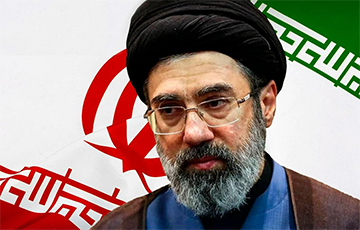
Intelligence agencies are trying to figure out where Mojtaba Khamenei is.
Mojtaba Khamenei took over as Iran’s leader this year following the death of his father—Ayatollah Ali Khamenei, who was killed in U.S. and Israeli missile strikes on the country on February 28. Since the new Supreme Leader took office, no one has ever seen him in person—all communication with him takes place exclusively through intermediaries from the ruling elite.
“A country on the brink of nuclear war—at least in theory—is led by a man about whom no one knows anything and who has never been seen in public. Frankly, it’s chaos,” sources in intelligence agencies, including Israel’s Mossad, told the Daily Mail sources within intelligence agencies, including Israel’s Mossad.
What is known about the fate of the new leader
More than five months have passed since the death of the former Supreme Leader. Along with Ali Khamenei, his daughter, grandson, son-in-law, and daughter-in-law were killed. Among the injured was his eldest son, 56-year-old Mojtaba Khamenei, who, according to available reports, suffered severe injuries to his face and one or both legs as a result of the airstrike.
Despite this, he succeeded his father on March 9, but has not appeared in public since then. The new leader did not even release a pre-recorded video or audio message—instead, a state television anchor read a statement allegedly written by Khamenei himself, while a still photograph of him was displayed on the screen.
Mojtaba missed his father’s funeral on July 4—the authorities attributed this to “security concerns.” He also broke with a long-standing tradition by not addressing the nation on the occasion of the Iranian Nowruz on March 20, even though his father had consistently delivered a New Year’s televised address for 30 years.
Experts’ Doubts
Last week, Washington resumed strikes on Iranian military targets following attacks by the Islamic Revolutionary Guard Corps (IRGC) on tankers in the Strait of Hormuz, and Donald Trump promised to “kick Iran’s ass.” However, even in the midst of this acute crisis, the new leader’s silence continues.
“It is highly doubtful that Mojtaba Khamenei is currently alive or, at the very least, fully functional,” said a former Mossad officer who now works at the Jerusalem Center for Security and Foreign Policy (JCFA).
“His absence from his father’s funeral is highly telling. Although high-ranking representatives of the Iranian regime, including his own brothers, attended the ceremony, Mojtaba was nowhere to be seen. In Shiite tradition and Iranian culture, attending one’s father’s funeral is a sacred duty. His absence directly indicates an inability to attend, rather than operational caution,” the intelligence officer believes.
Main theories regarding his whereabouts
Western security sources believe that if Mojtaba is indeed alive, he is most likely hiding in a heavily guarded underground shelter—speculation points to tunnels beneath Tehran or a bunker near the holy city of Qom.
“Despite five months of continuous bombing, intelligence agencies assume that the Iranian regime still maintains several secure underground shelters,” noted one Western source.
Within Iran itself, the official line is widespread: high-ranking officials claim that the new leader has been wounded and is therefore avoiding the public eye, while continuing to rule the country from his hideout. On July 21, President Masoud Pezeshkian stated that Mojtaba’s condition is improving: “The level of communication with our dear Supreme Leader is growing every day and must continue to grow so that we can resolve our problems under his leadership.”
There is also an alternative version—that Mojtaba fled to Russia, which has a long history of granting asylum to ousted foreign leaders (at various times, there has been talk of former Syrian President Bashar al-Assad and former Ukrainian President Viktor Yanukovych).
A third hypothesis suggests that the new leader is in a coma and physically incapable of performing even basic duties, and that statements on his behalf are drafted by IRGC Commander-in-Chief Ahmad Vahidi and generals close to him.
According to sources, if Mojtaba is indeed alive, he communicates via notes written on small pieces of paper that are passed along a chain of couriers—with each intermediary knowing only the previous and next links in the chain. The Mossad compares this system of secrecy to the methods used by Osama bin Laden to avoid detection by U.S. intelligence.

Bank's name: Bank Millennium S.A.
Address: ul. Stanislawa Zaryna, 2A, 02-593, Warszawa
IBAN: PL97116022020000000216711123
SWIFT: BIGBPLPW
Name of the account holder: Fundacja “KARTA ‘97”
Purpose/title of payment: Donation for statuary aims
You can contact us by the e-mail charter97@gmail.com