

WSJ: Putin Could Attack NATO As Early As This Fall
20- 7.08.2026, 7:57
- 10,180
U.S. intelligence has released a new forecast.
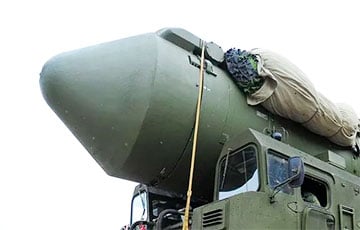
U.S. intelligence has released a new assessment regarding a possible scenario of a Russian attack on NATO. According to The Wall Street Journal, according to new reports, Russian leader Vladimir Putin may attempt to test the Alliance’s resolve with a limited offensive against an allied country even before the war in Ukraine ends.
These new assessments come amid a shortage of certain critical munitions needed by the U.S. military to confront Russia or China in a potential future war. At risk are stocks of high-precision long-range missiles and the Army’s tactical missile systems, as well as short-range “Stinger” anti-aircraft missiles.
Previously, the U.S. had assessed that Putin would not provoke a NATO member state until the war in Ukraine ended. However, earlier this year, that assessment changed as Putin has come under increasing pressure in Ukraine and at home—Ukrainian drones are inflicting growing damage on both the Russian military and the oil industry, while Putin’s forces are achieving fewer and fewer successes on the front lines, suffering heavy losses in the process.
At the same time, Putin’s goal in attacking NATO during the ongoing war with Ukraine would be to divide the alliance.
Timing and Scenario for an Attack
Putin is doing everything in his power to consolidate his gains in Ukraine, which is why U.S. intelligence officials predict that Moscow may soon intensify its aggressive actions against European allies. Officials note that there is concern Putin could become more dangerous if he is backed into a corner:
“Potential threats range from a cyberattack on a NATO country or the deployment of unidentified armed groups to occupy territory to a limited incursion on the alliance’s eastern flank. According to U.S. intelligence assessments, any Russian actions could occur between this fall and 2029.”
The likelihood of the most extreme scenario—a limited ground invasion—is low, but, according to reports, it is increasing over time. Such a move has always been considered extremely unlikely, as it would trigger NATO’s Article 5, which obligates members to collective defense. However, Article 5 does not clearly define NATO’s response to cyber threats or hybrid threats.
Representatives from the Ministry of Defense and NATO’s Supreme Headquarters in Europe declined to comment on this intelligence.
“We are constantly considering and preparing for various scenarios. NATO is watching us, and we are ready to deter and defend ourselves as necessary, which we continue to demonstrate,” said Colonel Martin O’Donnell, a NATO spokesperson.
Russia’s Attack on NATO
The Baltic states and Poland are considered the most likely theaters for a potential future confrontation between Russia and NATO. Such assessments come from Western intelligence agencies, military analysts, and the leadership of the Alliance’s eastern flank countries.
U.S. intelligence has warned Warsaw of the risk of possible Russian provocations against Poland’s critical infrastructure in order to test NATO’s response.
Meanwhile, Lithuanian intelligence believes that Russia may use captured Ukrainian-made drones to attack critical infrastructure in the Baltic region.

Bank's name: Bank Millennium S.A.
Address: ul. Stanislawa Zaryna, 2A, 02-593, Warszawa
IBAN: PL97116022020000000216711123
SWIFT: BIGBPLPW
Name of the account holder: Fundacja “KARTA ‘97”
Purpose/title of payment: Donation for statuary aims
You can contact us by the e-mail charter97@gmail.com