


The Kremlin's Secret Plans Through 2035 Have Been Revealed
6- 21.09.2026, 9:35
- 3,940

Rosatom declined to comment on the documents.
Russia, the aggressor nation, is preparing to increase its production of attack drones by at least 78%. The expansion of the “Alabuga-Volokno” plant, owned by the state corporation “Rosatom,” in Tatarstan will provide Moscow with an additional 500 metric tons of aviation-grade carbon fiber annually by 2029. This volume will be enough to produce 28,000 additional drone airframes per year. This was reported by Politico.
Currently, according to Ukrainian estimates, Russia is capable of producing more than 36,000 “Geran”-type kamikaze drones per year.
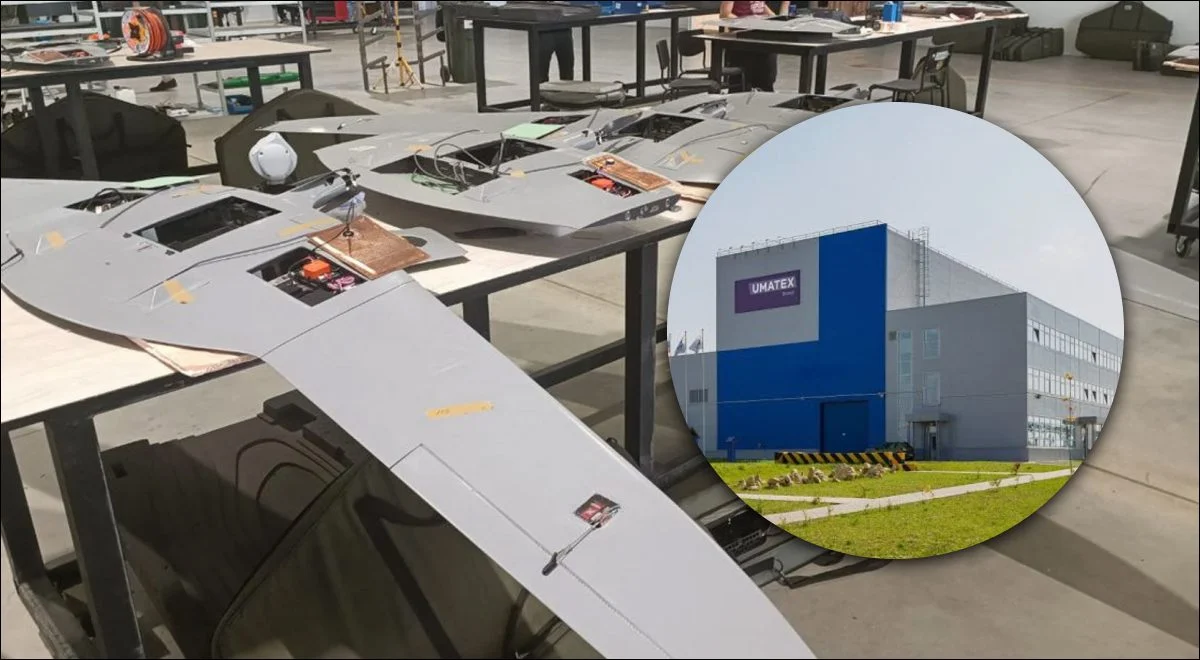
Business, design, and construction documents were compiled by the Ukrainian Center for Security and Cooperation. The materials include equipment diagrams and site development plans.
The authenticity of the documents was separately confirmed by the U.S. House of Representatives’ Committee on China and by the Ukrainian government—as officials speaking on condition of anonymity told Politico.
Rosatom declined to comment on the documents.
It is worth noting that the plant itself and its parent company, UMATEX, are subject to sanctions imposed by the U.S., the U.K., and other Western countries. Earlier this year, the company received a disguised shipment of 46 metric tons of chemical raw materials for carbon fiber from a Chinese state-owned corporation.
The Chinese Embassy in Washington stated that it was unaware of the expansion plans and that the export of dual-use goods is controlled in accordance with the law.
Construction has already begun
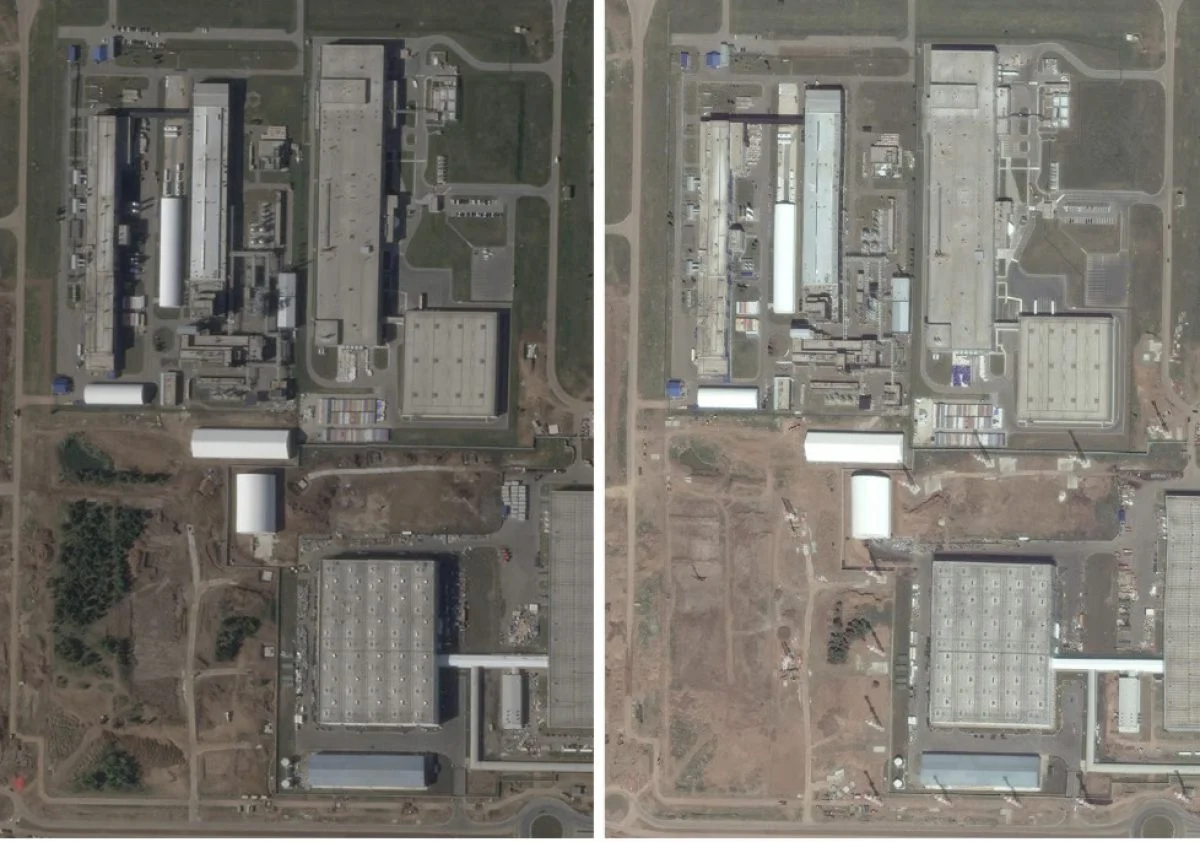
The Russian government approved the project for a new “chemical fiber and yarn production” line back in May. Satellite images taken between May and July showed land being cleared near the existing production facility.
Images from August were independently obtained by the founder of the Washington-based Institute for Science and International Security, David Albright, who has been researching Russian drone production for years. According to him, the foundation for the future production facility is already being laid, and the stated completion date of 2027 “requires rapid construction.”
The key question is why Moscow is investing in this particular material rather than in expanding assembly facilities.
“They can’t build a drone without carbon fiber. They can’t replace the carbon fiber in the drone and keep it lightweight,” Albright noted.
According to him, the material is used to reinforce the wing and internal structures—in particular, the fuel tank and engine mounts.
The shortage involves polyacrylonitrile (PAN) tow—the so-called PAN precursor, a raw material for high-quality carbon fiber.
The Kremlin lacks sufficient polyacrylonitrile tow—the so-called PAN precursor, a raw material for high-quality carbon fiber—to meet all of its defense needs. Therefore, the documents mention the construction of a “modern PAN plant” in the “Alabuga” special economic zone. The main product is expected to be UMT42S-3K fiber for the aerospace industry.
The file’s metadata indicates that it was created by a UMATEX employee late last year. The goal is to reduce dependence on Chinese imports.
According to an analysis by the Washington-based Center for Strategic and International Studies (CSIS), as part of the national “Unmanned Aerial Systems” project, Russia plans to produce about 130,000 drones by 2030 and 350,000 by 2035.
The threat extends beyond the front lines in Ukraine
Mass deployment has become a distinct tactical advantage for the Russian army, and it is precisely this that drives the logic behind investments in carbon fiber.
Drones allow Moscow to “launch massive barrages and target deep-seated objectives within Ukraine across a multitude of locations, ensuring that they can overwhelm the defense.”
“It was a highly effective tool of coercion and a critically important element of Russia’s campaign of deep strikes,” said Stacey Pettijon, a former advisor in the U.S. Secretary of Defense’s Office who researches unmanned warfare at the Center for a New American Security.
The head of the Center for New American Security (CNAS), Sergey Kuzan, is convinced that the scaling up of “Alabuga” should be viewed not only as a problem for the Ukrainian front but also as a long-term threat to the security of all of Europe.
Separately, Kuzan points to a shift in the nature of the Kremlin’s actions against EU countries, citing documented violations of Polish and Romanian airspace.
“At this stage, the Kremlin’s hybrid aggression is increasingly shifting toward direct escalation, in particular through so-called sub-threshold actions aimed at testing the reactions of European countries,” he emphasized.

Bank's name: Bank Millennium S.A.
Address: ul. Stanislawa Zaryna, 2A, 02-593, Warszawa
IBAN: PL97116022020000000216711123
SWIFT: BIGBPLPW
Name of the account holder: Fundacja “KARTA ‘97”
Purpose/title of payment: Donation for statuary aims
You can contact us by the e-mail charter97@gmail.com