

Russia Is Building A Network Of Towers In Belarus To Control The "Shaheds"
4- 25.09.2026, 16:22
- 2,616
Ukraine can counter this.
Former Ukrainian Air Force officer Anatoliy Khrapchynskyi appeared as a guest on the show "Channel 24". The discussion focused on the enemy’s new tactics regarding the operation of attack drones.
Anatoliy Khrapchynskyi analyzed this topic in detail and explained what kind of network of towers Russia has built in Belarus.
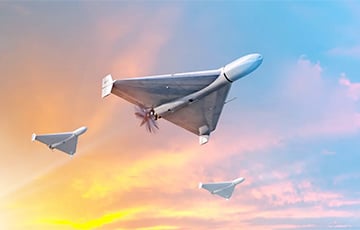
Thus, Russia is constantly improving its air attack capabilities. In addition to installing jet engines and additional weaponry (such as MANPADS to counter aircraft), high-quality network connectivity will become the main challenge in the near future. According to Anatoly Khrapchinsky, director of development at a defense enterprise, the adversary is actively deploying communication towers on Belarusian territory.
The cost of components for a single such ground station is approximately $20,000. Currently, about six towers are already operational. To completely cover the 140-kilometer border zone in western Ukraine, Russia needs to deploy 18 such facilities. This represents a relatively small investment for the aggressor, but it provides a colossal advantage.
A single such tower is capable of maintaining high-quality video communication with full control over two “Shaheds” simultaneously. If we’re talking only about telemetry and flight correction, the capacity increases to 20 drones. A prime example is the mobile communication tower installed by Belarus near Chernobyl.
Thanks to the unobstructed horizon over the Kyiv Sea, it provides guaranteed communication for drones at distances of up to 140 kilometers, which fully covers the territory of Kyiv. It is precisely this high-quality communication channel that allows the Russians to carry out precision strikes.
How Ukraine Can Counter Belarusian Towers
To neutralize this threat, it is not necessary to launch strikes against Belarusian territory. The optimal solution is to use electronic warfare (EW) capabilities. Directed radiation aimed at the antennas of these towers can jam the signal reception paths from the “Shaheds,” which will significantly limit Russia’s ability to use guided drones.
However, implementing this plan requires the appropriate equipment along the Ukrainian border. As Khrapchynsky notes, Ukrainian manufacturers possess the necessary countermeasure technologies but face a lack of clear, standardized technical specifications from the relevant ministries.
This lack of strategic vision means that the government continues to purchase conventional interceptor drones, ignoring the need for more sophisticated automated radar and countermeasure systems.

Bank's name: Bank Millennium S.A.
Address: ul. Stanislawa Zaryna, 2A, 02-593, Warszawa
IBAN: PL97116022020000000216711123
SWIFT: BIGBPLPW
Name of the account holder: Fundacja “KARTA ‘97”
Purpose/title of payment: Donation for statuary aims
You can contact us by the e-mail charter97@gmail.com