

Putin Has Trapped Himself
- 26.09.2026, 21:45
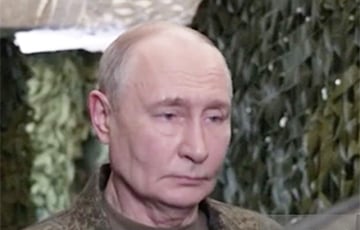
The economy is stagnating, while Ukrainian drones and missiles are striking deeper and deeper into Russian territory.
As British political scientist and historian Mark Galeotti writes in his article for The Times (translation - “UniAn”), Putin seems at a loss as to what to do. He has brought the political system, the security services, and the oligarchs under his control. At the same time, however, the awareness of his own mortality must be undermining his imperial ambitions.
Galeotti emphasized that Russia’s economy is stagnating, while Ukrainian drones and missiles are striking deeper and deeper into the country’s territory. Because of this, the Putin regime’s ability to withstand the current strain is being called into question.
The political scientist recalled that shortly after the “elections,” Putin claimed they had supposedly demonstrated that many Russians support the war against Ukraine. However, he believes that if this vote was a kind of “referendum on Putin’s war,” then it failed.
Galeotti noted that the 2026 elections were accompanied by even more widespread fraud than previous ones. Mathematical modeling of the detailed results shows that the actual turnout was about 40%, and the share of votes for “United Russia” was closer to 37%.
According to the historian, the facts indicate that Russians are tired of the war, although they do not intend to rise up against Putin. Russians are also not convinced by the Kremlin dictator’s claim that the so-called “new elite” in Russia will be formed from veterans of the war against Ukraine.
Moreover, Putin’s promises to elect at least 100 so-called “special military operation veterans” to the State Duma have fallen through. Instead, only 46 were elected—and many of them are not actually former military personnel, but rather politicians who served a safe and brief term in rear units solely to pad their résumés.
Putin is trying to convince Russians of Russia’s “greatness”
Separately, Galeotti drew attention to statements by Putin and former Russian President Dmitry Medvedev regarding Russia’s “greatness.” The historian believes that, in their view, a “great power” means complete autonomy and the ability to act solely in its own interests.
“Today’s Russia is not only drifting further and further away from the West economically and politically, but also in its self-perception,” the political scientist emphasized.
Galeotti noted that Putin is trying to present himself to Russians as the “defender of the motherland.” This narrative is actively supported by Russian propagandists. For example, State Duma Chairman Vyacheslav Volodin recently stated that without Putin, there “would be no Russia.”
However, while the federal government’s budget is under pressure, regional budgets are in an extremely dire situation, the political analyst emphasized. He added that local administrations, which had offered huge recruitment bonuses to meet their military recruitment quotas for the war, were in many cases forced to cut them due to budget constraints. In Mordovia, for example, the bonus amount was reduced last month from 3 million rubles to just 800,000.
“The ‘emperor’s new clothes’ policy only works for so long. Claiming there is a massive wave of support when there isn’t any is a risky tactic, and the longer the war lasts, the higher the likelihood that it will be called into question,” the historian emphasized.
What Putin Will Do Next
According to Galeotti, Putin will most likely launch an increasing number of strikes against Ukraine’s infrastructure this winter, throw his troops into the last two “fortress cities” in the Donbas, and step up his hybrid campaign in Europe. Then, with the onset of spring, he could initiate negotiations, hoping that Ukraine and its European partners will by that time be desperately seeking peace, even on the Kremlin’s terms.
The political analyst added that, according to a Western defense official, the Russian elite is confident that the war against Ukraine will end next year, regardless of whether Putin captures Slavyansk and Kramatorsk.
Galeotti believes that, as an alternative, Putin could use the powers granted to him to escalate the conflict, combining the long-awaited mass mobilization of hundreds of thousands of reservists with an even more aggressive campaign of sabotage and subversion in Europe. In that case, the Kremlin leader would hope that this would allow him to capture the last remaining unconquered areas of the Donbas quickly enough so that he could then declare a ceasefire on his own terms.
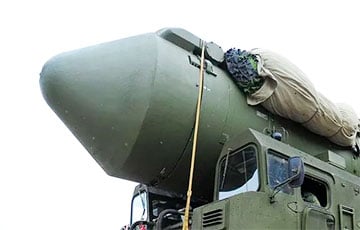
- Of course, this is dangerous. Putin will go all in, fully aware that he cannot afford for his escalation to fail. If it backfires and he finds himself backed into a corner, he may be tempted to take even more dangerous steps, such as using tactical nuclear weapons or striking European factories and supply centers that arm Ukraine. This is the real nightmare scenario,” writes Galeotti.
The political analyst noted that European leaders still doubt that Putin would dare to attack a NATO country. However, they fear that the Russian dictator is driving himself into a corner where, in his view, he has no alternatives.
“In any case, there is no turning back. When the war ends, it’s not just that the West will neither forgive nor forget, but also that Russia will not return to the model that existed before 2022.” This regime has become more typically authoritarian, more deeply rooted in hostility toward the West. Perhaps most of Russian society is tired of Putin’s imperial dreams, but he and his inner circle cannot abandon them, nor can they risk returning to the old system, which nevertheless allowed for a surprising degree of pluralism and civil society, the historian emphasized.
However, Galeotti does not rule out that after the war ends, Putin may try to restore relations with Europe. To do so, his regime will have to shed its habits, paranoia, and tyranny.

Bank's name: Bank Millennium S.A.
Address: ul. Stanislawa Zaryna, 2A, 02-593, Warszawa
IBAN: PL97116022020000000216711123
SWIFT: BIGBPLPW
Name of the account holder: Fundacja “KARTA ‘97”
Purpose/title of payment: Donation for statuary aims
You can contact us by the e-mail charter97@gmail.com