Natallia Radzina: Putin's Regime Will Collapse After Liberation of Belarus
16- 24.08.2022, 17:05
- 18,454
We must seriously think about how to rescue our country by military means.
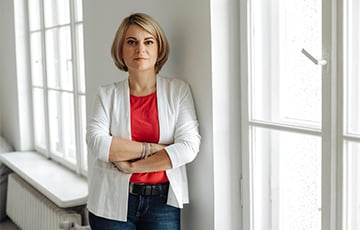
Russia's nuclear weapons may already be on the territory of Belarus. The RF Armed Forces are preparing to launch new large-scale strikes on Kyiv from the north, and we must not believe in Lukashenka's words that his army will not fight the Ukrainians. Natallia Radzina, the editor-in-chief of the oldest Belarusian independent website Charter97.org, visited Tallinn and told in an interview with Postimees what Putin’s war with Ukraine looks like in the eyes of the independent Belarusian press, what prevented the 2020 revolution in Minsk from becoming successful, and why the sluggish reaction of the West to Lukashenka’s violence made the current war possible.
— When it became clear that Russia was again bogged down on the fronts, Lukashenka suddenly said: “Don't think that I'm planning some kind of attack here, that Ukraine will be bombed from the territory of Belarus or something. I have no desire for either your or my children to fight. In the name of what? We need to calm down.” How do you understand these words of Lukashenka?
— You should not believe any of Lukashenka's words. Lukashenka always lies. In Belarus, his regime has been ruling for 28 years. I have been doing journalism for 25 years. I listened attentively to all his speeches. As a rule, there was never any truth there. Always look at actions, not words. And the actions say that today the deployment of Russian troops on the territory of Belarus continues. These are air defense units, aviation, and missile units of Russia.
From the territory of Belarus there is a constant shelling of the Ukrainian territory. A large-scale attack is expected soon — on August 24. On the Independence Day of Ukraine. Alongside that, the missile strikes do not stop. Any moment Ukrainian cities can again come under fire from the territory of Belarus. Also in Belarus there are Iskander missile systems that can carry nuclear weapons.
— And we remember that not so long ago, Lukashenka begged Putin for nuclear weapons in front of the cameras.
— Yes. Since then, Russian Il-76s have been regularly flying to Belarus. According to experts, they can just carry the necessary missiles for the Iskander complexes. It is possible that nuclear weapons are already on the territory of Belarus. At the same time, Lukashenka regularly threatens his neighbors: Lithuania, Latvia, Poland. And he directly speaks about the use of nuclear weapons. This is what you should pay attention to. Everything else is a ploy to try to minimize the pressure of the Western sanctions.
— Isn’t Lukashenka's statement supposed to work inside Belarus? It's one thing to let someone else's army, which is ready to die in Ukraine, into your territory, but it’s quite a different thing to accept coffins with your own soldiers in the country.
— This is a show for both external and internal consumers. Lukashenka understands that sanctions are detrimental to his regime, they are beginning to take effect. Bans have been introduced both on the supply of Belarusian oil products and on the supply of potassium, and these are the main sources of income from the country's exports. Banks are disconnected from SWIFT. Sanctions are being introduced at metallurgy and woodworking enterprises. Naturally, this hits the economy.
The flagships of the Belarusian industry are already working at a third of their capacities. Warehouses are loaded, there is no sale of products, machines gradually fail without the necessary imported spare parts. Every Belarusian enterprise is already experiencing difficulties due to the sanctions pressure.
— But what about the Russian ports in the Baltic sea? It seems that even a separate port has been promised for Belarus.
— There is no necessary infrastructure to create it, it takes time and money. Belarus understands that serious funds are needed for reorientation. And the path itself is more difficult — expensive logistics. More time, more money. There is simply no equivalent replacement for the ports in Klaipeda and Ventspils. Lukashenka is afraid of this, trying to slip out of the sanctions.
The situation becomes catastrophic. There are massive layoffs underway at Belarusian enterprises. The wages dropped sharply. There is a threat of non-payment of pensions. And all this against the backdrop of rising food prices. Lukashenka is trying to pretend that he can allegedly restrain something in Belarus (On August 22, Lukashenka announced the creation of a “National Fund under the patronage of the President”, to which Belarusians will “voluntarily” donate their funds — edit.) But he can no longer hold things back. He lost the remnants of independence after 2020. Before, he could maneuver. We have long understood that even then it was a game and dust in the eyes of the West.
After 2020, he was able to stay in power only thanks to the support of the Kremlin. I am convinced that on the eve of the presidential elections in 2020, he had a conversation with Putin, they met repeatedly. Just then, Putin already knew that there would be a war with Ukraine. And then he ensured the support of Lukashenka.
— Olaf Scholz just said that Putin's words sounded confident that Ukraine and Belarus cannot be independent from Russia. In this sense, what is next for your country?
— I would not say that Belarus has completely lost its independence. It is Lukashenka who has completely lost his independence. Lukashenka is an illegitimate ruler, all his integration agreements with Russia, all these maps and plans have no legal force. After the Belarusian people overthrow Lukashenka's regime, all these agreements will be denounced. But, of course, the option of complete absorption of Belarus by Russia is also possible. It is possible to hold a referendum on the territory of Belarus together with referendums in Zaporizhzhia and Kherson.
— Are there any signs of preparation thereof?
— So far there have been no signals, but there are expert estimates and assumptions. This may well be possible, since Putin needs to show his electorate that progress is being made.
— What do the people in the power system think of it? What does the “elite” say?
— Belarusian officials are not an elite at all. They are the servants of the dictator. But even there today there are ambiguous moods. Many people think about their future. They see that Lukashenka has driven Belarus into a dead end, that isolation is destroying the country ... And they don't really want Russia to come. They understand that if Belarus is fully incorporated into Russia, they will lose their power. They will be replaced by Russian officials. And such sentiments exist in all layers of the Belarusian government. I'm not talking about top management, because all senior positions are taken by the proven appointed people, against whom there is certain compromising evidence, so that they cannot twitch to the side. We are talking about middle-level officials.
— Does anything depend on middle-level officials? It is unlikely that they will cause trouble for Lukashenka and his top managers.
— I do not believe in nomenclature coups. I would like to see patriots ready for a coup in the Belarusian army. Let's see, maybe Putin's war with Ukraine, with the possible entry of the Belarusian army into Ukraine, will make this possible. Perhaps such a situation will be able to inspire the Belarusian military to act. If we talk about the security forces, they are all aware that Lukashenka's power is literally hanging by a thread. And it is only thanks to the Kremlin that he remains, and the Kremlin suffers defeat after defeat.
It is not known how long this support will remain, but everyone knows for sure that there is no longer any support for Lukashenka among the population. 90 percent of Belarusians do not support his regime. Yes, unfortunately they cannot express it openly. The regime is really totalitarian, repressions have been going on every day for two years now. People are arrested for any reason: for any little thing, for a sticker of solidarity with Ukraine, for a white ribbon, for anything. But everyone knows perfectly well that this situation can explode at any moment.
A Belarusian law enforcement officer next to injured protester Yauhen Zaychkin, lying right on the streets of Minsk after dispersing a demonstration against the falsification of the results of the presidential election on August 9, 2020. According to official data, which cannot be verified, Aliaksandr Lukashenka won the election. According to all independent expert estimates, the election was won by the opposition candidate Sviatlana Tsikhanouskaya.
— In this sense, can one try to buy the Belarusian public opinion if the conditional Putin decides to mechanically replace Lukashenka with someone less brutal, toxic, and dull? Like, “okay, let the Russians come here, just take this ghoul away”.
— Choose the lesser of two evils? I never liked this choice. Can it be sold to Belarusians? If the attack on Ukraine continues from the territory of Belarus, if the totalitarian regime remains in the country, the society will not accept it. This will be the replacement of one Lukashenka with another Lukashenka. They can not deceive people like this, demonstrative liberal reforms will be needed ...
— But Putin is good at showing off ...
— The Putin regime has already entered the stage where it is not able to play such games. Too difficult, he is rapidly tightening the screws in his own country, but suddenly loosen the screws in neighboring Belarus, which he wants to control? How do you imagine that?
— Everything is relative. In fact, the regime in Belarus is much tougher than in Russia. It has been like this for a long time. It is not necessary to cancel everything, it is enough to show people the direction. There is room for maneuver.
— It is indeed tougher in Belarus, yes. But Lukashenka is Putin's teacher, and Belarus is a training ground where Putin, among other things, practiced methods of suppressing the people, repression. All this then was passed to Russia, all the new laws of Russia were first tried in Belarus. Therefore, I do not believe in such a scenario, Belarus has gone too far. Opportunities to change the situation in the country peacefully, not through violent protests, have already been lost. 2020 was the last opportunity to make a difference in the process of peaceful revolution.
— Is there any regret that the protest in Belarus two years ago was “peaceful”, that Gandhi’s methods do not work with cannibals and that in order to achieve a result, someone will have to send people to death?
— In Belarus in 2020, there was no classic non-violent resistance. A peaceful protest could have worked if the absolutely failed plan of the Opposition Coordinating Council had not been invented. It included people who had never been in the opposition before, and had no experience of holding actions. Musicians, former Lukashenka diplomats, writers. Seven people who decided that they are able to decide the fate of the country.
They did not make contact, refused the advice of the people from the old opposition, who held hundreds of actions and could advise something. Some of them left the country, some were arrested when the protests were already suppressed. But from the very beginning, the protest tactics were misguided. Why did everything fail? Because the real leaders who prepared this revolution were arrested on the eve of the protests. These are Mikalai Statkevich, Pavel Seviarynets, Yauhen Afnahel, the same Siarhei Tsikhanouski. Hardened street fighters who had fought the dictatorship for years were neutralized.
— That is, it did not come to retaliatory violence against police violence simply because the leaders of the protest were neutralized by that moment?
— Yes, the real leaders of the revolution were simply arrested the day before. On the wave were either random people, or those who, as I understand now, were controlled by the special services. They came up with a failed plan — holding protests exclusively on weekends. Have you met weekend revolutions anywhere? Marches on Sundays, and on Monday back to work for five days.
— The protests in Moscow in 2011-2012 were wasted away like that.
— Quite right. And Russian political scientists sent me an analysis of those protests and protests in Minsk. “Natasha, look. This is how they drained our protests at Bolotnaya in Moscow, and this is how they are doing it in your country.” Absolutely the same hands drained the protests there and there. I don’t know whose exactly, the FSB or the KGB, but the protests in Russia and Belarus were drained in exactly the same way. If 200,000 people gather, you need to go to the government house and not leave until negotiations begin.
It is necessary to call on people to hold a general strike so that enterprises stop. It is necessary to go to the Belarusian television and demand broadcasting. This could be achieved. It was necessary to go to prisons and demand the release of those who were cruelly tortured there in those days. But those leaders who were at that time, Latushka, Kavalkova, Tsikhanouskaya, refused real scenarios. Because of these people, everything was destroyed two years ago. Thus, Lukashenka managed to suppress the protest.
— There has been no sociology in Belarus for a long time, but it is important to at least try to understand what the society thinks of Putin's war with Ukraine? Do ordinary Belarusians understand that they are accomplices?
— Most Belarusians oppose this war. There are sociologists who manage to conduct research clandestinely. They call the figure of 85-90 percent of those who oppose this war. I constantly talk to people in Belarus and ask about the same. And they tell me that there are practically no people who support this war. Yes, there are still marginal strata who still remain under the influence of Russian propaganda, but there are not many such people.
— How many people left the country after the events of 2020?
— Several hundred thousand. And among them about a hundred percent are against the war. In the current situation, many of them are actively involved in the struggle, more and more people are going to fight in Ukraine. In Ukraine, a regiment named after Kastus Kalinouski was created and continues its work. The regiment is part of the International Legion of the Armed Forces of Ukraine. They fight in hot spots. They fought near Kherson, in the Mykolaiv region, in Donetsk.
More than ten of their fighters were killed. There are mobilization centers in Warsaw, in Lithuania. Belarusians enter, train, and go to war. Some Belarusians abroad are very actively engaged in volunteer work. They help Ukrainians to stay in Poland, to survive in Lithuania, Latvia. The situation is the same in Tallinn, you also have an active Belarusian diaspora. Raising money to help the Armed Forces. People are helping the way they can.
— What is the qualitative difference between Belarusian migration and Russian migration? Activity, composition, problems in adaptation.
— Of course, there are problems. As is the collective responsibility. We can't do anything about it. Yes, they also refuse visas and residence permits. We are trying to explain to the authorities that it is very important for people who are subjected to repression or are at risk of being subjected to it to be able to leave the country. That humanitarian visas are necessary. Tourist visas in Belarus are almost impossible to obtain already. But, fortunately, it is still possible to obtain so-called humanitarian visas through some embassies. This allows people who could be arrested to leave the country.
As for the Baltic countries, I see in the news that they stop issuing residence permits and visas to citizens of the Russian Federation and Belarus. It seems to me that we just need to check people more carefully. You need to understand that Belarus is actually ruled by an occupation regime that people do not support. In this situation, you need to separate people. And I must say that in Russia there is a large mass of people who do not support Putin's war. There are threats to their security as well. These people should be able to go to Europe. I understand that these are issues of national security of the EU countries. Once again: the relevant services should just check all these people better.
— Do you think the retaliatory violence of the protesters in 2020 to the violence of the security forces would hasten the appearance of Russian soldiers in the country? After all, Lukashenka would certainly have requested such support from Putin.
— He got the support of the Kremlin even without it. There was information that there were fighters of the Russian Guard in Belarus in August-September 2020. Yes, there was no army, but there were Russian propagandists who landed on Belarusian TV, which Belarusian journalists began to quit in protest. There was financial support from Moscow. The bonuses to the security forces were huge. Obviously this money was from Russia. As for the army, if there were right-wing organizations like the Right Sector in Belarus, then, perhaps, such a scenario of Moscow's reaction would have been implemented.
But it is not a fact that even then Russia would have intervened in 2020 with the help of the army. For some reason, it still seems to me that Putin was not ready for such brutality in 2020. If Putin tried to suppress the protests in Belarus with the help of the Russian army, this would have caused a very harsh reaction from the West, and it was important for him to quietly prepare for a war with Ukraine. Belarus was then in the center of attention of the whole world. These actions by Putin would not go unnoticed and unpunished. Therefore, I believe that it was necessary to take risks on the street then. If there had been real leaders, if there had been a real plan of action and harsh sanctions from the West, the outcome could have been different.
Western sanctions are a very important moment for Belarus. There were no sanctions for almost a year after the suppression of the protests, only in May 2021, when Lukashenka actually committed an act of international terrorism by landing a foreign plane because of one blogger, they began to impose sanctions. We called for sanctions, but the West was very slow. And, by the way, Ukraine then very actively traded with the Lukashenka regime, fueling it financially. Ukraine bought huge volumes of oil products and potassium. They themselves created a situation that allowed Lukashenka's regime to hold on. And Putin was then able to attack Ukraine together with Lukashenka.
— Does the independence of Belarus depend on Putin's war with Ukraine now?
— Undoubtedly. Now the fate of my country in almost every aspect depends on this war. This is very well understood by the fighters of the Kalinouski regiment, who say that their goal is not only to help Ukraine, but also to liberate Belarus. I think that today we need to seriously think about how to liberate Belarus by military means. But this is a separate long and complicated conversation.
— A well-known political strategist in Belarus, Russia, and the West, Vitaly Shklyarov, after the outbreak of the war in Ukraine, said that the liberation of Russia from tyranny would begin precisely with Belarus. That Lukashenka's dictatorship will fall first, and then the power of Putin and the Russian security forces. Do you agree?
— I agree with Shklyarov here. We are often told that we will have freedom when the Putin regime collapses. I say to this: why wait? If we liberate Belarus, it will deal a crushing blow to the Putin regime. We will deprive him of a convenient springboard for an attack on Ukraine, then on the NATO countries. Indeed, Belarus should be the first.