

Soshi Gofstein's Last Match
14- Irina Khalip
- 31.08.2026, 7:50
- 12,424
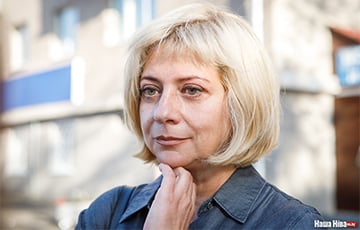
Photo: “Nasha Niva”
Today marks the 85th anniversary of the self-immolation of the Jews of Mozyr.
When they made that fateful decision, Mozyr had been under German occupation for nine days—since August 22, 1941. The city was small, though it was a regional center (the Polessia Region existed at the time)—with a population of 17,000. Nearly forty percent were Jewish.
On August 24, All-Union Radio broadcast a rally of the Jewish community. The great actor Solomon Mikhoels, who would be killed after the war right on a street in Minsk, spoke to the entire country that day: “Jewish brothers! It was on you, on your sons and daughters, that Hitler sharpened his murderous knife. Through the fates of tens and hundreds of thousands of Jews, he exercised his venomous sting and cultivated his cannibalistic calling. On his banner, among other atrocities, he wrote: ‘The complete annihilation of the Jewish people.’
In Mozyr, Mikhoels’s voice was no longer heard. In the occupied cities, Soviet radio was not broadcasting, and German radio did not report on what awaited the Jews. And on August 31, there wasn’t even a ghetto in this city yet. But the Jews knew what awaited them. How did they know? I don’t know the answer to that question. Perhaps from those Polish Jews who managed to flee from occupied Poland to the east and settled in Belarusian and Ukrainian cities. Or maybe it was simply historical memory—the memory of Masada.
When the Romans destroyed Jerusalem in 70 BCE, about a thousand people from the ruined city took refuge in the fortress of Masada, not far from the Dead Sea. They held out there for three years. All the while, the Romans were building a siege ramp. When it was completed—70 meters high—and it became clear that the fortress could not be held, Eleazar ben Yair, one of the Jewish leaders in the war against the Romans, addressed the fortress’s defenders. In his book *The Jewish War*, Josephus recounted his speech as follows: “Let us not bring shame upon ourselves—we who refused to endure slavery even before it posed any danger—nor let us now voluntarily surrender ourselves to slavery and to the most terrible torments that await us if we fall alive into the hands of the Romans! For we were the first to rise up against them, and we are the last to fight. I regard this as a mercy from God, that He has granted us the opportunity to die a noble death as free men—a fate not granted to others who have unexpectedly fallen into captivity.”
The Jews of Masada cast lots. The lot determined the ten who were to kill all one thousand. Then those ten had to cast lots again to choose one—the last one. He was tasked with killing the remaining nine, setting the fortress ablaze, and taking his own life. Masada did not surrender.
Two thousand years later, three thousand kilometers from Masada, Jews gathered at house No. 19 on Pushkin Street, where the Gofstein family lived. There were about forty people there. It is known that the youngest person at that gathering was six-year-old Shlomo Gofstein, and the oldest was 81-year-old Nisel Gutman. But who delivered a speech similar to that of Ben-Yair—and what he said—remains unknown. After all, Josephus does not quote him verbatim either, but only speculates on what Ben-Yair might have said to his fellow tribesmen, who were exhausted by the siege. We will never know what the gathering discussed, whether they recalled Masada, or how they reached their decision. But a decision was made—the same one as two thousand years ago. The lot fell to 19-year-old Sosha Gofstein. She was to go out into the street, douse the house with kerosene, and throw a lit match inside. And then—take her own life. Soshya carried it out.
The first mass execution of Jews in Mozyr took place just three days later—on September 3, 1941. And the ghetto was completely destroyed in February 1942. Throughout the fall, Jews were shot by the dozens, but by winter they were in a hurry: they were already exterminating them by the hundreds. They were shot and drowned in the Pripyat River.
It is now impossible to determine exactly how many Jews managed to outrun the Nazis and took their own lives after gathering in a house on Pushkin Street. Mozyr residents who survived the occupation later said that there were perhaps 40 people. Or 37. The surnames of some families are known—the Roginskis, the Hofmans, the Domnichs, the Gutmans, and the Hofsteins. After the war, the local history museum even featured an exhibition dedicated to the self-immolation of the Mozyr Jews. But it didn’t last long.
And in 2003, Nisel Gutman’s grandson Yakov, who lived in New York, brought a memorial stone to Mozyr. The stone bore an inscription in three languages—Belarusian, English, and Hebrew—that read: “Belarusian Masada. A monument will be erected on this site to the Jews of Mozyr who set themselves on fire on August 31, 1941. They considered it better to die than to surrender to the enemy. World Association of Belarusian Jews. Project for the Preservation of Jewish Heritage in Eastern Europe.”
A month later, the stone was removed by decision of the Mozyr Executive Committee. In Ashdod, Israel, one of the parks is named after the heroes of Mozyr, yet at the site of the tragedy, officials deemed even a simple stone inappropriate. The mayor of Ashdod wrote personally to Lukashenko, and many Israeli public figures asked Belarusian officials to commemorate the memory of those who perished rather than surrender to the “new Romans.” In the end, the officials agreed and erected their own stone with the inscription: “Site of the self-immolation of civilians from the city of Mozyr in 1941.” And nothing more. They probably even whisper the word “Jew” so that no one will hear it.
Israeli politicians and public figures continued to bombard Belarusian administrations at all levels with appeals. Nisel Gutman’s grandson, Yakov, traveled to Belarus and visited various offices. He would make an appointment, sit for hours waiting under the sidelong glances of government secretaries, and speak patiently and clearly. And in 2011, a memorial plaque finally appeared at that site with inscriptions in two languages—Belarusian and Hebrew. It read: “At this spot, during the Great Patriotic War in the fall of 1941, the souls of the Mazyr Jews ascended to heaven, who perished by self-immolation. They did not yield to the Nazis and left this life as free people. May their memory live on forever….”
The Jews of Mozyr lived under occupation for nine days. The heroes of Masada held the fortress for three years. Nisel Gutman’s grandson has been fighting for a memorial at the site of the tragedy for 16 years—since 1995. But it is unknown how much more time and struggle against a brick wall will be needed before all the places where Belarusian Jews were exterminated are marked with at least stones bearing an inscription.
Irina Khalip, exclusively for Charter97.org

Bank's name: Bank Millennium S.A.
Address: ul. Stanislawa Zaryna, 2A, 02-593, Warszawa
IBAN: PL97116022020000000216711123
SWIFT: BIGBPLPW
Name of the account holder: Fundacja “KARTA ‘97”
Purpose/title of payment: Donation for statuary aims
You can contact us by the e-mail charter97@gmail.com