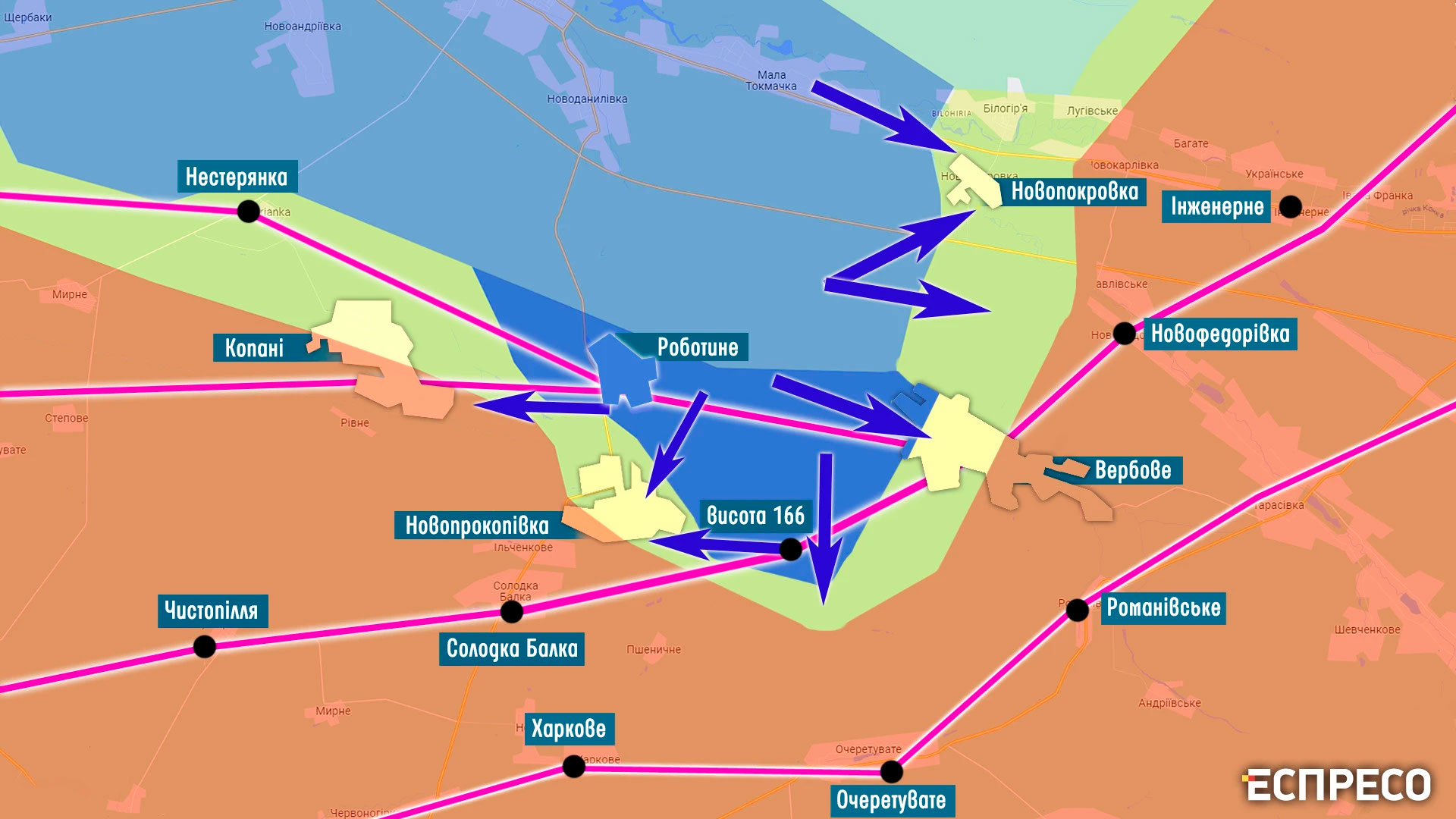


Ukrainian Infantry Broke Through Russian Defences And 'Dragon's Teeth' To The West Of Verbove
- 5.09.2023, 7:38
- 15,486
The Ukrainian army has widened the breach in the main Russian defensive layer in the South.
Ukrainian light infantry has advanced to positions beyond anti-tank ditches and dragon’s teeth anti-tank obstacles that comprise the current Russian defensive layer ahead of the Ukrainian advance in the western Zaporizhia region. Although we are not talking about breaking through this enemy defence line so far, since there are no heavy vehicles of the Armed Forces of Ukraine there, and Ukrainian forces likely intend to hold those positions..
The occupiers tried to expand their minefields in the South after the start of the Ukrainian counteroffensive in June, but they did not succeed. And now, the limitations of the capabilities of Russian artillery and the advantages of Ukrainians in counter-battery fire are forcing the Russians to deviate from their own doctrine, the Institute for the Study of War (ISW) reports.
AFU Advance in Zaporizhia
Analysts say that Ukrainian forces advanced to tree-line positions that are east of the Russian anti-tank ditches and dragon’s teeth obstacles that are a part of a tri-layered defence immediately west of Verbove.
Also, Ukrainian light infantry has also advanced further into a series of prepared Russian defensive positions along the road that runs northwest into Verbove
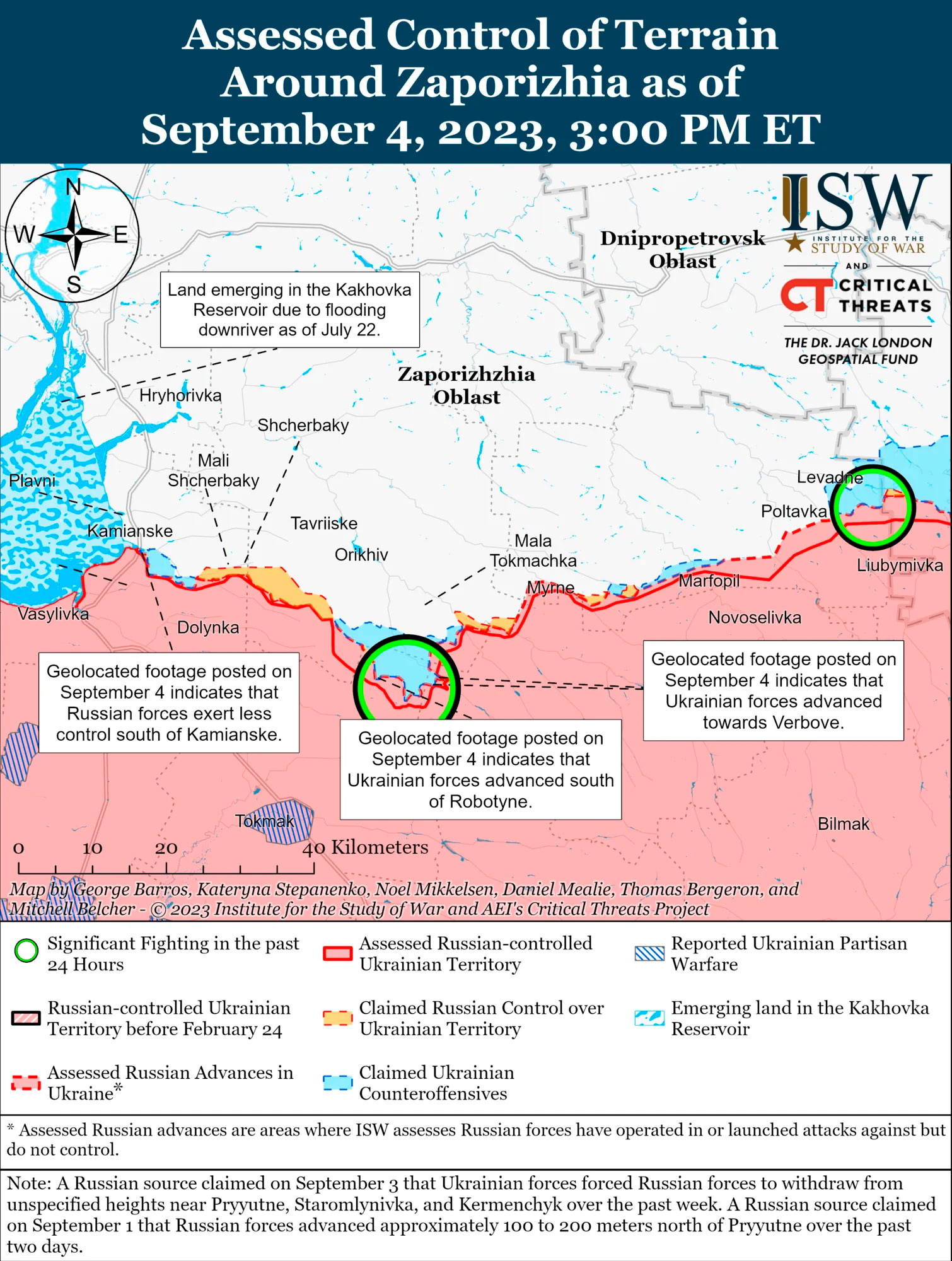
In addition, the Armed Forces of Ukraine approached the Russian defences between Robotyne and Novoprokopivka.
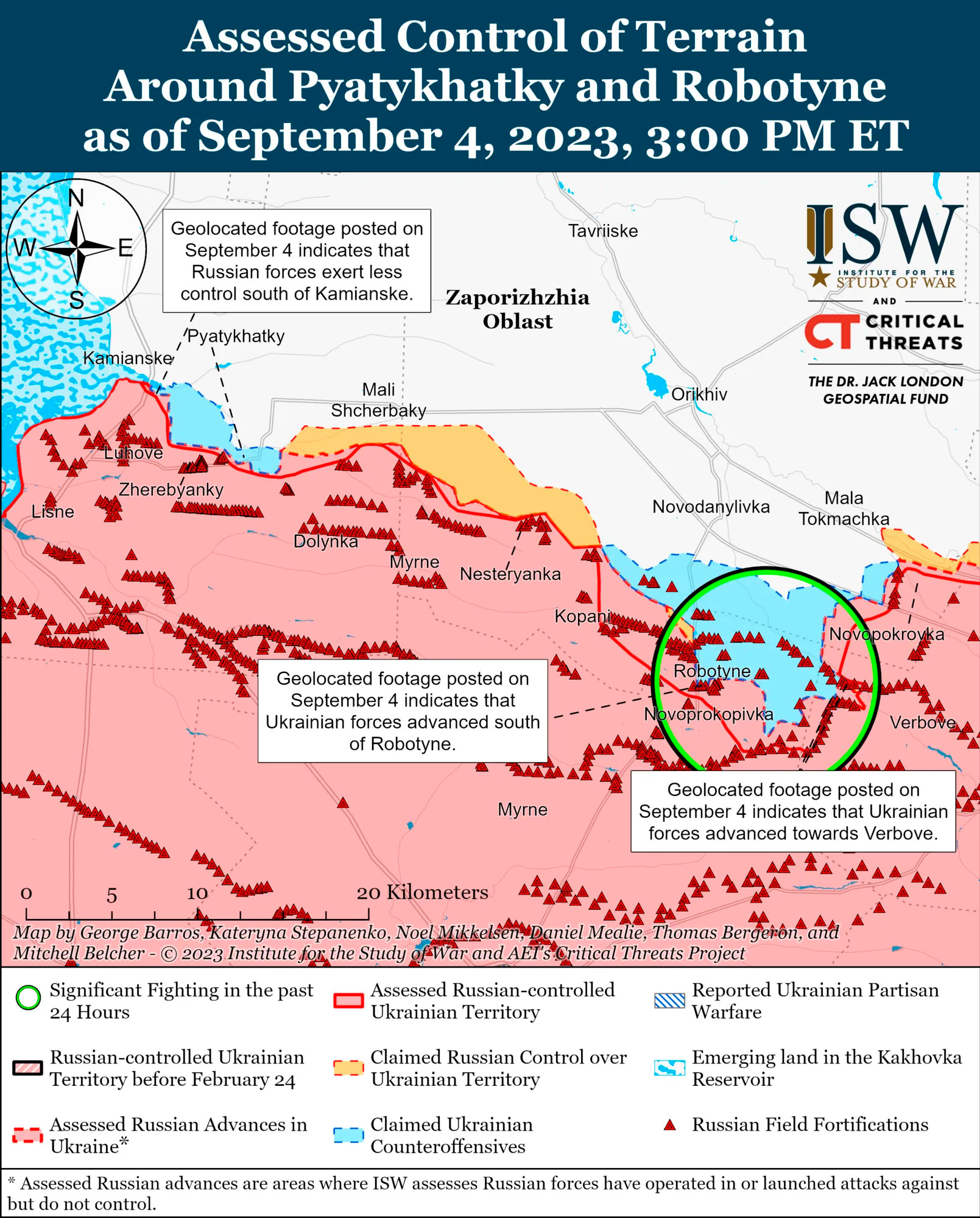
Experts noted that Ukrainian forces are widening the breach they have already made in one Russian defensive layer and are reportedly manoeuvring more equipment and personnel into tactical rear areas of this layer.
“Ukrainian forces appear to be making gains in the immediate vicinity of the not-yet-breached Russian defensive layer that runs northwest of Verbove to north of Solodka Balka, with infantry assaults and heavy artillery fire on Russian positions further into and south of this layer. The deployment of Ukrainian heavy equipment and more substantial forces to these areas than ISW has so far observed would indicate both a breach of this Russian defensive layer and an effort to widen that breach,” the ISW said.
Troubles are growing for the Russian troops
According to experts of the Royal United Services Institute (RUSI), limitations on Russian artillery capabilities and Ukrainian advantages in counter-battery fire are forcing the Russians to deviate from their own doctrine. Although the invaders have been attempting to adapt their fire doctrine since before Ukrainian counteroffensive operations began.
RUSI noted that Russian forces are attempting to prioritize strike accuracy over volume because they lack enough ammunition to sustain doctrinally designated artillery fire. They also have difficulties transporting a large volume of ammunition to frontline areas and are seeing diminishing effectiveness of mass strikes as they lose counter-battery radars and their guns suffer from barrel wear.
Experts say Russian forces are attempting to increase the production of Krasnopol laser-guided shells and the use of Lancet drones in order to increase accuracy and reduce the number of munitions used in attacks.
Also, the occupiers have often prepared their fighting positions for remote demolition with improvised explosives instead of striking their own positions with artillery after Russian forces have withdrawn, as Russian doctrine dictates.
After evaluating these changes, ISW suggested that reduced Russian artillery capabilities may further weaken the Russian defence in certain sectors of the front. Since artillery fire is a critical component of Russian elastic defence. Their shift towards a more precise fire doctrine may allow them to strengthen these capabilities, but constraints on the training capacity of the aggressors will likely prevent them from implementing this shift at scale in the near future. After all, from the very beginning of the counteroffensive of the Armed Forces of Ukraine, Russian sources have been reporting steadily that the troops of dictator Vladimir Putin do not have sufficient counterbattery capabilities in various sectors of the front.
Against this background, Estonian Defense Forces Intelligence Center Commander Colonel Margo Grosberg reported that Ukrainian artillery capabilities are “equal or even better” than those of Russian forces and have been able to push Russian artillery units back from the frontline, preventing them from supporting the enemy forces.