

"Kastus Taught Us To Be Strong No Matter What."
1- 30.10.2026, 11:23
- 1,190

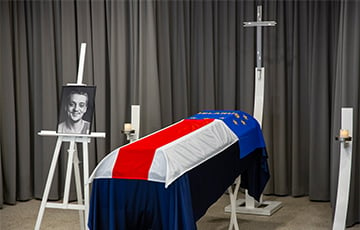
An in-depth report on the memorial service for Konstantin Ivanov, a journalist with “Charter ’97.”
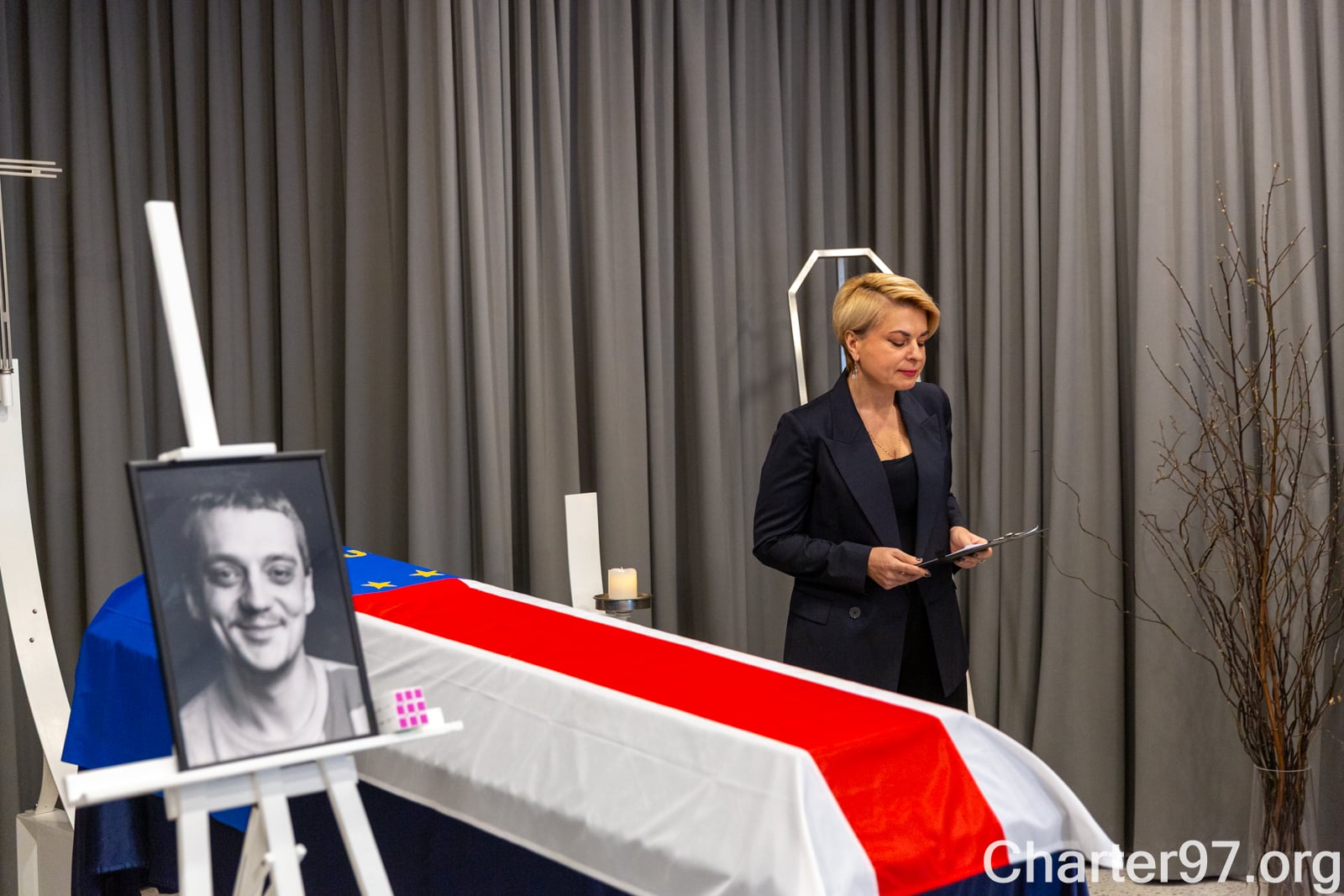
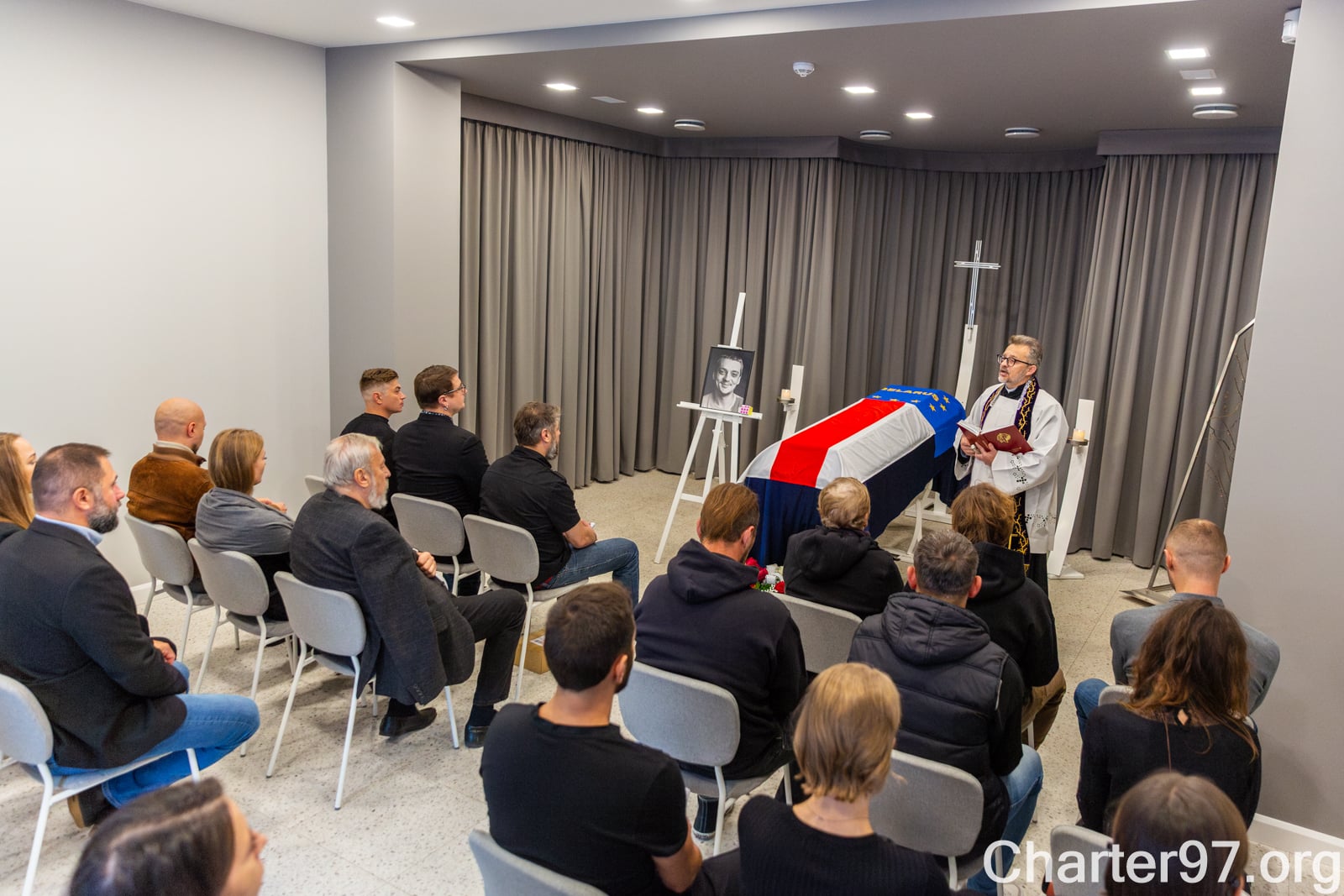
“Kostya knew how to bring people together”, — noted those present, as a truly diverse group of people gathered at the Dom Pogrzebowy Koperski funeral home on October 29: former activists from the “Zubr” and “Young Front” youth movements, opposition politicians, and journalists.
Konstantin Ivanov, a journalist for “Charter ’97” Konstantin Ivanov passed away on October 24 after a serious illness. He was 40 years old. Until the very last moments of his life, as his colleagues noted repeatedly at his funeral, Kastus continued to work for the website Charter97.org.
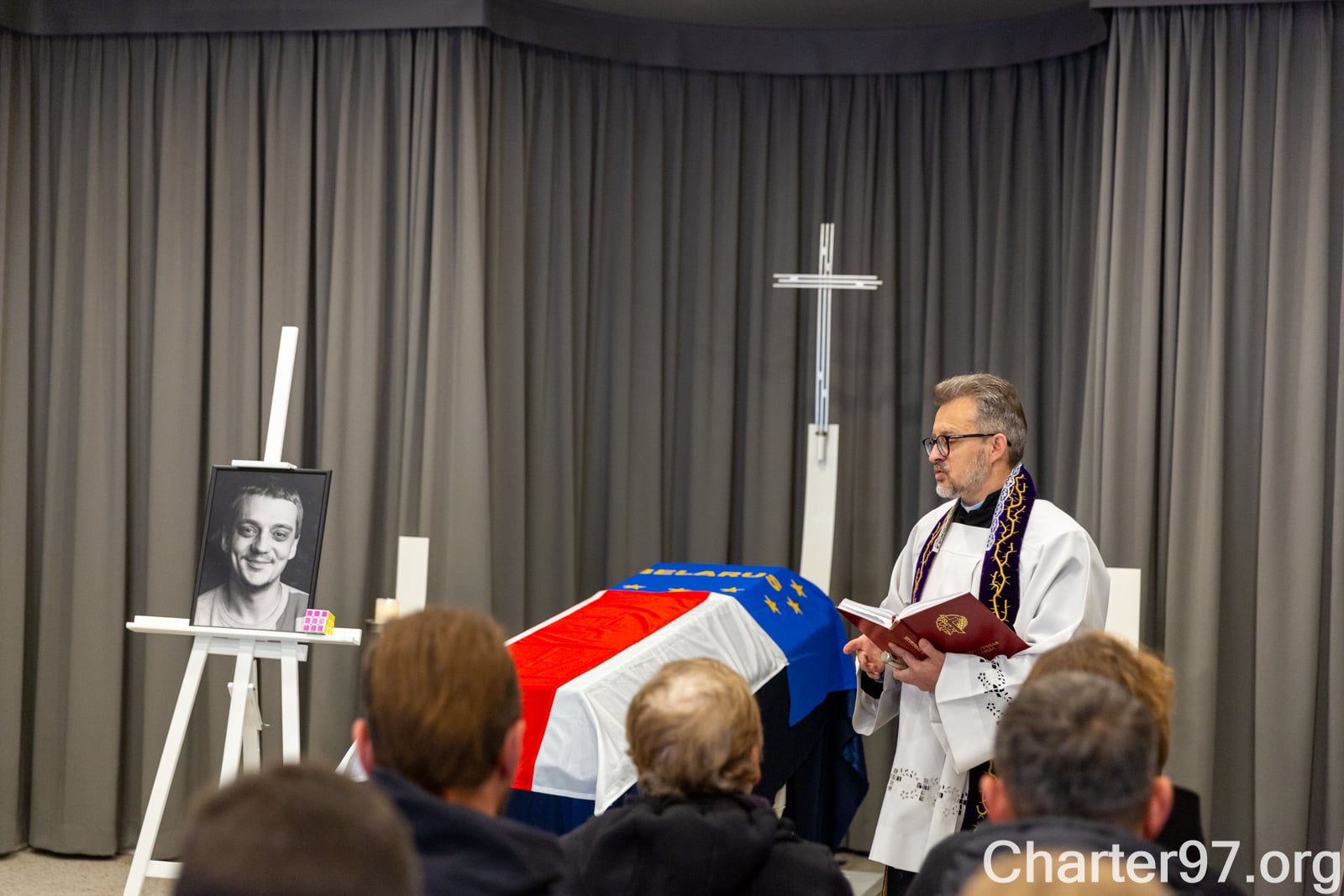
The memorial service was led by the chaplain for Belarusians in the Polish capital, Father Vyachaslau Barok. Speakers at the memorial service included the editor-in-chief of the Charter97.org website, Natallia Radzina, the leader of the “European Belarus” civic campaign Andrei Sannikov, the coordinator of “European Belarus,” Dzmitry Bandarenka, as well as Konstantin’s friends and loved ones.
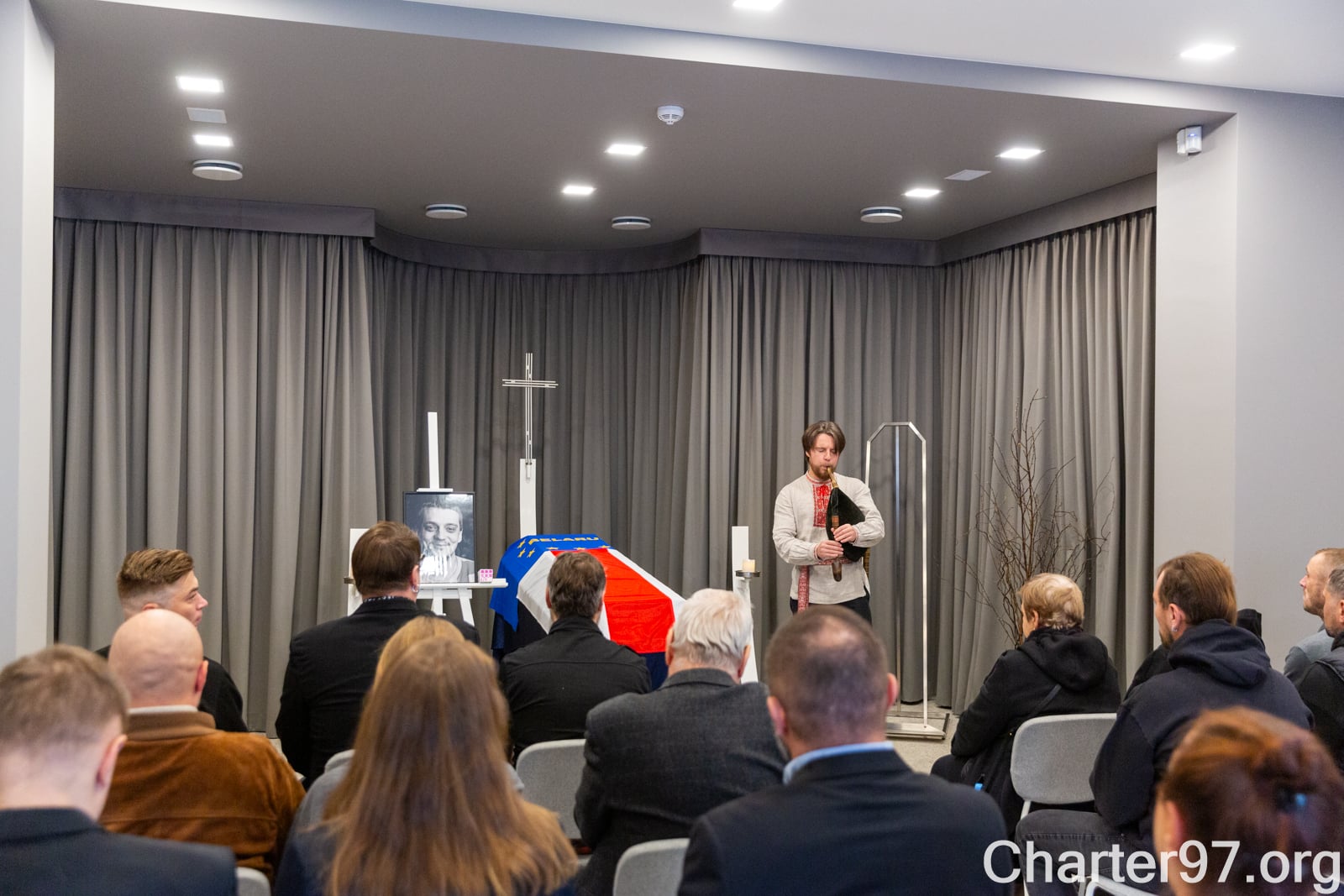
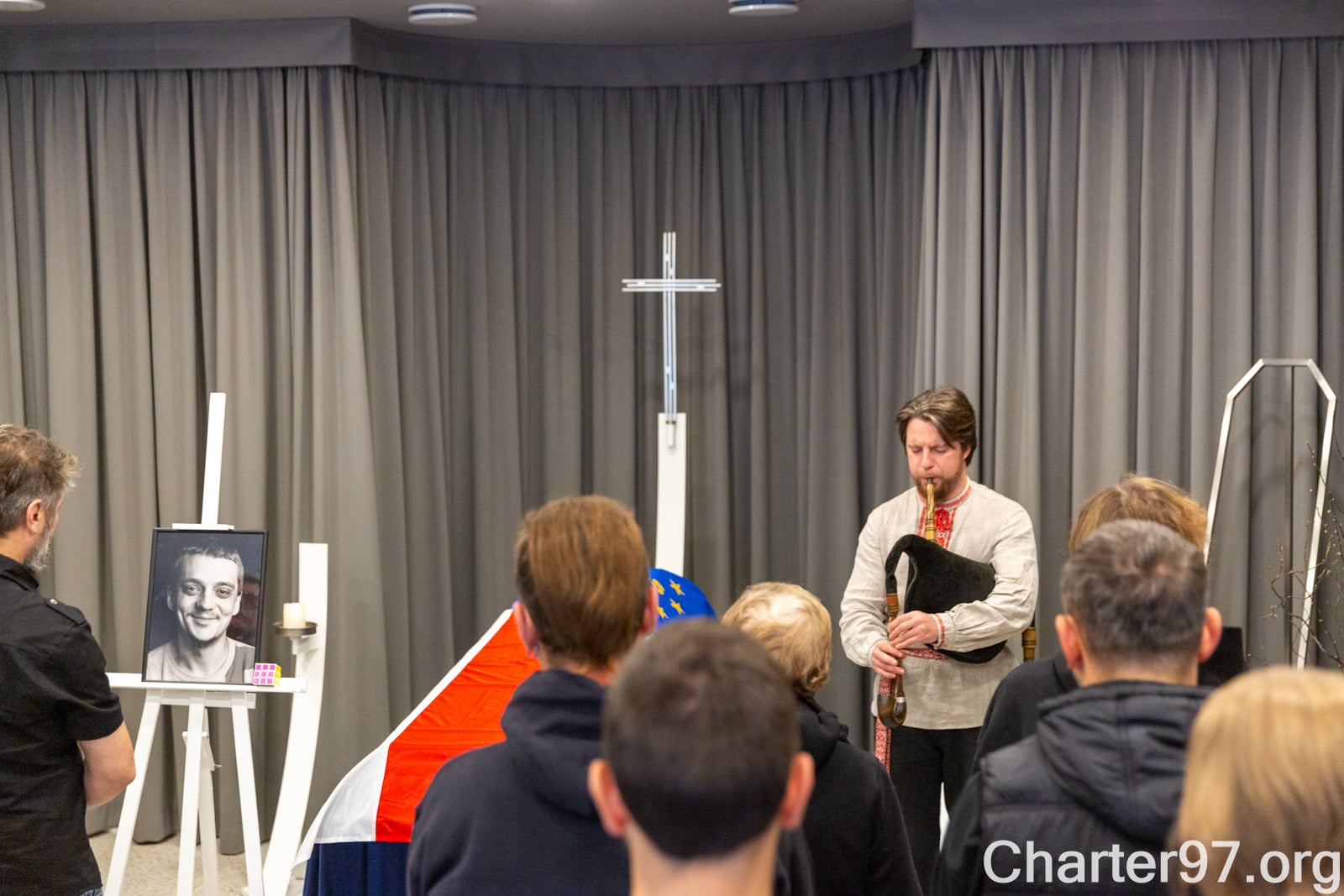
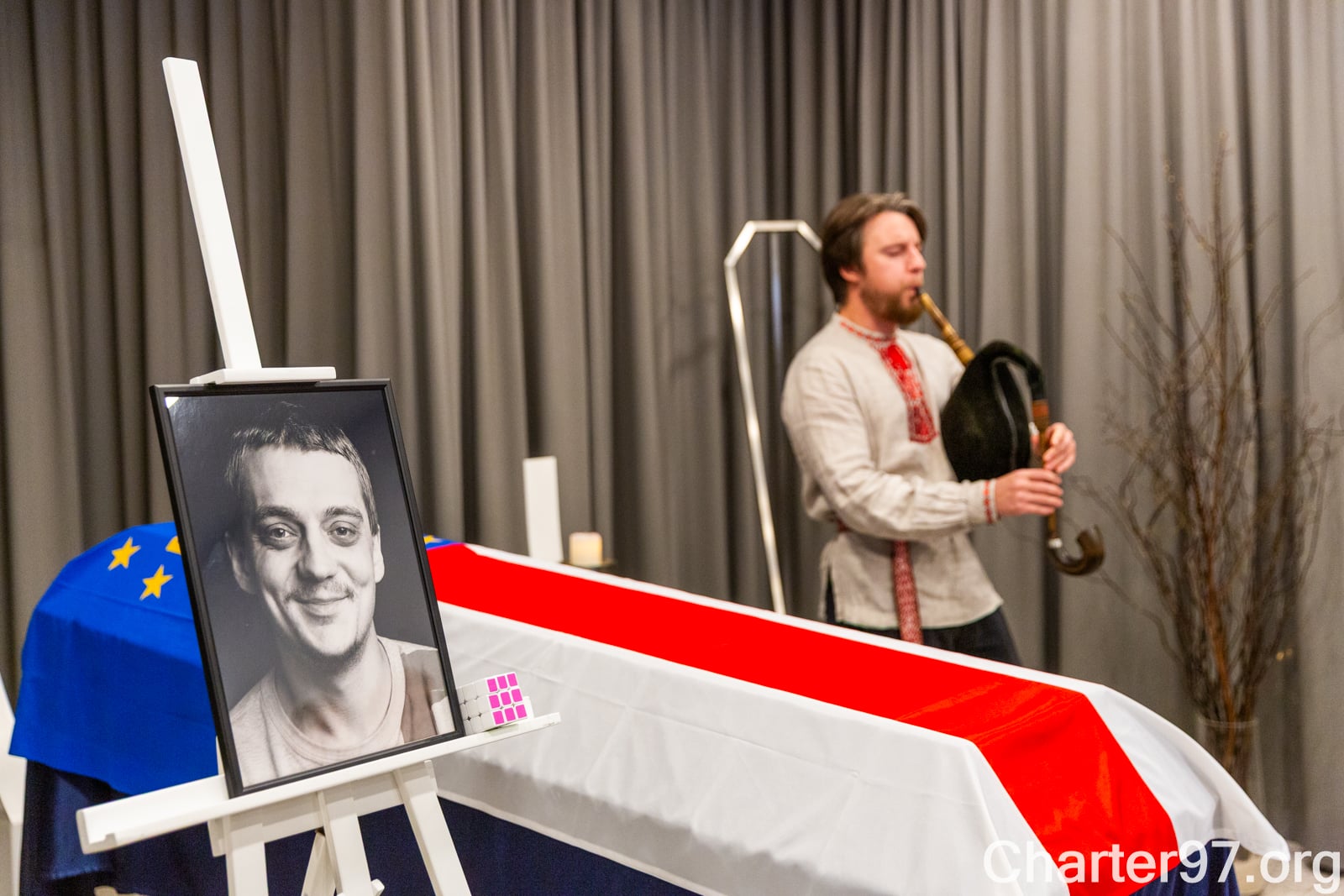
The service began with the hymn “Mother of God,” performed on the duda, an ancient Belarusian instrument, by Konstantin’s friend Pyotr Marchenko.
Father Vyachaslau Barok noted the “Charter ’97” journalist’s loyalty to his principles and ideals:
— I saw the conditions under which he continued to work. It was very hard for him, but he understood that he had to keep working for the good of our Fatherland, for the good of Belarus. He was a true fighter, — said the priest.
— The hymn “The Mother of God” was playing. This song originated in the Middle Ages. Our warrior ancestors sang it when they fought against the invasion of the Crusaders. Kastus also understood what invasions of evil he had to fight against. And he was consistent in his work and activities.
Belarusians still yearn for liberation; there is still no justice in Belarus, where the truth is persecuted and human dignity is trampled upon. But I hope and believe that the Lord will now grant Kastus the Heavenly Fatherland in exchange for the earthly one for which he fought in this world. By working for the good of his earthly Fatherland, he deserved the Heavenly Fatherland.
Natallia Radzina, editor-in-chief of Charter97.org, emotionally admitted that she “doesn’t know how to bury colleagues.” The journalist, who had worked alongside Konstantin in the same newsroom for many years, recalled that even as a student he had participated in opposition protests and was an activist with “Zubr” and “European Belarus.” After the 2010 elections, repression forced him to emigrate to Poland, where he began working for “Charter’97.”
— At work, Kostya was very reliable and responsible. There wasn’t a task he wouldn’t take on. If a job needed to be done urgently, he was always available and always lent a helping hand.
Konstantin spent over a year at the Caritas Catholic hospice of the Archdiocese of Warsaw. The editor-in-chief of the Charter97.org website thanked his colleagues for their care and said that many of them approached her after Kostya’s death and told her how much they had come to love him:
— “He kept working even at the hospice. He said himself that work kept him going and he didn’t want to stop. In his final days, when he no longer even recognized people, he would say, ‘What about work? Maybe I can do something?” It seems unbelievable, but at the hospice, Kastus taught English, studied programming languages, and did physical exercises and yoga whenever possible. He was planning to write a book. We even discussed its structure with him. We came up with a title—“Notes from the Hospice.” Every day he wrote something for this book. Kastus loved Belarus. Even in his final days, when he began having trouble with his memory and recognizing people, whenever someone said, “Long live Belarus!” he would invariably reply, “Long live eternity!” Kastus never lost heart. I would ask him: “How do you manage that?” He’d reply, “What’s the point of suffering and worrying?” His life motto was the words that Kastus wrote every day in his notes. He ended each one with the words: “Tomorrow will be better!”
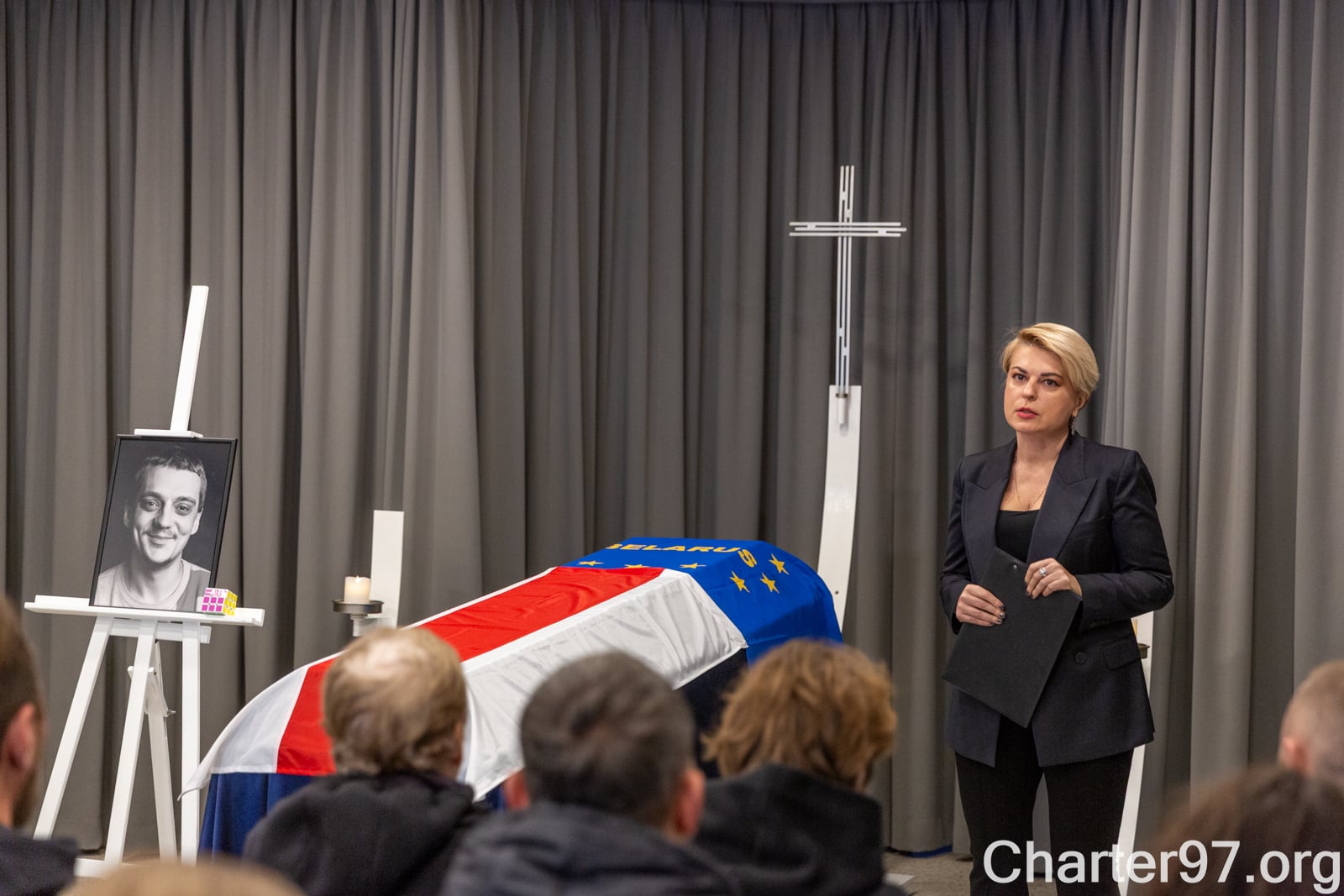
Natallia Radzina recounted two touching stories from Kastus’s childhood that she heard from his mother, Valentina Mikhailovna: — Back in elementary school, there was a very frail and sickly boy who was in the same class as Kastus. No one wanted to be friends with him—children can be very cruel. But Kastus was friends with this boy and would say, ‘He’s so lonely. Who’s going to be his friend if not me?” The second story is about September 1. Valentina Mikhailovna sent Kastus off with a big bouquet. When he came back, his mom asked, “Who did you give your flowers to?” And he replied, “I waited, saw which of the teachers had the fewest, and gave my bouquet to them.”
Today I want to thank Kastus for being a part of our lives. Of course, it’s very bitter and painful for us, but we’re fortunate to have met such a person. On the way to say goodbye, I realized once again what Kastusya’s life teaches us: to be strong under any circumstances. We should be ashamed to lose heart and do nothing, when he never lost heart and kept taking action under such circumstances.
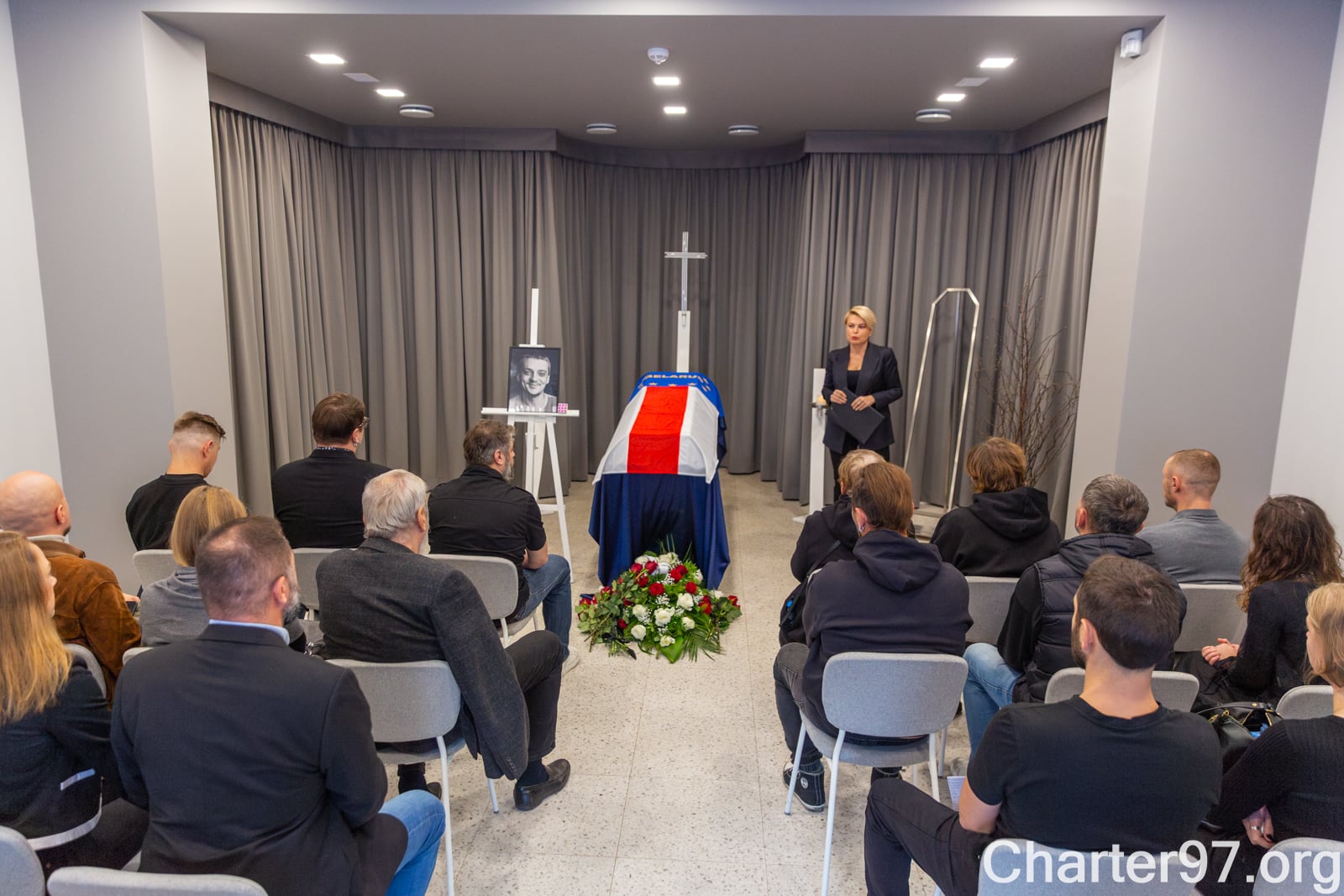
Andrei Sannikov, leader of the “European Belarus” campaign, said that his loved ones knew about his serious illness, but it was still very difficult to accept what had happened: — After Kastus’s death, Natallia Radzina wrote: “We are in trouble.” And that’s truly the case. I don’t think anyone could say a bad word about him. He was a kind, sincere, and open-hearted person—a loyal colleague, devoted to Belarus and his cause. He lived for Belarus and lived for the sake of Belarus.
The opposition leader said he was shocked to learn that, the day before his death, Konstantin had wanted to continue working: — What kind of willpower does a person need to still be thinking about work in such a state, the day before his death? He enjoyed life more than anyone else. I’ll never forget his eyes—so childlike, sincere, open to the world, and at the same time surprisingly wise. May your memory live on, Kastus, son of Belarus.
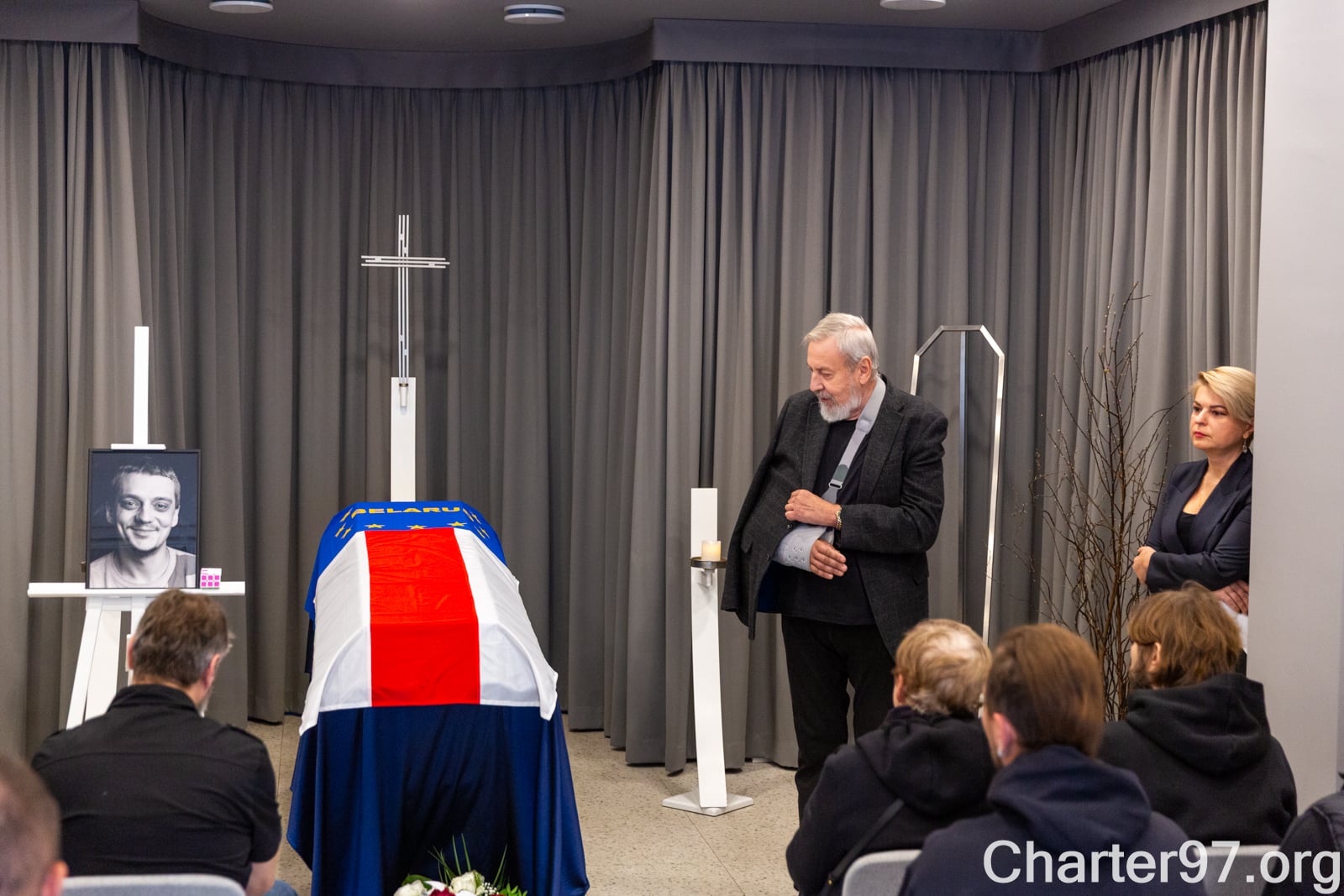
Konstantin’s close friend Sergei Guminsky said that the presence of so many people is a sign that Kastus left his mark on each of them:
— Kastus and I talked about death. That was five or six years ago. No one could have imagined that Kastus was already sick back then. He hid it; he was incredibly secretive. When talking about passing away, he said we shouldn’t just sit around and be sad. We should be happy that he was with us and that he remains with us.”
Sergey spoke very touchingly about his friendship with Konstantin: — We’d known each other for 17 years. I tried to think if there was anything bad I could say about Kastus. I won’t say he was always right, but it’s incredible: in the entire history of our relationship, over so many years, there really is nothing bad to say. Everything was interesting with him: chess, traveling, and programming. We broke an incredible number of gamepads. It was a wonderful time, and that’s how it will remain in our memories. Even at the hospice, we kept playing together. As Natalya already mentioned, he had plans. We talked about them; he told me all about them. Those plans haven’t gone anywhere. I think we’ll continue to bring at least some of his plans and ideas to life. Perhaps we’ll carry out the idea behind those very “Notes from the Hospice” and preserve a lasting memory of him.
In his speech, Sergei Guminsky thanked the editorial staff of “Charter ’97”: — I know that they were more than just employers to him. It was a family. He worked not because he had to, but because it helped him feel good. And to you, Kastus: you’re still with us, brother. I feel you, and others feel you too. Thank you for everything.
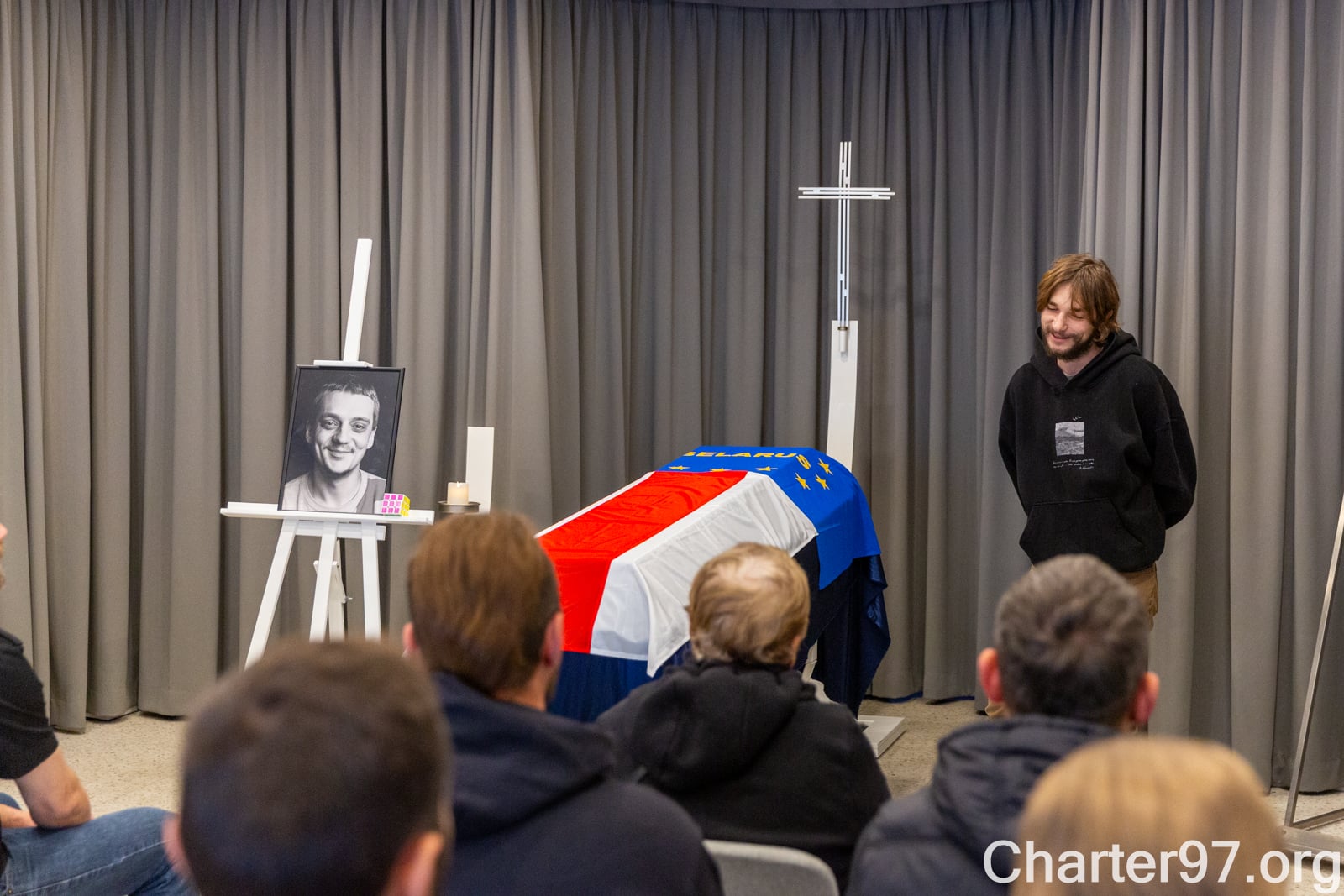
Former activist with “Zubr” and “European Belarus” Pavel Kuryanovich met “Kuzey”—as many friends called Konstantin—in 2007 in Vitebsk:
— I’d come on business, but my plans for a place to stay fell through. One of the guys who was with me said he’d sort everything out right away. And he did. That’s how I met “Kuzey,” who took me in even though he’d never seen me before and knew absolutely nothing about me. From that day on, everything took off. Over these nearly 20 years, it’s hard to count how many times I’ve visited him, how many times he’s visited me, and how many times we’ve spontaneously gone off somewhere together.
I lived on the outskirts of Minsk, not far from the highway to Vitebsk. Quite often, on my way home, I’d stop, just call “Kuzya,” and head to his place instead of going home. He would always say, “Come over,” without asking any questions. And I wanted to go. Perhaps the secret lay in some kind of unique energy that drew people in.
Pavel said that almost every other person would greet Kastus, and he explained why: — He wasn’t a pushover. He knew how to stand his ground and did so with tenacity, but without malice. I tried to remember if “Kuzya” was ever afraid of anything, and I couldn’t. Even when we were at the KGB and they threatened to handcuff him to a radiator and shoot him, “Kuzya” still didn’t lose his composure or back down. With a man like that, you could not only go into intelligence—you could lead it.
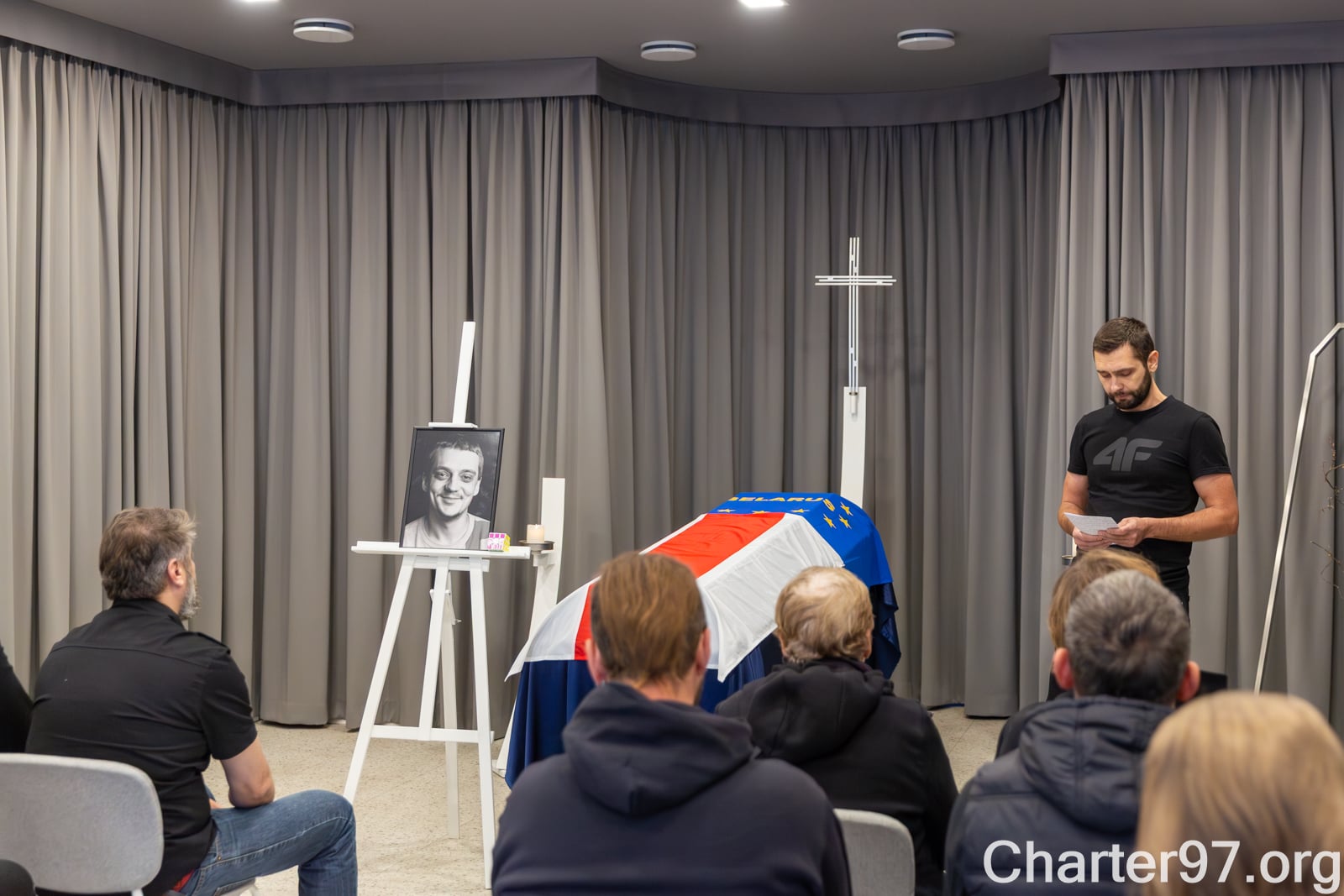
Former “Zubr” activist Pavel Mikulovich said he had known Kastus for over 20 years: — At first, it seemed to me that we had different views. But he was a true patriot and always spoke his mind. During a conversation, he could come across as a bore. “You’re getting on my nerves,” I’d tell him. Even when things were tough for him, I’d ask, “So, how are things with you?” He’d reply, “Everything’s fine here.”
Even when it was clear that things weren’t right, he held on. He held on very tightly—unfortunately, no longer with his body, but with his spirit. He never betrayed himself or his oath to “Zubr.” I hope you already have a whole collection of Rubik’s Cubes up there, that you’re playing with them and “blowing everyone’s minds” with your facts.
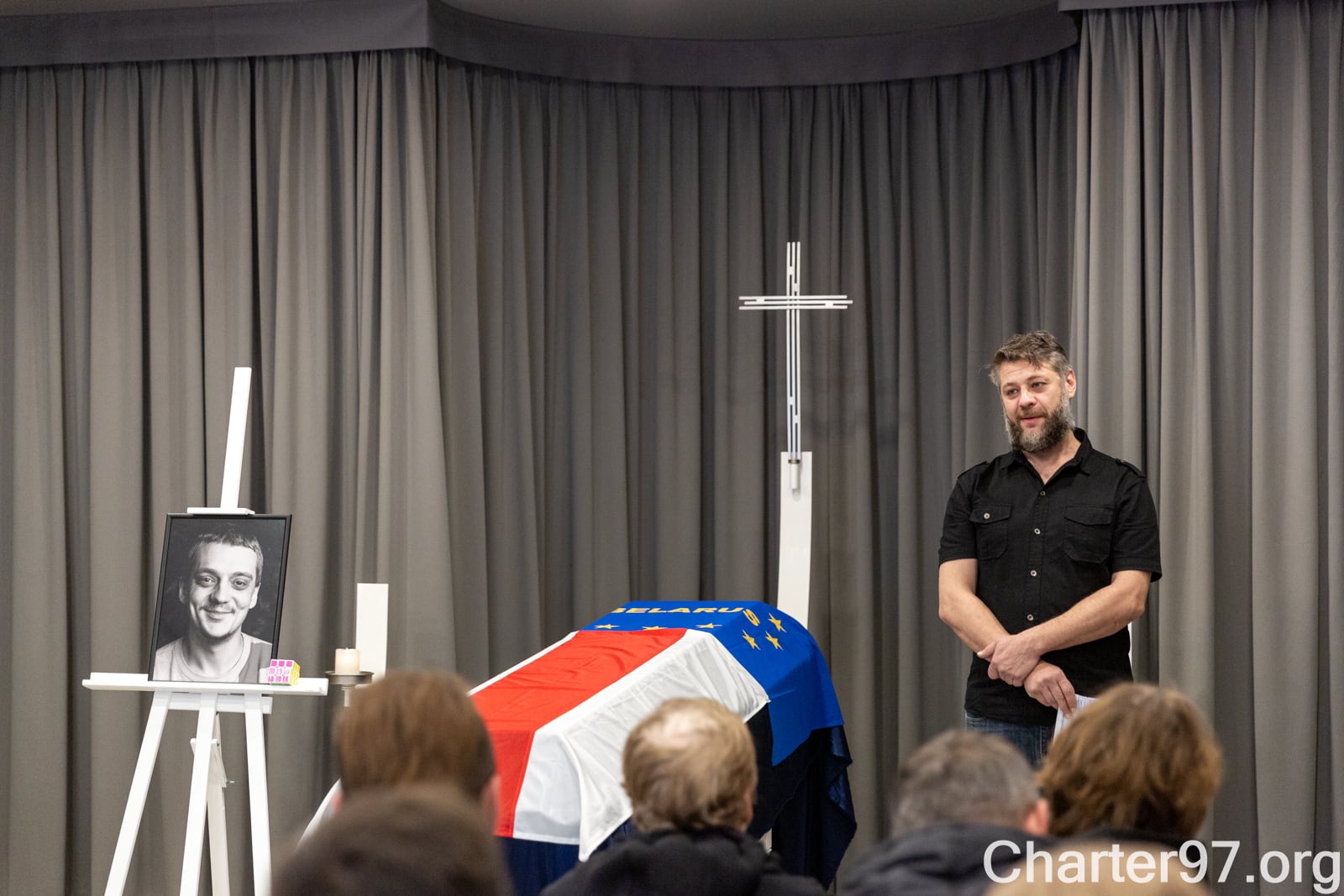
The last to speak was Dzmitry Bandarenka, coordinator of “European Belarus.” He recounted that Konstantin had helped him write his thesis on geopolitics: — Kastus was very good at typing up texts quickly, and, to a certain extent, he was also its first editor. He was a well-educated man and, unlike many professional political scientists, knew who Haushofer, Mackinder, and Mochulsky were. He read Brzezinski’s books. He recalled telling a friend: “Kastus, who will lead the Vitebsk region if not you?” His friend just laughed in response.
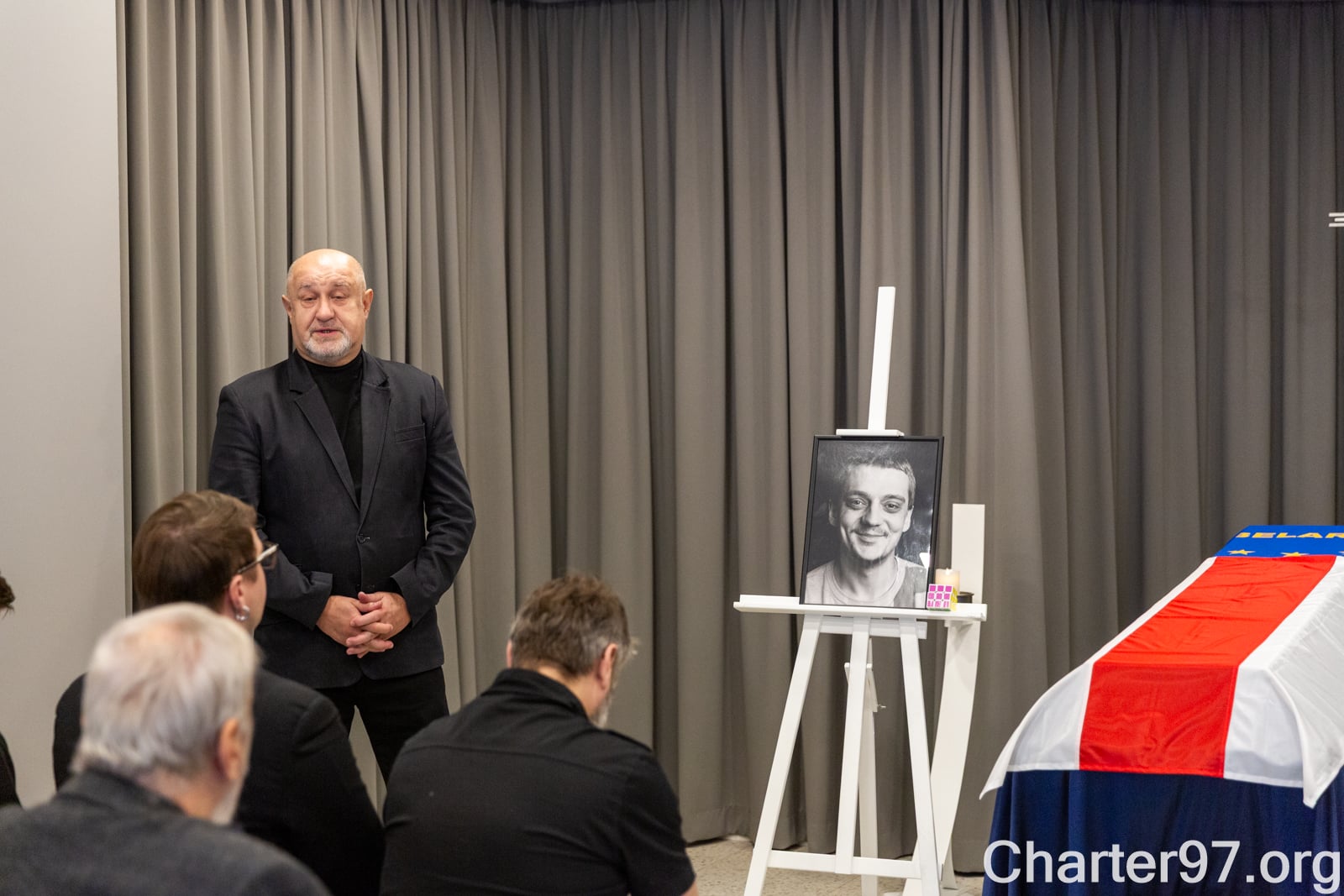
— Perhaps it is precisely because Kastus did not become one of the leaders of his small homeland that problems with Vitebsk Region constantly arise in this dictatorial country, — said the coordinator of “European Belarus.” At the end of his speech, Dzmitry Bandarenka addressed those who had come to the farewell gathering: — I’m glad to see people here today from “Zubr,” “Young Front,” and our other organizations here today. You are sensible people; you didn’t just wake up in 2020. Each of you has fought for Belarus and served it for decades. Thank you very much for being with us today.
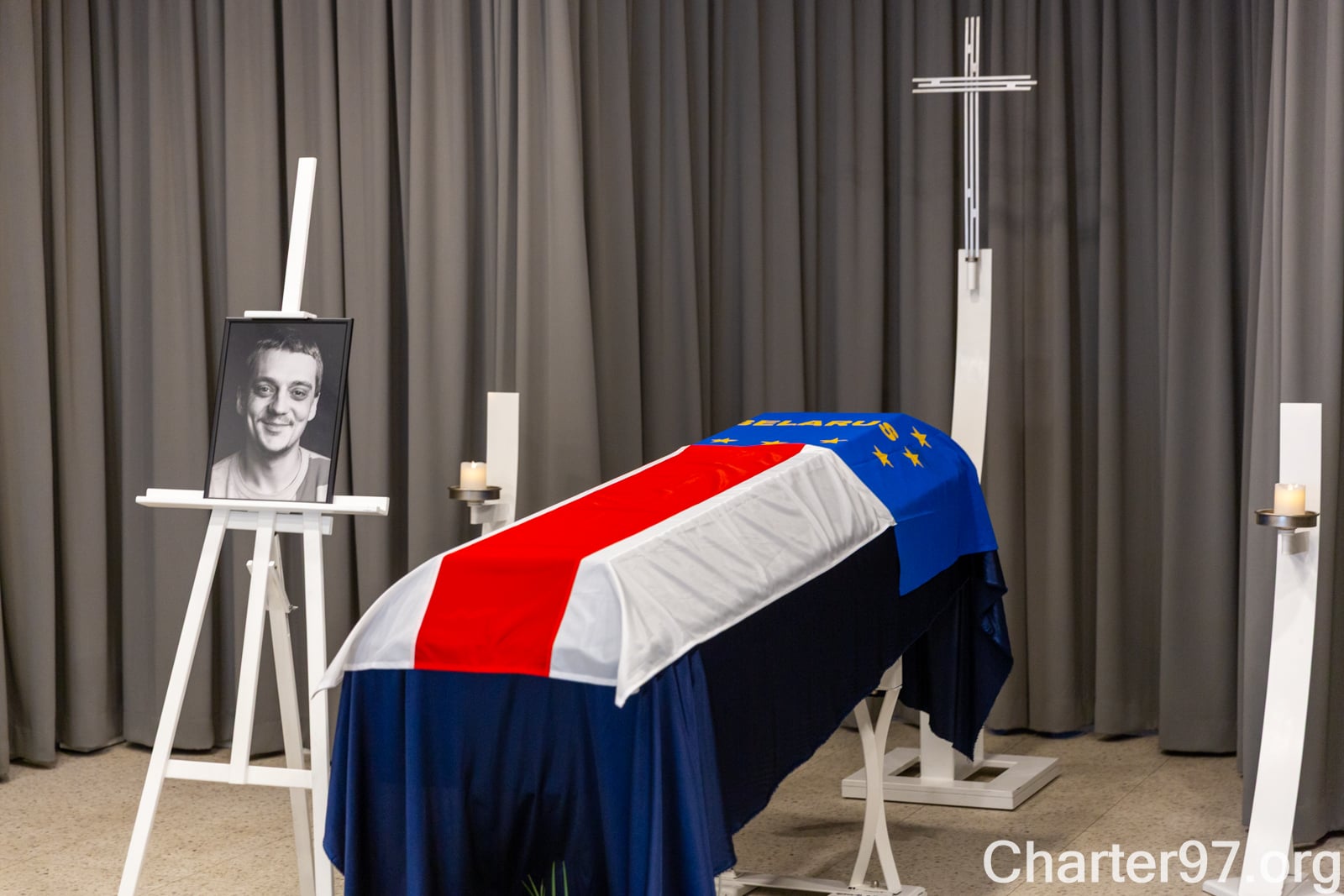
The ceremony concluded with the national anthem “Magutny Bozh” performed by bagpipe player Petr Marchenko. Kastusia was escorted under the white-red-white flag and the flag of European Belarus—this is precisely the kind of country he fought for, and until the very end, he believed that “tomorrow will be better.”

Bank's name: Bank Millennium S.A.
Address: ul. Stanislawa Zaryna, 2A, 02-593, Warszawa
IBAN: PL97116022020000000216711123
SWIFT: BIGBPLPW
Name of the account holder: Fundacja “KARTA ‘97”
Purpose/title of payment: Donation for statuary aims
You can contact us by the e-mail charter97@gmail.com