
Former Minister Killed In Train Collision In Spain
- 30.10.2026, 8:43
- 1,204
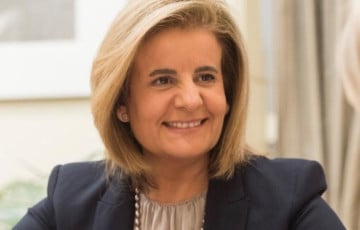
The politician played a prominent role in the country's economic policy.
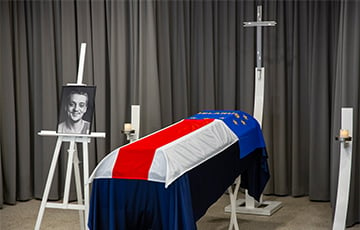
Among those killed in the train crash in Spain was the former Minister of Employment and Social Security Fátima Bañez. A total of at least 69 people were killed as a result of the collision between two high-speed trains, according to Politico.
As a reminder, a major train accident occurred on the morning of October 28 near the city of Toledo—a high-speed train operated by the state-owned company Renfe collided with a train belonging to the private carrier Iryo that was stationary on the tracks. Several cars derailed, and the death toll reached 69.
Bañes was in one of the cars that sustained the most damage in the collision. Her death was officially confirmed by the Spanish Confederation of Business Organizations (CEOE), whose foundation she headed.
Fatima Bañes served as Spain’s Minister of Employment and Social Security from 2011 to 2018 in the center-right government of Mariano Rajoy. She played a prominent role in the country’s economic policy during the eurozone crisis.
In particular, Bañez oversaw the 2012 labor reform, which simplified the procedure for employers to lay off employees. The changes sparked strong opposition from labor unions, but the government maintained that they would make the labor market more flexible and aid economic recovery.
Since 2020, Baños has worked at the Spanish Confederation of Business Organizations and headed its foundation.
Following the disaster, Spanish Prime Minister Pedro Sánchez declared three days of national mourning and promised to thoroughly investigate the circumstances of the tragedy. According to preliminary reports, the collision may have been caused by an error on the part of a dispatcher who authorized one of the trains to continue on a track where another train was already traveling.
Transport Minister Óscar Puente acknowledged that human error may have played a role in the incident, but emphasized that the investigation must reach the final conclusions. This is the second major disaster on Spain’s high-speed rail network since the beginning of 2026.

Bank's name: Bank Millennium S.A.
Address: ul. Stanislawa Zaryna, 2A, 02-593, Warszawa
IBAN: PL97116022020000000216711123
SWIFT: BIGBPLPW
Name of the account holder: Fundacja “KARTA ‘97”
Purpose/title of payment: Donation for statuary aims
You can contact us by the e-mail charter97@gmail.com