

A Unique Situation
2- 9.10.2026, 15:48
- 1,186
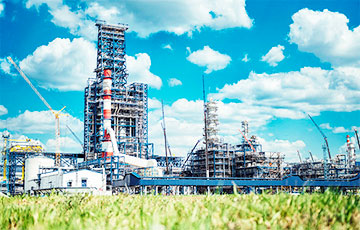
The blow to the Omsk Oil Refinery is significant and painful.
The strikes against Russia’s oil refining sector have now led to a situation far more severe than the crisis this past summer. In a short period of time, Ukraine simply knocked out Russian refineries along their usual routes.
Such strikes do not have an immediate effect—previously stockpiled reserves keep the situation afloat for a while. Reserves are stored at oil depots, in large and small storage facilities, and even at gas stations belonging to retail chains. But if reserves are not replenished, a crisis is inevitable.
So, on October 8, Ukrainian drones breached Russian air defense in Omsk. This is Russia’s largest oil refinery. Later, Fire Point posted a brief message asking, “Omsk, have you missed FP-1?”, indicating that the strike had hit its target.
The Omsk refinery is Russia’s largest oil refinery, capable of processing more than 21 million metric tons of crude oil annually. The Omsk Oil Refinery accounts for 10% of Russia’s total crude oil processing. In 2024, the refinery produced more than 50 product lines, with 100% of its fuel meeting the “Euro-5” standard. The facility employs more than 3,300 people.
The blow to the Omsk Oil Refinery is significant and painful, given its share of oil refining. But it is not the only one in recent times. And we’re talking about a crisis, about a general shortage—which means a cumulative effect must be achieved when several refineries shut down simultaneously.
That is exactly what is happening. On the morning of October 8, the “Gazprom Neftekhim Salavat” refinery in Bashkortostan, located near Omsk, was attacked. The facility processes about 10 million metric tons of oil per year. Recently, the Moscow, Yaroslavl, and Perm refineries, as well as KINEF, Ust-Luga, Ilsky, Saratov, Syzran, and other plants have all come under attack.
What does this amount to overall? Analysts from the General Staff, the Ministry of Defense, and intelligence agencies have assessed the consequences of the recent long-range attacks. More than 51% of the enemy’s capacity has been put out of commission, which was the result of systematic efforts to cripple the Russian Federation’s military machine.
In early October, Bloomberg, analyzing the consequences of the strike on the Orenburg Oil Refinery and other Russian oil refineries, reported that oil refining in Russia had plummeted to its lowest level in more than two decades.
In other words, we have already taken half of Russia’s fuel production out of commission. Lines are already forming at gas stations, as are the first fights. But overall, the situation is still being managed thanks to reserves at oil depots. How long will these reserves last? Not for long. The main thing is that they don’t run out before the repairs are completed and the damaged refineries are back online. So we’re not waiting for them to use up all their reserves—we’re striking the storage facilities.
Thus, on the night of October 2 in Samara, Europe’s largest oil terminal, “Samara”—which is part of the Transneft system—caught fire shortly after a flight landed there. The facility covers an area of more than 216 hectares. It houses 71 storage tanks with a combined capacity of over 1.6 million cubic meters of oil. Obviously, not all 71 will catch fire from a single strike. So we won’t limit ourselves to a single strike either.
With this approach, reserves will soon run out and a full-blown crisis will begin. If half of the country’s production facilities are knocked out—it’s terrifying to even imagine what will happen. But we won’t even have to imagine it. We’ll see for ourselves soon.
Kirill Sazonov, Facebook

Bank's name: Bank Millennium S.A.
Address: ul. Stanislawa Zaryna, 2A, 02-593, Warszawa
IBAN: PL97116022020000000216711123
SWIFT: BIGBPLPW
Name of the account holder: Fundacja “KARTA ‘97”
Purpose/title of payment: Donation for statuary aims
You can contact us by the e-mail charter97@gmail.com