

NYT: Where Trump Is Wrong About Putin
1- 11.11.2026, 14:42
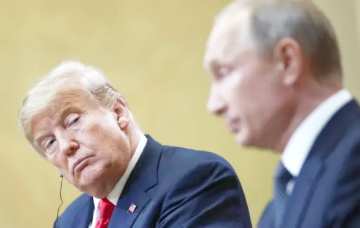
American negotiators with a business background are applying their approach to the Kremlin.
The administration of Donald Trump had hoped that a series of business and trade proposals—ranging from lifting sanctions on Russian diesel to the potential sale of Lukoil’s international assets and the resumption of gas supplies to Europe — would help persuade dictator Vladimir Putin to agree to a ceasefire in Ukraine.
However, as analysts note in an article in The New York Times, this approach fails to take into account the true priorities of the Russian leadership.
The negotiations that special envoys Steve Witkoff and Jared Kushner are conducting in the UAE with the participation of representatives from Russia, Ukraine, as well as advisers from European countries and NATO, are running up against the Kremlin’s fundamental demands. Putin is pursuing strategic goals: limiting Ukraine’s defense capabilities, preventing Ukraine from joining NATO, and a general overhaul of the security architecture in Europe.
The Main Reasons for the Ineffectiveness of “Business Diplomacy”
Different Frameworks: According to Eric Green, former director for Russian affairs at the National Security Council, American negotiators with business backgrounds mistakenly extrapolate their approach to the Kremlin. While money is of paramount importance to Russian oligarchs, Putin is guided by political and geopolitical objectives.
Willingness to suffer heavy domestic losses: The Russian leader has demonstrated a willingness to pay a colossal price for the war. Despite the economic costs and massive human casualties (according to estimates by hacker groups that released Rosstat data on the eve of the summit, between 390,000 and 350,000 Russian soldiers have died in the war), the Kremlin continues to ramp up its efforts.
Counting on Ukraine’s exhaustion: Moscow sees that Ukraine’s air defense is being depleted ahead of a harsh winter and hopes to strengthen its position by striking cities. In addition, the Kremlin has noted a weakening of support for Ukraine in a number of European countries (for example, the rise in popularity of right-wing forces in France and Germany).
Mutual miscalculations: Moscow is also employing the tactic of “tempting” a deal, believing that the U.S. administration, for its own benefit, will be able to force Ukraine to accept peace on Russia’s terms.However, the domestic political context in the U.S. (including Congress’s stance) limits the White House’s ability to unilaterally compromise on Ukraine’s interests.
Prospects for the Negotiation Process
Experts note that commercial incentives can only work as part of a comprehensive pressure strategy. According to Thomas Graham, a former senior adviser on Russia in the administration of George W. Bush, sanctions relief packages and deals should only be deployed in response to concrete steps toward de-escalation (such as halting attacks on energy infrastructure) and should be backed by the delivery of air defense systems to Ukraine.
Moscow’s position remains the main stumbling block: Putin opposes a broad ceasefire until a comprehensive peace agreement is signed, fearing the loss of leverage. According to analysts, the demand to settle all details before a ceasefire leads to a protracted conflict, even though Russia’s own resources for sustaining a “perpetual war” are also limited.

Bank's name: Bank Millennium S.A.
Address: ul. Stanislawa Zaryna, 2A, 02-593, Warszawa
IBAN: PL97116022020000000216711123
SWIFT: BIGBPLPW
Name of the account holder: Fundacja “KARTA ‘97”
Purpose/title of payment: Donation for statuary aims
You can contact us by the e-mail charter97@gmail.com