
Evgenia Chirikova: Partisans Are Carrying Out Brilliant Operations In Russia
- 26.11.2026, 14:21
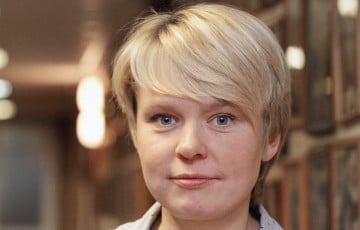
Photo: Evgeny Biyatov / RIA Novosti
A Ukrainian victory will give Russians a chance at freedom.
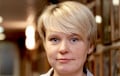
Russian opposition activist and human rights defender Evgenia Chirikova, who lives in Estonia, has been investigating crimes committed by Russian security forces in the occupied territories of Ukraine for several years and has been helping Ukrainian civilians held captive by Russia.
In an extensive interview with the website Charter97.org, Yevgeniya Chirikova spoke about the closure of the Estonian-Russian border, the prospects of the FSB being designated a terrorist organization, Russians’ reactions to the massive losses in the war against Ukraine, and the possibilities for resistance against Putin’s regime.
— Starting December 1, Estonia is closing all border crossings on the border with Russia. The reason was an attempted sabotage operation against an Estonian defense company. The Kremlin has launched a full-scale propaganda campaign against Tallinn. How do you view this situation? Why is Moscow escalating tensions with Estonia?
— I think it’s a mistake to assume that the Russian Federation’s sabotage is the only reason. The cause runs deeper—it’s political. Because you can only have normal borders with normal neighbors. Russia is currently in an abnormal state, and the longer this goes on, the more abnormal it becomes.
Russia is directly engaged in terrorism and the destruction of the civilian population. And having a normal border with such a neighbor means legalizing its crimes. Estonia should have done this much earlier, as Finland did, for example.
The fact that Russia, in its current state, is lashing out and waging a propaganda campaign with all its might is, of course, abnormal behavior, but for Russia, this is a typical reaction. They pretend that they aren’t actually aggressors, that they are a normal country. Of course, they’re upset that the civilized world is shunning them. That’s why this is a rather aggressive, spiteful reaction and an attempt to portray black as white and white as black.
“Our task is to make the world see them”
— Recently, the British Parliament screened your documentary *Prisoners: The Punishers”. The film reveals the scale and systematic nature of the terror that Russian security forces have unleashed in the occupied territories of Ukraine. You said that you would seek to have Russia’s FSB recognized as a terrorist organization. Has there been any progress on this issue?
— Thank you very much for this question. But first of all, I’d like to take this opportunity to invite everyone to a screening of the film “Prisoners: The Punishers” at the Lithuanian Seimas. To attend the screening, you must register via this link by 11:00 a.m. on December 1.
The film premiered in the United Kingdom on November 3. A screening was held at the European Parliament on November 17.
The political outcome to date is as follows: eight punitive forces from our investigation, whose stories are featured in the film “Prisoners: Punitive Forces,” have been added to the UK’s sanctions list. Of course, this happened after we shared this investigation with the UK. Member of the European Parliament Rasa Juknevičienė publicly announced at the film screening on November 17 that she is initiating the process to designate the FSB as a terrorist organization.
British Member of Parliament Alex Sobel, who focuses on Ukraine-related issues, also stated at a screening in the UK on November 3 that the FSB must be recognized as a terrorist organization, since the terror perpetrated by the FSB in the occupied territories is undoubtedly outrageous. He also recalled that two FSB officers carried out a terrorist attack in central London when they poisoned Alexander Litvinenko with a radioactive substance. Marina Litvinenko, his wife, was present at the hearing in the UK, and she confirmed these facts.
It is important to note that at the hearing in the European Parliament, Rasa Juknevičienė took on political patronage of a Ukrainian civilian prisoner, a very young girl named Yulia Sokolova. Yulia was 17 years old when she was abducted by the occupiers and taken captive.
This, in fact, is one of the goals of our public campaign. We are trying to draw attention to the fates of Ukrainian civilian prisoners. These are ordinary people who were abducted by punitive forces in the occupied territories of Ukraine. We are currently talking about 16,000 Ukrainian civilian prisoners, most of whom are being held incommunicado—that is, without any contact with the outside world. They are subjected to torture and brutal violence and are used as slaves to serve the needs of the Russian army.
The film tells the story of the executions of Ukrainian civilian prisoners who were forced into labor slavery by the Russian army. For example, those who were unable to work were shot. We identified the names of the officers who gave the criminal orders to execute civilians, as well as the soldiers who carried out the executions. The film tells their stories.
It is very important for us to draw attention to these Ukrainian civilian prisoners. Because there is no mechanism for their release. Our task is to make the world see them. Only then do we have a chance to secure their release. We launched this campaign quite some time ago. The premiere of our previous film, “Prisoners: System of Terror” took place at the European Parliament on July 1, 2025. And as early as July 9, the European Parliament adopted a resolution demanding the release of Ukrainian civilian prisoners. In essence, they are victims of terrorists. They have been abducted, are being held incommunicado, are often not charged with any crimes, and are subjected to torture. Many of them are dying.
If we don’t speak out about this, if we don’t draw attention to the fates of these people, it will all end very badly. Just as it ended in Chechnya, where civilians were also abducted. Everyone who was abducted was killed. They died terrible deaths. We’ve created a website specifically for this purpose. It’s called Prisoners of Russia. You can visit it to read specific stories of Ukrainian civilians held captive in Russia.
“We must help Ukraine win”
— The independent Russian publication “Mediazona” concluded that over nearly five years of full-scale war against Ukraine, the Russian Armed Forces have suffered more than 700,000 combat deaths. The estimate is based on an analysis of a Rosstat database that was stolen by hackers. These are terrifying figures, dozens of times higher than Soviet losses in Afghanistan. How is this data perceived in Russia? Do Russians realize the scale of the tragedy that the war against Ukraine has led to?
— You know, today in Russia, a system of terror has been established... And it’s not limited to the occupied territories. The FSB operates in exactly the same way within Russia as well. Russian society is simply not given the opportunity to reflect on or come to terms with these losses. If you start to mourn these losses aloud—and, most importantly, to wonder why this is happening—you’ll very quickly find yourself alongside the Russian political prisoners who opposed the war. Public acknowledgment of these losses is simply impossible right now.
This is very reminiscent of the situation in Nazi Germany, where any such reflection likewise ended in a concentration camp. But the situation in Russia today is even more terrifying. While in Nazi Germany everything revolved around the German race, which was pitted against the rest of the world, in Russia an even more terrifying system has been established. They incorporate people of different nationalities.
Among the punitive forces are Ukrainians, Chechens, Dagestanis, and, of course, Russians. Nationality doesn’t matter. The narrative there is this: we are a single people surrounded by enemies, and the condition for our survival is permanent war. This is stated explicitly. What does that mean? It means that war has now become a condition for Russia’s existence. That’s very frightening.
In the film, we show how children in the occupied territories are being influenced, starting as early as kindergarten. And it’s not just in the occupied territories—the same thing is happening in Russia. It’s shocking that children are being conditioned—prepared to play the role of victims who will die in this endless war—starting as early as kindergarten. In this state, Russian society is unable—at least for now—to resist or reflect. This is a very sad fact.
But we find ourselves in a situation where helping the Ukrainian army also means helping Russia. Because if the Ukrainian army gains the upper hand and wins, Russia will have a small chance that this system of terror—which is currently destroying Ukrainian civilians in the occupied territories and Russian civil society—will come to an end. And that there will be some changes. For that to happen, we must actively help Ukraine win.
For Russians, this is not just a matter of helping Ukraine. It is also our issue. If we want a free Russia, we must help Ukraine win. In doing so, we will also help our own country free itself from this monstrous system, from this octopus.
“People will eat grass, die, and remain silent”
— We are witnessing a decline in the standard of living for Russians. Has the refrigerator begun to win out over the TV in Russia?
— They’re not stupid people; they’ve seen it all for a long time. This didn’t start today. Of course, Russians see this, but, as I’ve already said, the system is structured in a certain way. This terrifying organization, the FSB—the successor to the KGB—knows how to break people’s spirits; it knows how to create a system in which no one dares to speak up.
And people will eat grass and die, they’ll live in much worse conditions, they’ll perish, and they’ll remain silent. That’s what’s terrifying.
Probably, we don’t often encounter evil on such a scale in human history. Now I believe that this is, in fact, evil on a planetary scale. This isn’t just a war between two states; it’s a war between two systems. And Russians, finding themselves within this system, are forced—willingly or unwillingly—to play by its rules. They are forced to remain silent about the terror; they are forced to pay taxes.
We’re already seeing how men were simply rounded up on the streets of Penza, shoved into vans, and sent off as cannon fodder. We have reports on this topic here at “Aktivika.” Yes, some go willingly, get paid for it, and become killers.
The situation has changed drastically since 2022. Now, violence and terror have simply become the norm. Whereas before, for example, FSIN officers had dashcams and these crimes were somehow documented, after 2022, FSIN leadership simply ordered them to remove the dashcams and use any amount of violence. And they’ll face no consequences.
At first, yes, against Ukrainian prisoners, but very soon they’ll be doing this—and are surely already doing so—against Russians who are dissatisfied with something. That’s why we don’t see any protests, no matter how terrible the situation is. Just try to unite even a little bit, and you’ll immediately find yourself in a concentration camp. To be honest, I don’t see a happy outcome to this situation. This terrorist system, led by the FSB, is only feeding on new blood; it’s growing stronger and becoming more brutal.
The system began to take shape in 2014, with the annexation of Crimea. Of course, before that there was the experience of Chechnya, the Soviet era, deportations, concentration camps, the Gulag—all of that happened. They gathered all that experience and applied it in Crimea. We had already begun to document the first signs of this system of terror back then. And after 2022, it simply blossomed in full force. It’s a real machine. If you watch our film “The System of Terror,” which is freely available, you’ll see for yourself.
We’ll be holding an online premiere on December 7, organized in collaboration with The Insider. Please watch our new film, “Prisoners: The Punishers,” and just understand how powerful this system is. Many questions will immediately fall away. Why is there no resistance? Just take a look at how it’s set up from the inside—how the FSB operates, how the Federal Penitentiary Service (FSIN) operates, and what a well-coordinated system it is.
The architect of this system of terror is the FSB. Look at how it manages to incorporate everyone, from the Federal Penitentiary Service and the Russian Guard to the courts and judges. See how well this terror is orchestrated. And, of course, resistance to it through non-military means is, in my view, highly unlikely.
“Partisans are carrying out brilliant operations”
— Recently, General Leonid Ivashov called for a revolt against Putin. Is dissatisfaction with him growing in Russian society? Are the Russian elites ready to stand up against Putin?
— I don’t really understand who the general is actually appealing to there. What kind of elites are these? Who exactly are these people?
In my view, if there are those within Russia, in the occupied territories, who can organize any kind of resistance, it’s most likely the underground. Not long ago, we published a piece featuring Igor Volobuev. He’s a fairly well-known figure—a man who gave up his comfortable life in Moscow to become a fighter in the Ukrainian Armed Forces. He is the face of the “Iskra” partisan movement, which operates on Russian territory.
This is the kind of partisan resistance I believe in, because I see it. I see brilliant operations against military targets throughout Russia. But as for any open resistance from the elites... It’s clear that Putin is an FSB leader. The FSB is a powerful, influential organization. And to be honest, I don’t believe that anyone would directly oppose it.
But it’s very possible that this call will reach the right ears and that an underground partisan resistance will be organized. I don’t rule that out.

Bank's name: Bank Millennium S.A.
Address: ul. Stanislawa Zaryna, 2A, 02-593, Warszawa
IBAN: PL97116022020000000216711123
SWIFT: BIGBPLPW
Name of the account holder: Fundacja “KARTA ‘97”
Purpose/title of payment: Donation for statuary aims
You can contact us by the e-mail charter97@gmail.com