

Will The Dollar Rise In Belarus Before The New Year's Holidays?
- 29.11.2026, 13:04
A financial analyst shared his forecast.
There’s a month left until New Year’s, and while Belarusians are figuring out how much money they’ll spend on gifts and the holiday feast, global financial markets are preparing to wrap up the year. That said, December could still throw a wrench in the works. Meetings of the U.S. Federal Reserve and the Russian Central Bank are coming up, and the geopolitical situation is not exactly conducive to calm. Financial analyst Alexander Kozlov has predicted what to expect from exchange rates, oil prices, and gold prices in the final month of 2026, writes Onliner.
The Dollar
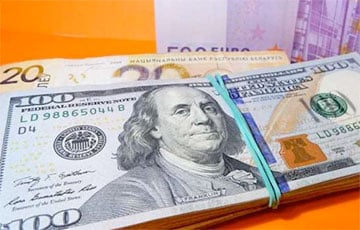
Belarusians have a financial superstition: the closer it gets to New Year’s, the more expensive the dollar becomes. We asked a financial analyst what the exchange rate for the U.S. currency will be as we ring in 2027.
— One of the key events in December will be the U.S. Federal Reserve meeting, scheduled for December 8–9. If the Fed decides to raise the benchmark interest rate, this will be an additional factor strengthening the U.S. dollar. However, I tend to believe that the rate will remain at its current level. The dollar is already strengthening amid instability in Europe, and an excessively strong national currency is also detrimental to the U.S. economy.
As for Belarus, I maintain a fairly conservative forecast here. In December, I expect the dollar to fluctuate within the range of 2.97–3.05 rubles. If the Russian ruble weakens significantly and the dollar reaches 90 rubles in Russia, the dollar could rise to 3.1 rubles here. But for now, that is the upper limit of my forecast.
The growing flow of tourists from Russia is providing some support to the Belarusian ruble. They come here on vacation, bring money with them, and spend it freely. As the New Year’s holidays approach, this factor will intensify, and it’s worth taking into account.
Russian ruble
Belarusians have to keep an eye on the Russian ruble even if they don’t have a single Russian banknote in their wallet. This is because the exchange rate of our ruble depends largely on the performance of our neighbor’s currency.
— I don’t think the picture will change much in December, although a weakening of the Russian currency seems to me a more likely scenario than its strengthening. And a weaker ruble wouldn’t hurt the Russian economy itself right now. I fully expect the dollar to gain another five rubles. I’d say the psychological threshold for December is 90 Russian rubles per dollar. We’re more likely to approach that level than to see the dollar at 70–75 rubles.
The Central Bank of Russia is set to hold a meeting on December 18. There is currently talk of a possible key rate hike, but I do not yet see any compelling arguments in favor of such a decision. I think the regulator will leave things as they are.
Euro
This currency doesn’t seem to be in a festive mood right now. In November, the euro fell to $1.06, and there’s only one month left to recover before the end of the year.
— A lot now depends on how successfully European countries tackle their domestic problems. If the situation stabilizes, the euro could very well regain its lost ground and return to the $1.15 mark.
For now, however, there are plenty of risks for the European currency. These include protest sentiment within Europe, security concerns, and the likelihood of military conflicts spreading. Escalating tensions will play into the dollar’s hands, and we may then see a further decline in the euro’s exchange rate.
Oil
In November, the oil market began to trend downward: the price per barrel fell from $117 to $97. We asked an expert how long these prices would hold.
— Yes, oil prices fell significantly in November, and I would attribute this primarily to market participants’ expectations. Traders are counting on a de-escalation of the conflict between the U.S. and Iran and a normalization of shipping in the Strait of Hormuz. For now, the market is reacting specifically to the prospect of an improvement in the situation.
In December, in my view, the most likely price range for oil is $100–105 per barrel. I base this forecast on how events are unfolding today. At the same time, the oil market remains highly sensitive to geopolitics. A new round of conflict in the Strait of Hormuz could well trigger a rise in prices up to $127 per barrel.
Gold
This precious metal lost its luster in November: the price per troy ounce fell from $4,100 to $3,600. Will the precious metal continue to fall in price in December?
— Gold lost significant ground in November, and this came as no surprise to me. We’ve already discussed that there are no significant economic fundamentals supporting further price growth. Markets are currently reacting very emotionally to the news cycle, and the price of gold is largely determined by the geopolitical situation.
Economic processes are quite slow-moving; we may not feel their effects for nine months or even a year. Political events, on the other hand, can shift investor sentiment quite rapidly.
For now, I stand by my forecast that gold prices will continue to fall. If the global situation remains relatively calm in December, we may well see the price of a troy ounce in the $3,300–$3,500 range. Another escalation of military conflicts could reverse this trend. In that case, gold could once again approach the $4,000 mark.

Bank's name: Bank Millennium S.A.
Address: ul. Stanislawa Zaryna, 2A, 02-593, Warszawa
IBAN: PL97116022020000000216711123
SWIFT: BIGBPLPW
Name of the account holder: Fundacja “KARTA ‘97”
Purpose/title of payment: Donation for statuary aims
You can contact us by the e-mail charter97@gmail.com